 EN
 AR
 BG
 CS
 DA
 NL
 FI
 FR
 DE
 EL
 HI
 IT
 JA
 KO
 NO
 PL
 PT
 RU
 ES
 SV
 TL
 ID
 UK
 VI
 HU
 TH
 TR
 FA
 AF
 MS
 SW
 GA
 CY
 BE
 KA
 LA
 MY
 TG
 UZ


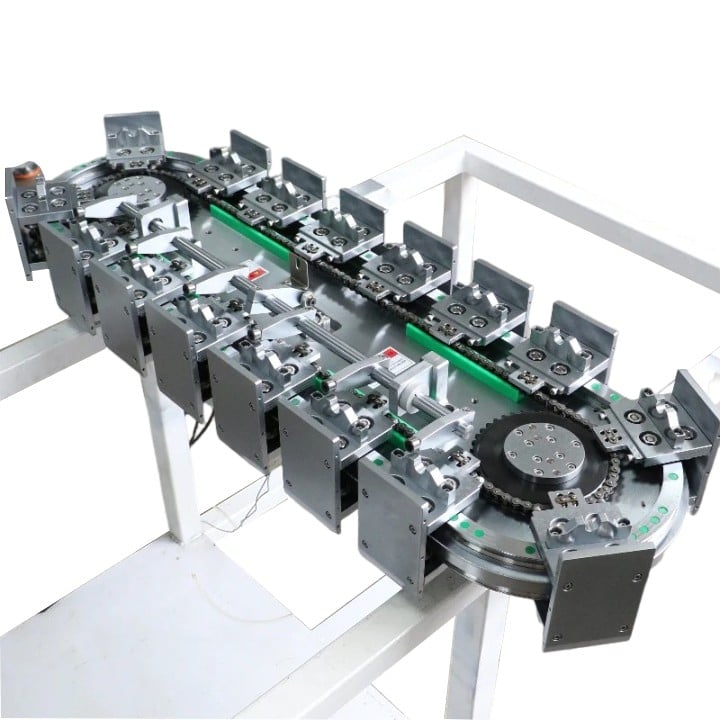
Automated assembly lines rely heavily on linear motion pairs to transfer workpieces, lock fixtures, perform pick-and-place and carry inspection probes. Unlike single-purpose standalone machines, production line axes run continuously in cycles, often 2–3 shifts per day, with frequent start-stop, acceleration and moment loads. A poorly matched ball screw or linear guide does not fail immediately; it slowly increases scrap rate, triggers unexpected line stops and pushes up long-term maintenance cost.
Two core motion components work together here: linear guides bear radial, lateral and tilting moment loads, while ball screws convert servo torque into controlled thrust and accurate positioning. Many designers make the mistake of sizing only by static load or price, ignoring dynamic cycle, contamination and alignment conditions unique to continuous production lines.
For gantry transfer axes covering long strokes, rigidity and critical speed are the first priority. Roller-type linear guides are preferred for heavy payload battery PACK, automotive subassembly and large-component transfer, thanks to line-contact rolling structure and higher moment resistance. Ball-type profile guides suit light-to-medium payload pick-and-place stations in electronics assembly, where low friction and quiet operation matter. Preload class should be matched to positioning requirement: Z0 light preload for simple transfer, Z1 normal preload for general positioning, Z2 medium preload for inspection and press-fit stations that cannot tolerate backlash.
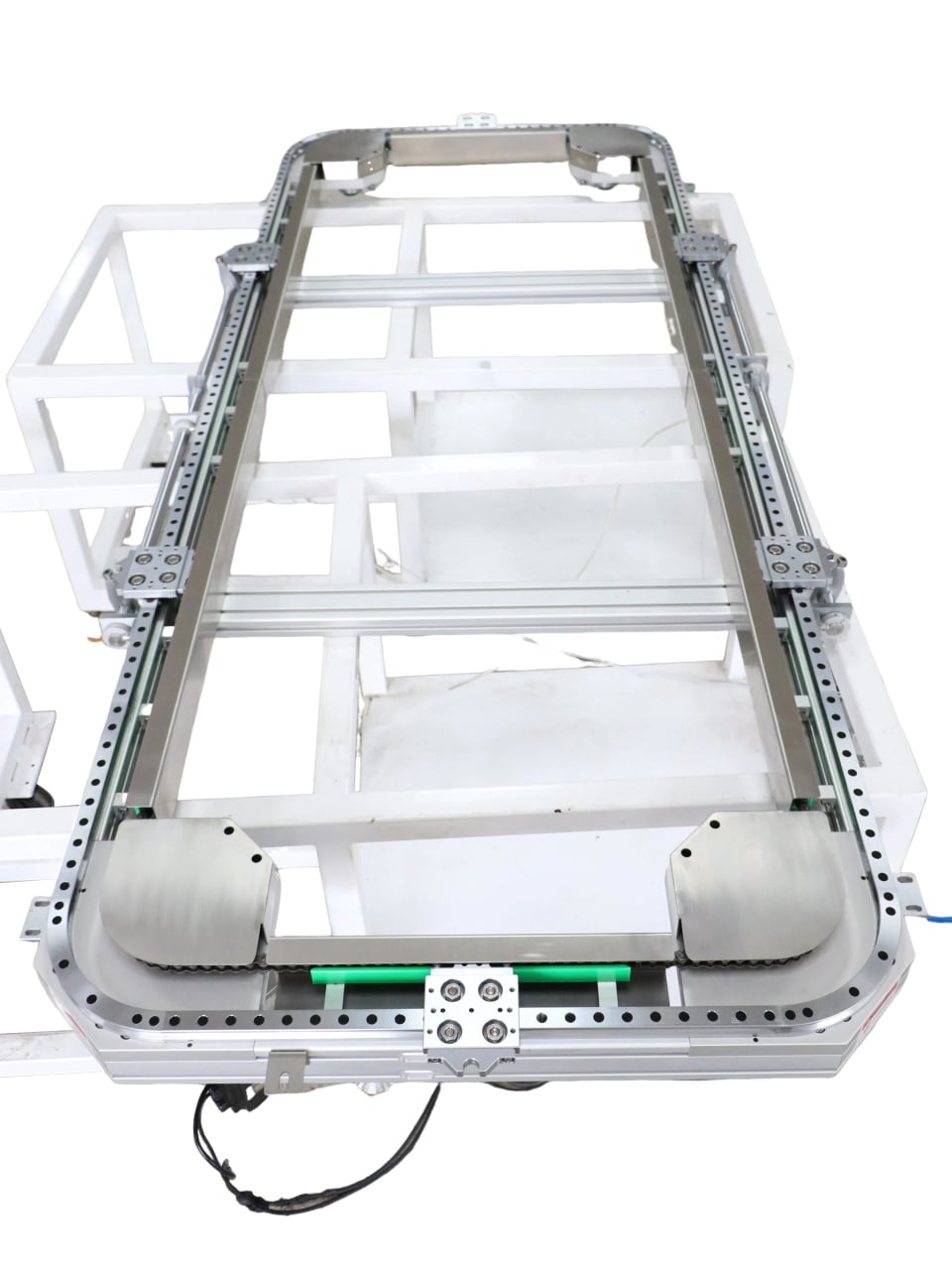
Ball screw selection for production lines splits clearly by axis function. Press-fit and locking stations need small-lead, high-rigidity ball screws with double-nut preload to maintain steady thrust and repeatability. High-speed transfer stations use larger lead to shorten cycle time, but engineers must check critical speed and dN value to avoid screw whipping and rapid heat buildup. For strokes longer than 1000 mm, fixed-supported or tension-preloaded screw design is recommended to suppress thermal elongation error.
Production floor environment is often underestimated. Welding spatter, metal dust, cutting chips, coolant and packaging debris will quickly abrade raceways if sealing is inadequate. Standard end seals are not enough for harsh stations; add scraper plates, bellows covers or dust-proof nuts. For washdown food and pharmaceutical lines, stainless steel linear guides and corrosion-resistant surface treatment are necessary.
Another frequent pain point is interchangeability and spare-part strategy. Many line builders mix non-interchangeable motion brands, which slows retrofitting. Standardized profile rails and ground ball screws with compatible mounting dimensions simplify future replacement during planned shutdown windows.
YOSO supplies matched linear guide and ball screw packages tailored for assembly lines, packaging lines and battery production equipment. Our engineering team reviews duty cycle, load spectrum and environmental conditions to provide axis-by-axis specification and mounting guidance for OEM and system integrators.