 EN
 AR
 BG
 CS
 DA
 NL
 FI
 FR
 DE
 EL
 HI
 IT
 JA
 KO
 NO
 PL
 PT
 RU
 ES
 SV
 TL
 ID
 UK
 VI
 HU
 TH
 TR
 FA
 AF
 MS
 SW
 GA
 CY
 BE
 KA
 LA
 MY
 TG
 UZ


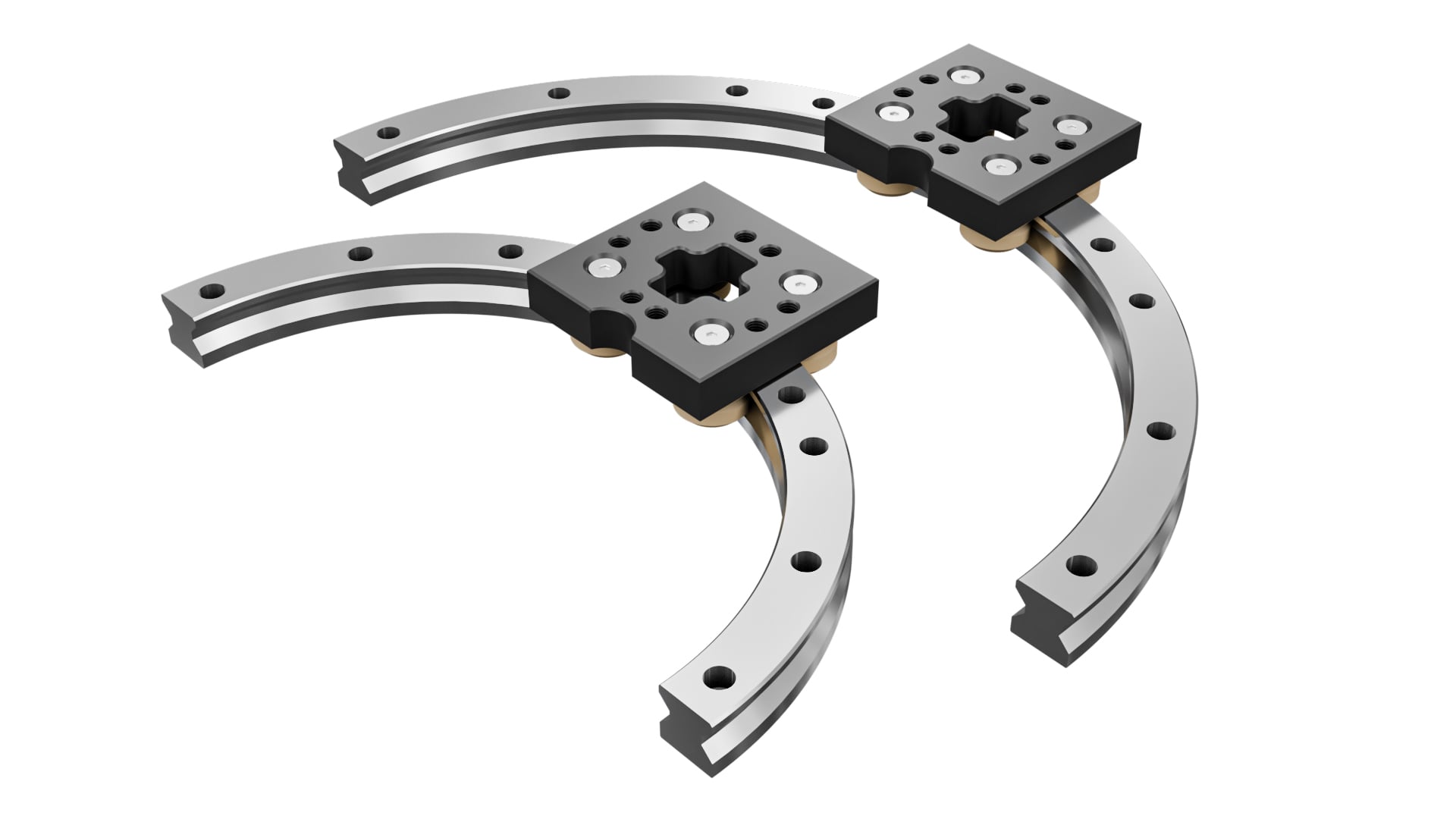
ulti-station automated assembly and testing lines always face a core decision: should the machine use a traditional rotary index table, or a closed-loop curved rail system made of arc rails and straight linear guides? Many mechanical engineers default to indexing tables for circular transfer tasks, but curved rail loop solutions have gained traction in flexible manufacturing, especially for multi-fixture, long-cycle and expandable production requirements.
A rotary index table rotates one single fixture plate around a central axis. It is compact, highly accurate for fixed station counts and ideal for low-station, high-precision synchronous indexing. However, its main limitations are fixed station quantity, limited available space around the turntable, and difficulty adding buffer stations. Once the indexer is built, you cannot easily extend the travel path or add extra loading and unloading positions. It also struggles if your process needs a rectangular path rather than a perfect circle.
In contrast, a curved rail loop system combines arc rail segments and straight guide rails to build closed tracks. You can design the track as full circular, oval, rectangular loop, or mixed curved-straight layout. Each carriage is an independent moving fixture, and multiple carriages can circulate on one track at the same time. This is the biggest advantage over rotary tables: scalable station quantity. For example, a rectangular curved rail loop can have 8, 12 or 16 moving pallets running sequentially, with separate stations for feeding, dispensing, vision inspection, tightening and unloading along the straight sides.
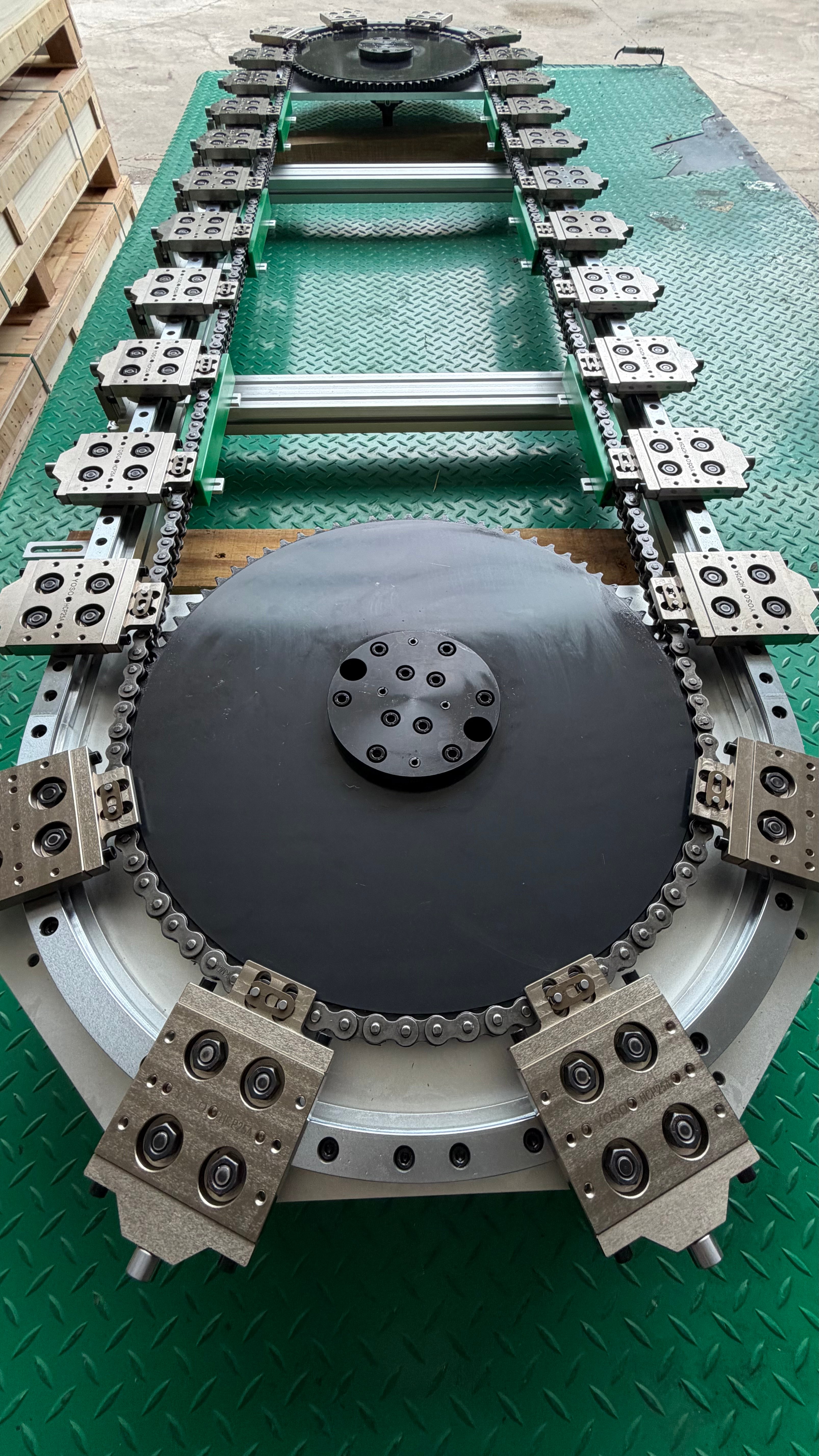
For applications that need vertical transfer or irregular transfer paths, curved rail systems provide more freedom. Vertical curved rail sections can change the workpiece elevation within the circulation loop, a function that standard rotary index tables cannot achieve without extra lifting modules. Custom radius and custom diameter arc segments can be matched to the machine enclosure outline, helping designers shrink the overall machine footprint.
On performance, both systems can reach good positioning repeatability. Index tables usually excel at static positioning accuracy at stop points. Curved rail loops offer better dynamic performance: continuous low-friction rolling motion, lower vibration during high-speed transfer, and less backlash when properly preloaded. For high-cycle packaging lines and lithium battery module assembly, the low rolling friction of arc rail loops reduces energy consumption and heat generation.
Maintenance is another differentiator. If one carriage on a curved rail loop wears out, you can replace the single slider without disassembling the whole drive unit. If a rotary index cam or bearing fails, the whole indexing unit usually needs full removal and overhaul, which means longer production downtime.
Of course, curved rail loops are not always the answer. If your process only requires 4–6 fixed stations, pure circular motion, and ultra-compact installation space, a precision index table remains a sensible choice. But when your project needs flexible layout, multiple moving pallets, rectangular circulation, vertical transfer or future expansion, curved guide rail loop systems bring obvious engineering and commercial benefits.
Final recommendation framework:
- Choose rotary index table: few stations, purely circular motion, fixed layout, highest static positioning.
- Choose curved rail loop: multiple pallets, rectangular / oval path, vertical curved sections, expandable stations, continuous flow transfer.
As custom automation grows, designers are increasingly combining standard straight guides with custom arc rails (variable radius, special profile) to build hybrid transfer systems that outperform both single indexers and simple conveyor belts.