 EN
EN
 AR
AR
 BG
BG
 CS
CS
 DA
DA
 NL
NL
 FI
FI
 FR
FR
 DE
DE
 EL
EL
 HI
HI
 IT
IT
 JA
JA
 KO
KO
 NO
NO
 PL
PL
 PT
PT
 RU
RU
 ES
ES
 SV
SV
 TL
TL
 ID
ID
 UK
UK
 VI
VI
 HU
HU
 TH
TH
 TR
TR
 FA
FA
 AF
AF
 MS
MS
 SW
SW
 GA
GA
 CY
CY
 BE
BE
 KA
KA
 LA
LA
 MY
MY
 TG
TG
 UZ
UZ


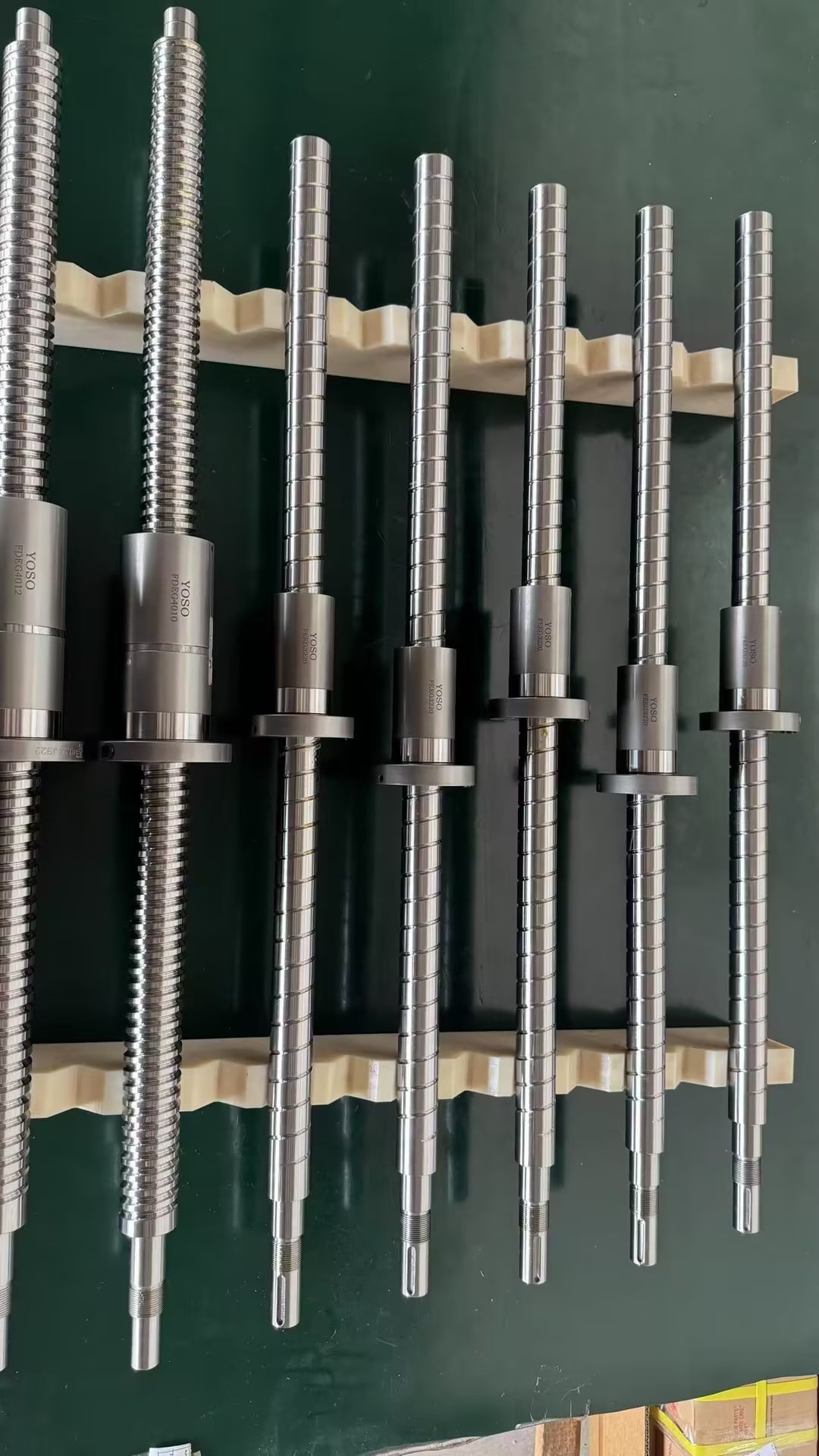
High precision ground ball screw is the core linear transmission component that determines micron-level positioning performance for high-end automation, CNC machine tools, medical all-electric injection molding and semiconductor equipment. Unlike rolled ball screws for general automation, precision ground ball screws adopt ultra-precision thread grinding process, strictly follow ISO 3408 international tolerance standards, and provide controllable cumulative lead error, zero backlash preload and stable thermal performance. Many equipment engineers struggle to distinguish C0, C3 and C5 grades, match proper nut structure and solve precision loss caused by thermal expansion and backlash. This professional guide covers tolerance parameters, manufacturing differences, preload matching and industry application rules to help you select the correct high precision ball screw without over-specification or insufficient accuracy.
H2 1. ISO 3408 Precision Grade Definition: C0 / C3 / C5 Ground Ball Screw
All high precision ball screws are categorized by ISO 3408-1 standard, with C0 as ultra-super precision, C3 high precision, C5 medium high precision. C7/C10 are rolled general screws, not classified as precision grade.
H3 1.1 Core Tolerance Comparison Table (Key SEO data table, Google favors structured charts)
表格
| Precision Grade | Cumulative Lead Error (300mm travel) | Repeat Positioning Accuracy | Typical Industry Use |
|---|---|---|---|
| C0 Ultra Precision | ≤ 3 μm | ±0.5 μm | Lithography equipment, optical inspection, ultra-precision five-axis machine |
| C3 High Precision | ≤ 8 μm | ±1~2 μm | Medical implant injection, semiconductor die bonder, precision five-axis CNC |
| C5 Medium High Precision | ≤ 18 μm | ±2~3 μm | General precision all-electric injection, PCB drilling, standard CNC machining center |
H3 1.2 Manufacturing Gap Between Ground & Rolled Ball Screws
- Thread Machining: Precision ground screws use CNC thread grinder with diamond wheel; rolled screws adopt cold forming without fine grinding.
- Surface Roughness: Ground raceway Ra ≤0.04μm, rolled Ra ≥0.3μm, leading to higher friction drift over long cycles.
- Lead Consistency: Ground screw corrects pitch error by grinding compensation; rolled screws have unpredictable cumulative error after temperature rise.
- Long-Term Stability: Precision ground screws maintain original tolerance for 8–12 million cycles; rolled screws lose positioning precision within 3–5 million cycles under continuous reciprocation.
H2 2. Three Core Precision Determinants of High Precision Ball Screws
H3 2.1 Zero Backlash Preload Design (Critical for Bidirectional Precision)
Backlash is the biggest killer of repeat positioning error. High precision ball screws apply three mature preload structures:
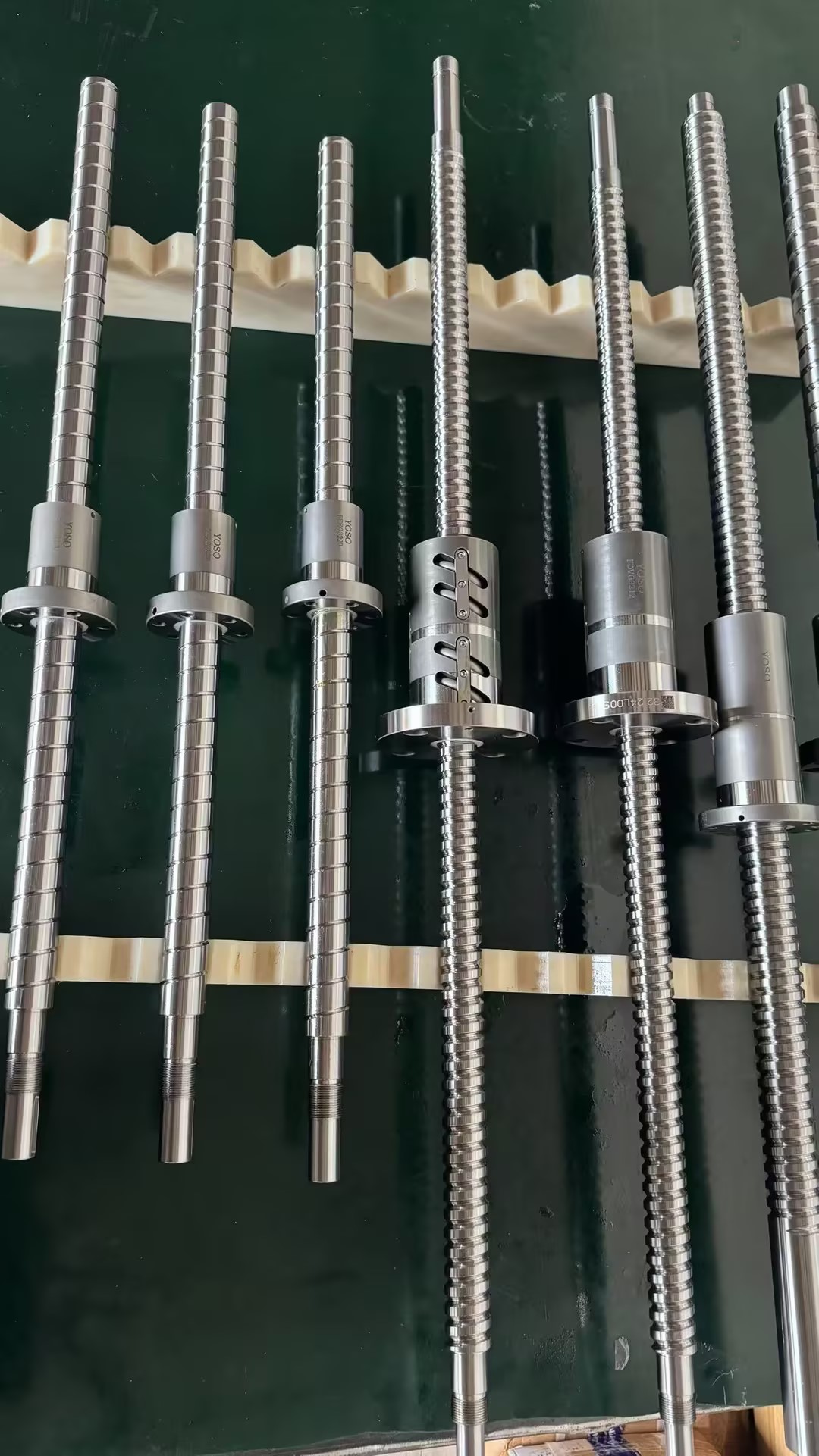
- Double Nut Spacer Preload (DFU / DFI Series): Adjustable preload, ideal for C3/C5 clamping & injection axes of precision molding machines. When raceway wears, technicians can shim the spacer to restore zero clearance without replacing the whole screw.
- Oversize Ball Single Nut Preload (FSW-Super S / FSC): Compact nut outline, perfect for narrow installation space on semiconductor micro stages. Preload fixed at factory, no on-site adjustment.
- Offset Lead Single Nut Preload: Ultra-small nut size, widely used in C0 miniature precision ball screws for optical testing equipment. Preload grade rule for precision equipment: Z1 light preload for ejection axes; Z2 medium preload for injection/clamping main axes; heavy Z3 preload only for C0 ultra-precision static positioning platforms. Excessive preload generates extra heat and causes thermal drift.
H3 2.2 Thermal Growth Control for Long-Stroke Precision Screws
Even C0 grade ground ball screw will produce positioning drift when temperature rises. Standard bearing steel GCr15 thermal expansion coefficient = 11.7×10⁻⁶ /℃. For a 1200mm long C3 screw with 10℃ temperature rise, total drift reaches 140μm, completely destroying micron tolerance. Three mature solutions for precision equipment:
- Hollow Cooled Precision Ball Screw: Internal coolant circulation stabilizes shaft temperature within ±1℃, first choice for medical optical injection molding machines running 24/7.
- Fixed-Fixed Dual Bearing Support Configuration: Maximize axial rigidity, matched with real-time CNC thermal compensation algorithm.
- Low-Friction Superfinished Raceway: Reduce friction heat generation by 40%, lower temperature rise during high-speed reciprocation.
H3 2.3 High DN Silent Circulation Structure for High-Speed Precision
Standard external return tube screws produce ball collision vibration, introducing micro positioning jitter at high speed. High precision silent circulation systems (end-cap circulation / caged ball spacer) eliminate ball-to-ball impact, ensuring stable precision at DN value up to 220,000 for C3/C5 screws.
- End-cap circulation (HIWIN Super S, TBI SFS): Higher DN limit, fit thin-wall high-speed precision injection axes.
- Caged ball design (THK SBN-V): Lower vibration fluctuation, ideal for medical low-noise precision molding lines.
H2 3. Industry Matching Rules for C0 / C3 / C5 Precision Ball Screws
H3 3.1 Semiconductor & Optical Equipment (C0 / C3 Only)
Wafer inspection, lens grinding, lithography auxiliary axes strictly require C0 grade ground ball screws, zero backlash double nut preload, stainless SUS440C optional for cleanroom anti-contamination. Travel repeatability must reach ±0.5μm to avoid wafer scrapping.
H3 3.2 Medical Precision Injection Molding (C3 Recommended)
Syringe, catheter, implant plastic parts demand shot weight variation below 0.3%. All injection and clamping axes adopt C3 ground ball screws with double nut preload, optional hollow cooling design to suppress thermal drift during long production shifts. C5 screws only apply to auxiliary nozzle traverse axes.
H3 3.3 CNC Precision Machining Centers (C3 / C5 Based on Tolerance)
Five-axis mold machining for optical plastic molds selects C3 grade feed screws; general aluminum alloy CNC cutting uses cost-effective C5 ground ball screws. Rolling screws (C7) cannot meet mold contour precision requirements.
H3 3.4 Miniature Precision Automation Stages (C0 / Mini C3)
Micro dispensing, tiny medical ejection axes adopt small-diameter C0/C3 miniature ground ball screws (6/8/10mm shaft), low lead 5mm to guarantee micro feeding resolution.
H2 4. Common Mistakes When Specifying High Precision Ball Screws
- Confuse rolled C7 screw with precision C5 grade: C7 only fits low-precision packaging machines, cannot replace ground screws for medical/optical molding.
- Over-spec C0 grade for general precision equipment: C0 grinding cost increases 80% vs C3, unnecessary cost waste if ±2μm repeatability meets production demand.
- Ignore thermal expansion on long stroke: Many engineers only check static tolerance, neglect continuous running temperature drift leading to batch unqualified parts.
- Match fixed-free bearing support for precision clamping axes: Low rigidity generates axial deflection under tonnage load, damaging long-term positioning consistency.
H2 FAQ (Google Featured Snippet Capture, High Traffic Long-tail Questions)
- What is the difference between C3 and C5 ball screw? C3 cumulative lead error ≤8μm/300mm, repeat ±1~2μm for medical/semiconductor; C5 ≤18μm/300mm, cost-effective for standard precision injection & CNC.
- Can C5 ball screw reach zero backlash? Yes, equipped with double nut Z1/Z2 preload structure to eliminate axial play, but long-cycle stability is weaker than C3 ground screw.
- Do precision ball screws need special lubrication? C0/C3 grade requires synthetic low-friction grease; ordinary lithium grease will increase friction heat and reduce precision retention cycle.
- Is hollow cooling necessary for C3 injection axis ball screw? If production runs over 6 hours continuously with thin-wall precision parts, hollow cooled precision screw is strongly recommended to control thermal drift.
Conclusion
High precision ground ball screw performance depends on three key indicators: ISO precision grade, adjustable zero-backlash preload and thermal stability control. Engineers should select C0 for ultra-micro optical equipment, C3 as mainstream for medical precision injection & semiconductor, C5 for medium-precision CNC and general precision automation. Proper matching of nut circulation, bearing support and cooling structure can maximize micron positioning consistency and extend service life of precision transmission systems.