 EN
EN
 AR
AR
 BG
BG
 CS
CS
 DA
DA
 NL
NL
 FI
FI
 FR
FR
 DE
DE
 EL
EL
 HI
HI
 IT
IT
 JA
JA
 KO
KO
 NO
NO
 PL
PL
 PT
PT
 RU
RU
 ES
ES
 SV
SV
 TL
TL
 ID
ID
 UK
UK
 VI
VI
 HU
HU
 TH
TH
 TR
TR
 FA
FA
 AF
AF
 MS
MS
 SW
SW
 GA
GA
 CY
CY
 BE
BE
 KA
KA
 LA
LA
 MY
MY
 TG
TG
 UZ
UZ


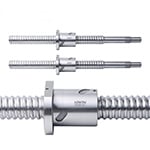
Ball screws are the mechanical backbone of all-electric injection molding machines. They convert rotary motor motion into the linear force that clamps molds, injects plastic, and ejects parts. When they fail, production stops — often unexpectedly, and always at the worst possible time.
But ball screw failure is rarely sudden. Most failure modes develop gradually over millions of cycles, leaving detectable warning signs along the way. With the right monitoring strategy, molders can catch problems early, schedule maintenance during planned downtime, and avoid costly emergency shutdowns.
This article covers the seven most common ball screw failure modes in injection molding applications, their warning signs, and how to implement a predictive maintenance program that maximizes uptime.
Why Ball Screws Fail in Injection Molding Environments
Injection molding shops are harsh environments for precision components. Ball screws face a combination of stressors that accelerate wear:
- High cyclic loading: Clamping and injection forces reverse millions of times per year
- Contamination: Plastic dust, carbon black, cooling water mist, and release agents
- Temperature variation: From shop floor swings to internal heat generation from friction
- High speed / acceleration: Especially on injection axes of high-speed packaging machines
- Lubrication challenges: Grease gets washed out, contaminated, or thermally degraded
Under these conditions, even the highest quality ball screws will eventually wear out. The question is not if they fail, but when — and whether you see it coming.
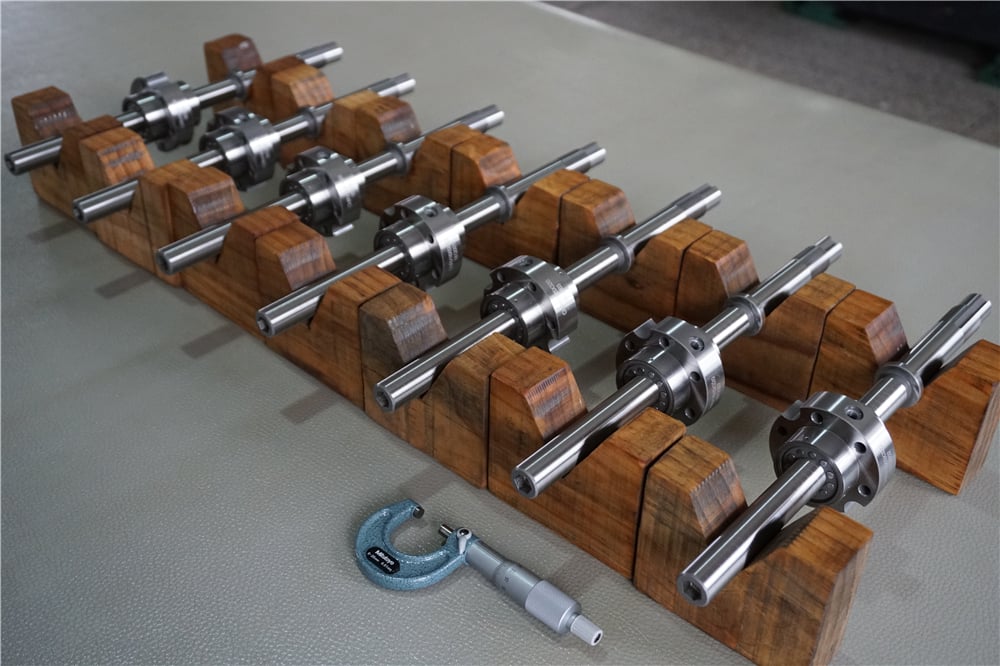
Failure Mode 1: Raceway Fatigue (Flaking / Pitting)
Most common failure mode — accounts for ~60% of ball screw failures
What happens: After millions of load cycles, the metal surfaces of the screw and nut raceways develop microscopic cracks just below the surface. These cracks propagate upward until small pieces of metal break away — a phenomenon called flaking or pitting. Once started, the damage accelerates rapidly as the hardened steel fragments act like abrasive particles inside the nut.
Causes:
- Normal fatigue at the end of rated life (L10 life)
- Overloading beyond the dynamic load rating
- Poor lubrication (insufficient film thickness)
- Contamination (particles create stress concentrations)
Warning signs:
- Increasing vibration and noise
- Rough, "gritty" feel when moving the nut by hand
- Visible metal particles in the grease
- Gradual loss of preload / increasing backlash
In injection molding: Most common on clamping and injection axes that carry high loads over millions of cycles. Typically appears after 8–15 million cycles, depending on load magnitude and lubrication quality.
Failure Mode 2: Preload Loss / Backlash Increase
Most frequently noticed failure — causes quality issues before complete failure
What happens: As the raceways wear, the clearance between the balls and grooves increases. The preload force decreases, and eventually measurable backlash appears. The screw still functions, but positioning accuracy and repeatability degrade.
Causes:
- Normal wear (gradual, predictable)
- Inadequate initial preload
- Overloading causing permanent deformation
- Improper installation (preload not set correctly)
Warning signs:
- Shot-to-shot weight variation increases
- Part dimensional drift over time
- Audible "clunk" on direction reversals
- Measurable axial play when checked with a dial indicator
In injection molding: This is often the first sign that a screw is reaching end-of-life. Many machines continue running with some backlash, but precision applications (medical, optical) become impossible. On double-nut screws, preload can often be restored by adjusting the spacer.
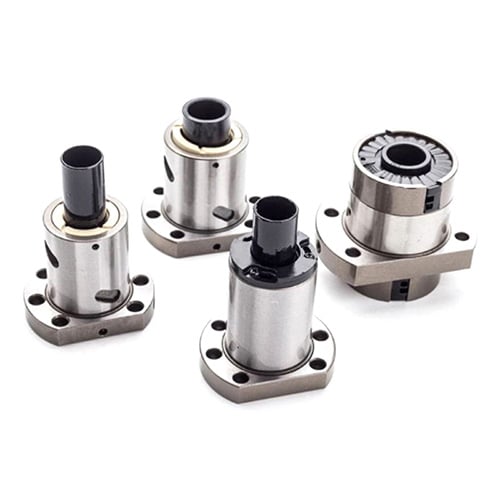
Failure Mode 3: Ball Return System Damage
Often misdiagnosed — can cause sudden catastrophic failure
What happens: The ball return system (deflector, end cap, or return tube) that guides balls from one end of the nut back to the other becomes damaged or misaligned. Balls can jam, skip, or even escape from the nut.
Causes:
- Impact damage during installation or handling
- Misalignment causing balls to hit the return port at the wrong angle
- Fatigue cracking of return tube from vibration
- Improper disassembly/reassembly allowing balls to fall out
Warning signs:
- Intermittent binding or "sticking" during travel
- Clicking or popping sounds at specific positions
- Sudden increase in driving torque
- Balls found on the floor or in the machine (severe)
In injection molding: More common on external-circulation screws (like SFU/DFU series) where return tubes are exposed and vulnerable to damage. Can happen suddenly during high-speed injection strokes, potentially causing a crash.
Failure Mode 4: Brinelling / Permanent Deformation
Occurs under static overload or severe impact
What happens: When the axial load exceeds the static load rating of the screw, the balls permanently deform the raceway surface, creating indentations (Brinell marks). These indentations cause vibration, noise, and accelerated wear every time a ball rolls over them.
Causes:
- Severe overload (e.g., mold crash, hydraulic failure on hybrid machines)
- Impact loading during emergency stops
- Shipping damage (screw dropped or struck during transport)
- Exceeding static load rating during stationary clamping
Warning signs:
- Vibration with a regular, repeating frequency (corresponding to ball passage over indentations)
- Increased noise from specific positions along the screw
- Measurable increase in driving torque
- Visible indentations if the screw is inspected
In injection molding: Can occur after a mold crash or severe jam. If a machine experiences a major impact, the ball screws should be inspected even if they appear to function normally. Brinelling damage is permanent and will accelerate fatigue failure
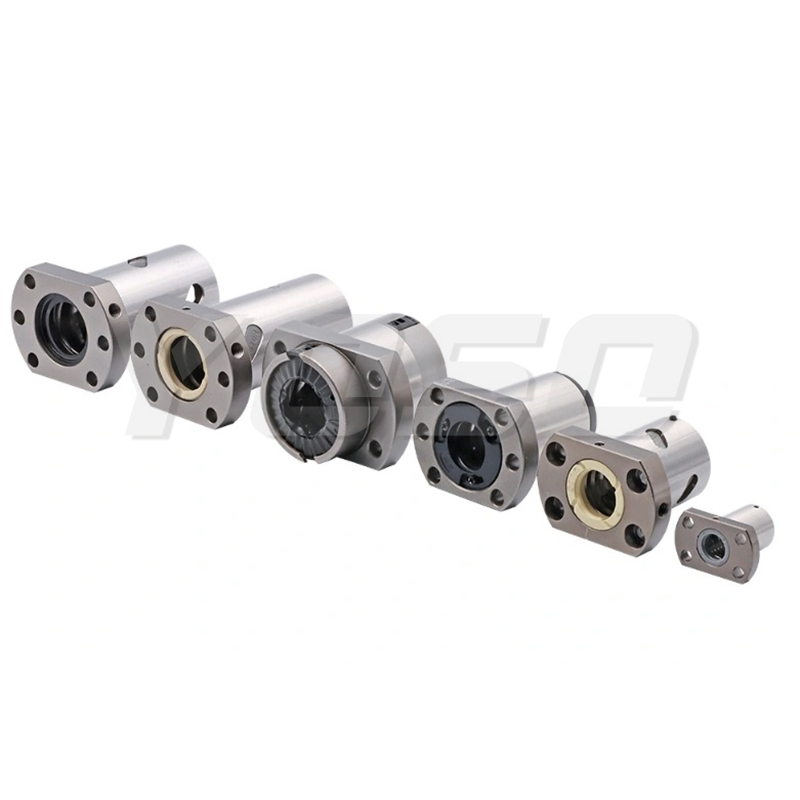
Failure Mode 5: Contamination Damage
Silent killer — slowly destroys precision without obvious symptoms
What happens: Foreign particles (plastic dust, metal chips, water, chemicals) enter the nut and get trapped between the balls and raceways. These particles act as abrasives, wearing away the precision-ground surfaces. They can also clog the lubrication system, accelerating wear further.
Causes:
- Damaged or missing wiper seals
- Poor machine enclosure / guarding
- Coolant or water ingress
- Plastic dust from machining or deflashing operations nearby
- Using contaminated grease during relubrication
Warning signs:
- Gradual increase in friction / driving torque
- Grease appears dirty, gritty, or discolored when sampled
- Accelerated wear rate (preload loss faster than expected)
- Surface pitting / scoring on visible screw shaft
In injection molding: Extremely common. Plastic dust is everywhere in molding shops, and many machines have inadequate sealing on ball screw nuts. This is the #1 reason screws fail before reaching their rated L10 life.
Failure Mode 6: Lubrication Failure
Most preventable failure mode
What happens: Without proper lubrication, metal-to-metal contact occurs between balls and raceways. Friction increases dramatically, generating heat and accelerating wear. In severe cases, the screw can seize completely.
Causes:
- Grease completely used up / starved
- Wrong grease type (incompatible with speed, load, or temperature)
- Grease washed out by water or coolant
- Grease degraded by high temperature
- Automatic lubrication system failure (clogged line, empty reservoir)
Warning signs:
- Sudden increase in operating temperature
- High-pitched squealing or whistling noise
- Sharp increase in driving torque
- Grease appears dry, caked, or burnt
- Discoloration (blueing) of screw shaft from overheating
In injection molding: Surprisingly common despite being entirely preventable. Automatic lubrication systems fail, maintenance teams miss intervals, or the wrong grease is used during servicing. A lubrication failure can destroy a screw in a fraction of its normal life.
Failure Mode 7: Shaft Buckling / Bending
Catastrophic failure — usually requires full replacement
What happens: The screw shaft bends or buckles under compressive load. This can happen suddenly during an overload, or gradually from repeated high-load cycles combined with inadequate support.
Causes:
- Severe overload beyond compressive strength
- Misalignment causing side loads on the screw
- Insufficient end support (e.g., fixed-free on a long, high-load screw)
- Critical speed vibration causing whirling and bending
- Impact damage (e.g., something falls on the screw)
Warning signs:
- Visible runout when the screw rotates
- Binding or tight spots at certain positions
- Vibration that increases with speed
- Nut wears unevenly (one side shows more wear)
In injection molding: Most common on long-travel clamping axes of large machines, especially if the screw was undersized or if the support configuration is inadequate. A bent screw cannot be repaired — the entire assembly must be replaced.
Predictive Maintenance Strategy
The goal of predictive maintenance is to detect failure early enough to plan replacement during scheduled downtime, rather than reacting to an emergency breakdown.
Level 1: Basic Monitoring (Low Cost, High Value)
Monthly visual inspection:
- Check for visible wear, contamination, or damage on exposed screw shafts
- Inspect wiper seals for damage or leakage
- Look for grease discoloration or debris
Grease sampling:
- Extract a small grease sample from the nut
- Check color, consistency, and presence of metal particles
- Compare to new grease baseline
Backlash measurement:
- Use dial indicator to measure axial play at multiple positions
- Track trend over time — the rate of increase predicts remaining life
Level 2: Intermediate Monitoring
Vibration analysis:
- Mount accelerometers on the nut housing
- Monitor vibration amplitude and frequency spectrum
- Increasing vibration at ball pass frequency indicates raceway wear
- Can detect flaking 2–6 months before it causes failure
Temperature monitoring:
- Install thermocouples or IR sensors on nut housing and bearing supports
- Sudden temperature rise indicates lubrication problem or increased friction
- Baseline + trend analysis is key — absolute values matter less than changes
Torque monitoring:
- Record servo motor torque data during normal operation
- Gradual increase indicates wear or contamination
- Sudden spike indicates lubrication failure or jamming
Level 3: Advanced Monitoring (High Precision Machines)
Laser calibration:
- Periodic laser interferometer measurement of positioning accuracy and repeatability
- Detects gradual degradation of lead accuracy from wear
- Most accurate method, but requires machine downtime
Acoustic emission monitoring:
- Ultra-sensitive sensors detect high-frequency sound from microscopic crack formation
- Can detect fatigue damage at the earliest stage
- Expensive, justified only for critical production machines
Predictive Maintenance Schedule Template
表格
| Frequency | Activity | Method |
|---|---|---|
| Weekly | Visual inspection | Look for contamination, seal damage, grease leakage |
| Monthly | Backlash check | Dial indicator at 3–5 positions along travel |
| Monthly | Grease check | Sample and inspect grease condition |
| Quarterly | Vibration survey | Accelerometer measurement at nut housing |
| Quarterly | Temperature baseline | Record operating temperature at steady state |
| Semi-annually | Full precision check | Laser calibration (critical machines only) |
| Annually | Complete inspection | Disassemble nut, inspect balls and raceways |
When to Replace vs. Repair
Not all ball screw problems require full replacement. Here's the decision framework:
Can be adjusted / repaired:
- Preload loss on double-nut screws → adjust spacer
- Minor contamination → clean and re-grease
- Lubrication system issue → fix lubrication, re-grease screw
- Damaged wiper seals → replace seals
Requires nut replacement:
- Raceway flaking / pitting on nut only
- Ball return system damage
- Screw shaft still within tolerance
Requires full assembly replacement:
- Screw shaft worn, pitted, or bent
- Both nut and shaft show significant wear
- Lead error exceeds specification
- Brinelling damage on shaft raceways
Cost-Benefit of Predictive Maintenance
For a typical 200-ton all-electric injection molding machine running production parts:
- Emergency ball screw failure: $8,000–$15,000 in lost production + rush shipping + overtime labor
- Planned replacement during scheduled downtime: $1,500–$3,000 in parts + normal labor
- Predictive monitoring cost: ~$500/year in sensors and labor
The ROI is clear: catching one unexpected failure per year pays for the entire program many times over.
Conclusion
Ball screw failure in injection molding is usually gradual and predictable. The seven most common failure modes — raceway fatigue, preload loss, ball return damage, brinelling, contamination, lubrication failure, and shaft bending — all produce detectable warning signs before they cause catastrophic breakdown.
Implementing a predictive maintenance program doesn't require expensive sensors or complex systems. Even basic monitoring — regular backlash checks, grease inspection, and vibration trending — can detect most problems early enough to plan maintenance.
For molders running all-electric machines, the ball screw is the single most critical mechanical component. Treating it with proactive monitoring, rather than reactive repair, directly translates to higher OEE, lower maintenance costs, and more consistent part quality.