 EN
EN
 AR
AR
 BG
BG
 CS
CS
 DA
DA
 NL
NL
 FI
FI
 FR
FR
 DE
DE
 EL
EL
 HI
HI
 IT
IT
 JA
JA
 KO
KO
 NO
NO
 PL
PL
 PT
PT
 RU
RU
 ES
ES
 SV
SV
 TL
TL
 ID
ID
 UK
UK
 VI
VI
 HU
HU
 TH
TH
 TR
TR
 FA
FA
 AF
AF
 MS
MS
 SW
SW
 GA
GA
 CY
CY
 BE
BE
 KA
KA
 LA
LA
 MY
MY
 TG
TG
 UZ
UZ


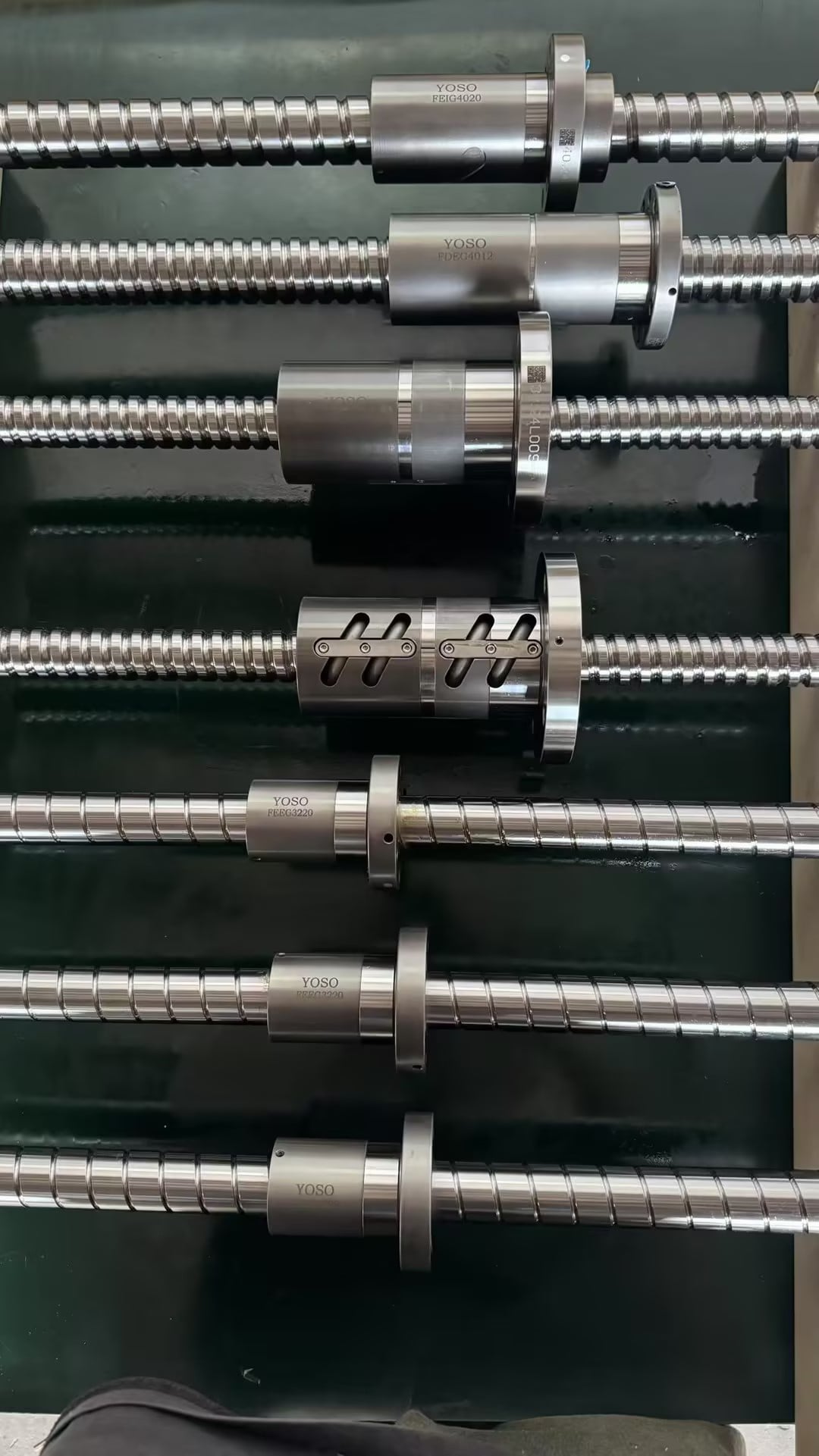
Ball screws are the core precision transmission components of linear motion modules, CNC machine tools, and automated transfer equipment in industrial automation systems. Most automation manufacturers only focus on three basic parameters during selection: repeat positioning accuracy, screw accuracy grade, and screw lead. Many engineers assume that standard qualified parameters guarantee long-term stable operation. However, actual on-site application always presents common problems: perfect precision for new equipment, obvious accuracy drift, abnormal noise, jitter and stuck movement after 3 to 6 months of operation, and service life far below the theoretical value.
In most cases, the attenuation of precision and service life failure of ball screws are not caused by product quality defects. Instead, they result fromone-sided selection logic and mismatched working conditions. Based on long-term supporting experience of linear modules, this article summarizes the most typical ball screw selection mistakes in the automation industry, helping mechanical engineers avoid hidden failures and extend equipment service life fundamentally.
1. Only Focus on Accuracy Grade While Ignoring Backlash Matching
Many engineers have a fixed misconception that C3 and C5 high-precision ball screws are zero-backlash products. In fact, the reverse backlash of ball screws directly determines the positioning stability of equipment during start-stop, direction switching and micro-displacement processing.
Preloaded ball screws can eliminate most reverse gaps, but blind selection of high-preload screws for light-load and high-speed handling scenarios will lead to excessive preload resistance, increased friction, continuous heat generation and tiny screw deformation. Long-term operation will cause rapid precision attenuation and greatly shorten the service cycle of transmission components.
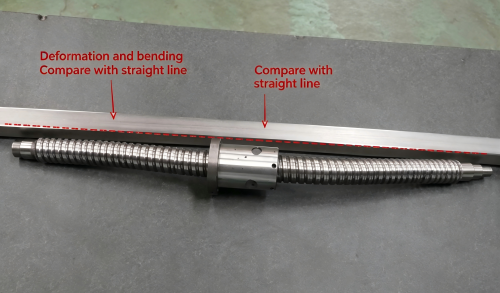
Professional and reasonable selection criteria for different scenarios:
-
Precision processing, dispensing, visual inspection and laminating equipment: Adopt zero-backlash, double-nut preloaded C3/C5 grade ball screws to ensure ultra-stable positioning accuracy during direction switching.
-
High-speed loading/unloading, assembly line and automated transfer equipment: Adopt low-preload and micro-backlash solutions to reduce friction loss and improve operation smoothness and overall service life.
A larger screw lead means a higher spiral angle and weaker axial locking force, making backlash harder to control. This is the core reason why high-speed ball screws with large leads are more prone to direction switching deviation in actual operation.
2. Blind Pursuit of Large Lead & High Speed Ignoring Centrifugal Wear Risks
To improve equipment cycle efficiency, engineers tend to choose large-lead ball screws for higher feed speed. Nevertheless, steel balls will generate strong centrifugal force under high-speed operating conditions, bringing two hidden wear hazards that are easily ignored in conventional selection.
First, the high-speed revolution of steel balls causes unstable operation and periodic speed fluctuation when passing through the circulator. It leads to thrust fluctuation at low speed and severe equipment vibration and poor uniformity at high speed.
Second, high-speed sliding friction will destroy the lubricating oil film on the screw raceway surface, resulting in local dry friction, early surface peeling, abnormal noise and accelerated component wear.
Therefore, high-speed scenario selection cannot rely solely on speed parameters. It is necessary to match high-speed dedicated circulation structure, enhanced lubrication system and speed-adaptive lead specifications to prevent premature aging caused by blind parameter superposition.
3. Select According to Static Load Only, Neglecting Dynamic Impact Loads
Most engineers only verify the static rated load of ball screws during selection, ignoring dynamic working factors such as start-stop impact, eccentric load and cantilever deflection. In actual automated production, the instantaneous impact load of equipment is often several times the static load.
Insufficient load margin of screws and sliding blocks will lead to long-term overload and eccentric operation, causing micro-deformation of raceways and fatigue damage of steel balls. The final manifestations are continuous accuracy decline, module jitter and stuck movement.
Industry-standard reliable principle: Reserve a dynamic load safety factor of 2 to 3 times. For cantilever and eccentric working conditions, optimize the base structure and rigidity to reduce the actual load pressure on ball screws.
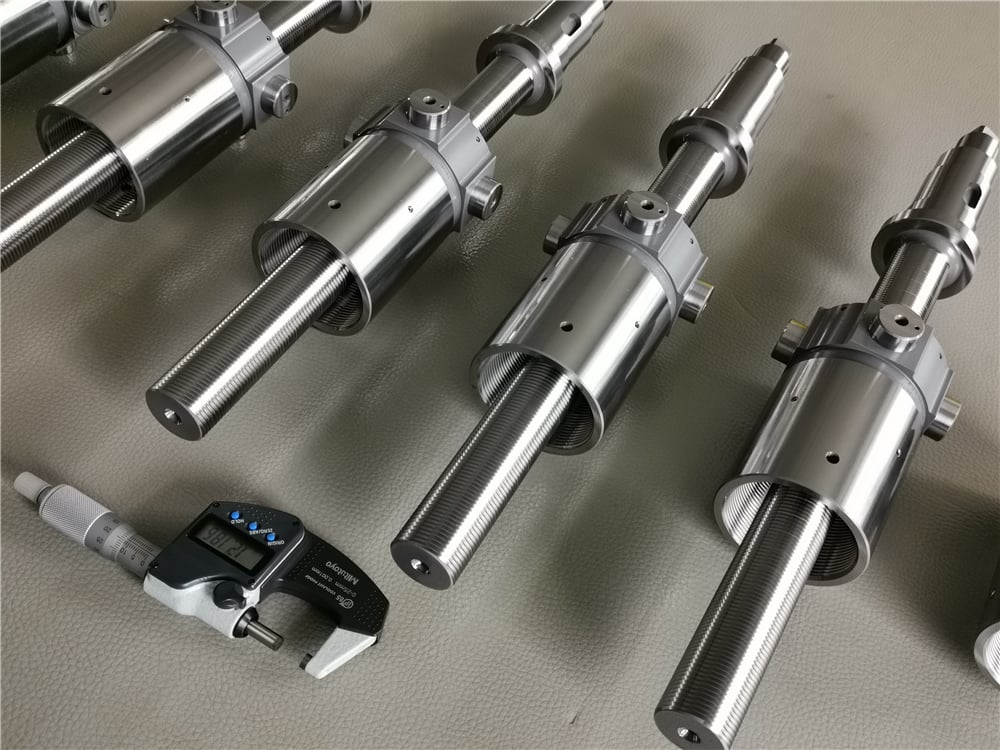
4. Qualified Instant Accuracy Does Not Mean Long Service Life
Ball screw failure rarely occurs suddenly. It is a cumulative process of micro-deformation, progressive wear, lubrication attenuation and stress fatigue. All new screws leave the factory with standard accuracy, but mismatched working conditions, installation deviation and insufficient lubrication will continuously amplify precision loss.
Advanced selection logic requires predicting the full-life accuracy attenuation curve of ball screws, reserving reasonable accuracy margin according to equipment operation frequency, load spectrum and ambient temperature, so as to ensure stable precision output in the middle and later service period of automated equipment.
Conclusion
Ball screw selection is not a simple parameter matching of accuracy, lead and load. Professional precision transmission design requires comprehensive optimization of accuracy, speed, backlash, rigidity, lubrication and working condition adaptation. Avoiding the above common selection mistakes can effectively reduce equipment failure rate and repeated calibration costs, realizing long-term high-precision and high-stability operation of linear motion modules.