 EN
EN
 AR
AR
 BG
BG
 CS
CS
 DA
DA
 NL
NL
 FI
FI
 FR
FR
 DE
DE
 EL
EL
 HI
HI
 IT
IT
 JA
JA
 KO
KO
 NO
NO
 PL
PL
 PT
PT
 RU
RU
 ES
ES
 SV
SV
 TL
TL
 ID
ID
 UK
UK
 VI
VI
 HU
HU
 TH
TH
 TR
TR
 FA
FA
 AF
AF
 MS
MS
 SW
SW
 GA
GA
 CY
CY
 BE
BE
 KA
KA
 LA
LA
 MY
MY
 TG
TG
 UZ
UZ


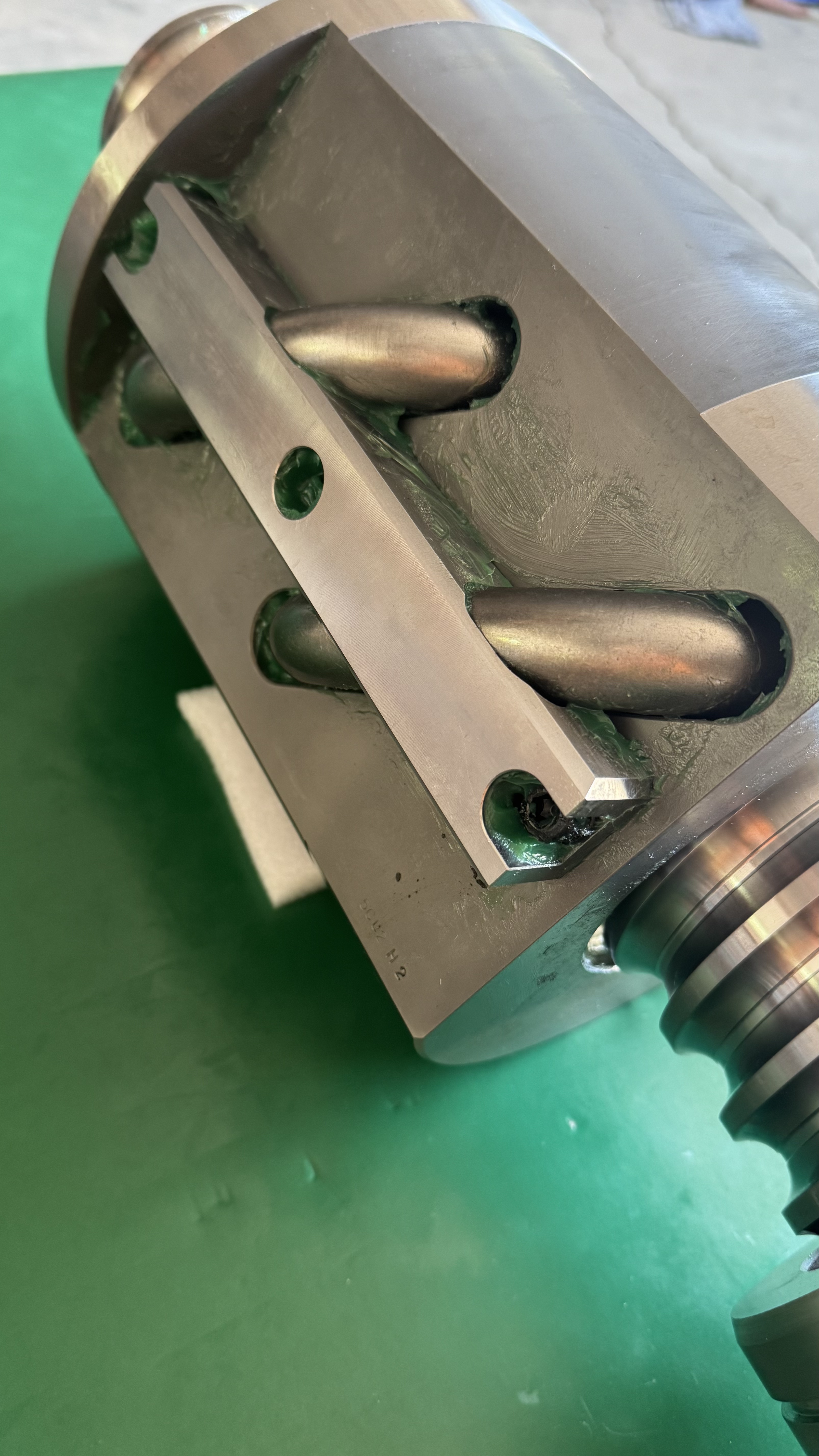
Many plastic factories fall into a vicious cycle: frequent ball screw replacement, continuous abnormal noise, and recurring precision drift. Most manufacturers mistakenly attribute these problems to poor screw quality. However, industry practical data proves that 85% of ball screw premature aging, wear, backlash enlargement and jitter issues stem from substandard installation precision, not material defects.
Electric injection molding machines are high-precision transmission equipment. Even a tiny deviation of 0.02mm in the parallelism and concentricity between the ball screw, linear guide, bearing seat and motor will be magnified drastically under high-frequency reciprocating impact of tens of thousands of cycles daily, eventually leading to premature screw scrapping. This article analyzes four critical installation errors, corresponding production failures, and industry-standard calibration methods for injection machine ball screws.
1. No.1 Cause of Premature Screw Failure: Guide Rail Parallelism Deviation
The ball screw must maintain absolute parallelism with the linear guide rail. Any slight inclination front, rear, left or right will trigger the following problems:
-
Uneven force on the screw nut during operation
-
Overload friction of single-side steel balls
-
Rapid unilateral raceway wear and step formation
-
Increasing operating resistance, high-speed stuttering and severe heat generation
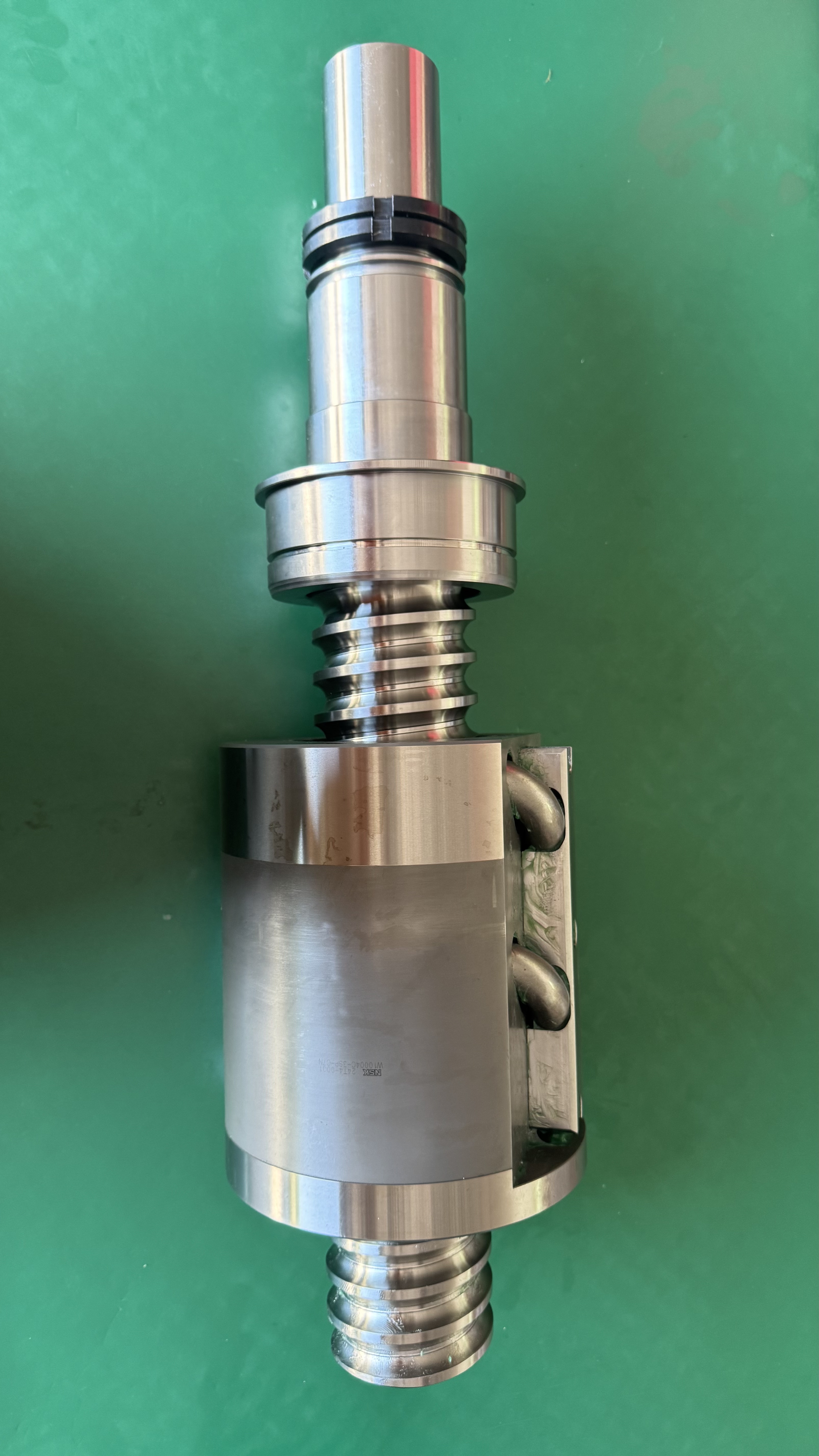
Industry standard tolerance: The overall parallelism error shall not exceed 0.02mm per 1000mm.
Most refurbished, assembled and old injection machines have a common deviation of 0.05–0.1mm, which is the core reason for shortened screw service life.
2. Second Failure Cause: Misaligned Dual-End Bearing Seats (Most Hidden & Harmful)
Misaligned support seats at both ends force the ball screw to operate in a bent state, which is invisible to the naked eye but keeps the screw under long-term bending stress and alternating impact load.
Direct consequences include:
-
Irreversible micro deformation of the screw shaft
-
Unsmooth steel ball circulation and continuous raceway abrasion
-
Obvious reversing clicking noise within 3–6 months of new machine operation
-
Rapid precision attenuation and unstable dimensional consistency of batch products
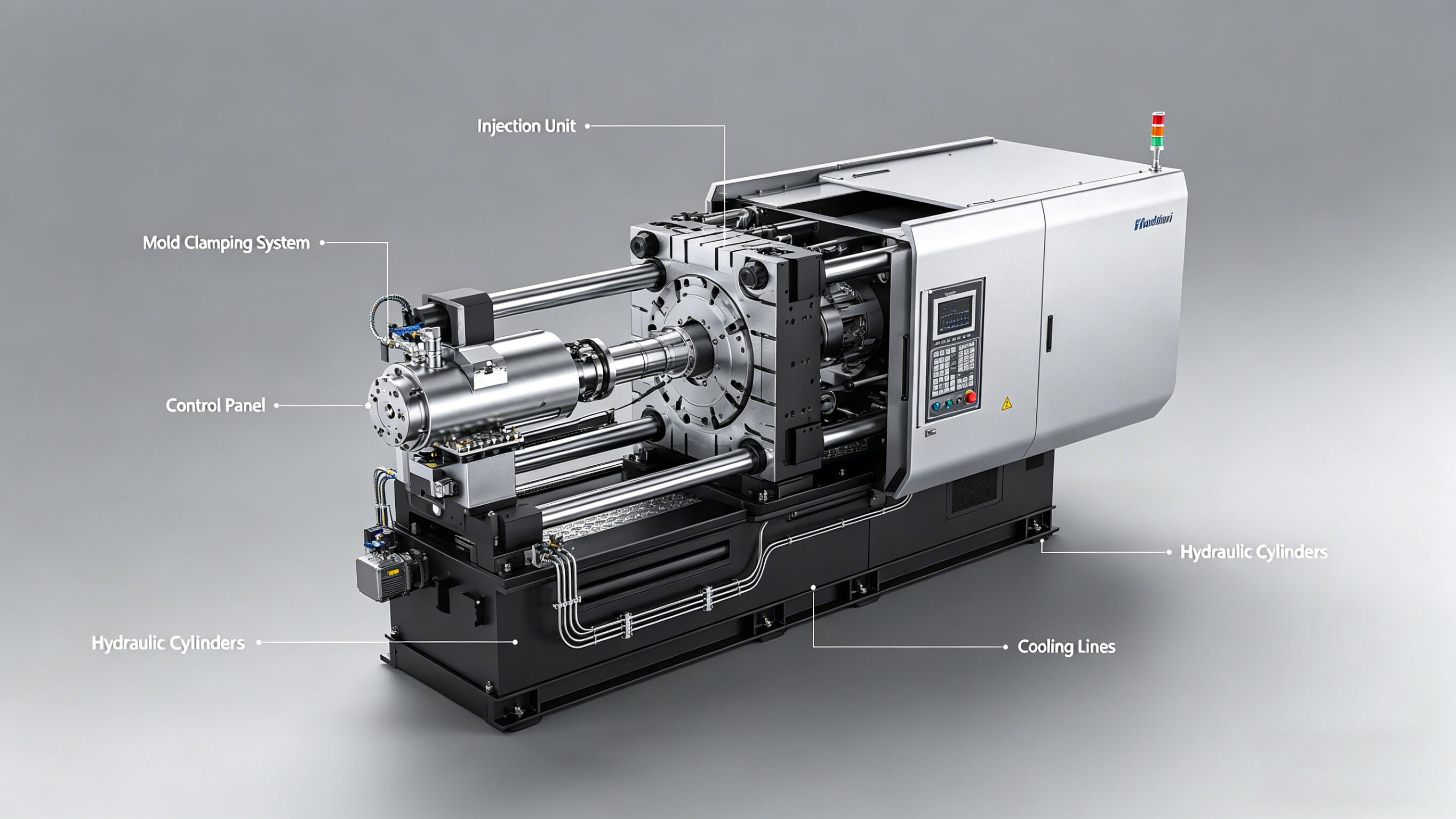
3. Third Failure Cause: Motor Coupling Eccentricity & Improper Preload
Skewed, offset or unevenly preloaded couplings between the motor and ball screw will cause:
-
Radial runout during high-speed rotation
-
Instant impact torque during direction reversal
-
Fatigue peeling of screw thread surface under long-term alternating torque
Most equipment abnormal noises are not caused by damaged screws, but by eccentric screw movement driven by offset couplings.
4. Fourth Failure Cause: Uneven Mounting Base & Stress Locking
Uneven machine base, inconsistent gasket height and incorrect screw locking sequence force the ball screw into distorted installation with residual internal mechanical stress.
Stress release accompanied by thermal deformation during equipment operation leads to:
-
Thermal vibration and inaccurate hot-state positioning
-
Qualified products in cold state but defective in hot state
-
Doubled positioning errors under high-temperature working conditions
5. Standard Installation & Calibration Guidelines for Injection Machine Ball Screws (Factory Practical Version)
-
Parallelism calibration with dial indicator: Full-stroke detection to control screw-guide parallelism within 0.02mm
-
Dual-end bearing seat concentricity correction: Three-point alignment to eliminate eccentric stress
-
Stress-free coupling locking: Diagonal uniform locking to avoid unilateral torque pressure
-
Step-by-step screw locking for stress relief: Pre-locking → running-in → final locking to release assembly residual stress
-
No-load running test: 30-minute high-speed no-load operation to confirm no abnormal noise or overheating before formal production
Conclusion: Ball screw service life depends 70% on installation and 30% on product quality. Screws with the same material and precision can serve over 5 years with standard installation, but may fail in merely half a year with inaccurate assembly. Optimizing installation precision is the most cost-effective way to reduce injection machine maintenance costs.
Table of Contents
- 1. No.1 Cause of Premature Screw Failure: Guide Rail Parallelism Deviation
- 2. Second Failure Cause: Misaligned Dual-End Bearing Seats (Most Hidden & Harmful)
- 3. Third Failure Cause: Motor Coupling Eccentricity & Improper Preload
- 4. Fourth Failure Cause: Uneven Mounting Base & Stress Locking
- 5. Standard Installation & Calibration Guidelines for Injection Machine Ball Screws (Factory Practical Version)