 EN
EN
 AR
AR
 BG
BG
 CS
CS
 DA
DA
 NL
NL
 FI
FI
 FR
FR
 DE
DE
 EL
EL
 HI
HI
 IT
IT
 JA
JA
 KO
KO
 NO
NO
 PL
PL
 PT
PT
 RU
RU
 ES
ES
 SV
SV
 TL
TL
 ID
ID
 UK
UK
 VI
VI
 HU
HU
 TH
TH
 TR
TR
 FA
FA
 AF
AF
 MS
MS
 SW
SW
 GA
GA
 CY
CY
 BE
BE
 KA
KA
 LA
LA
 MY
MY
 TG
TG
 UZ
UZ


As a precision transmission component, ball screws require extremely high installation accuracy. Installation errors directly affect the performance, lifespan, and precision of the equipment.
I. Two Core Installation Errors of Ball Screws
1. Coaxiality Error: Positional deviation occurs between the screw axis and the axis of the nut, motor shaft, or support bearing housing. This typically combines three situations: axis bending, tilting, and offset.
2. Parallelism Error: Deviation occurs between the screw axis and the direction of movement of mating components (such as linear guides or mounting surfaces), directly causing the nut to bear additional radial loads and torques.
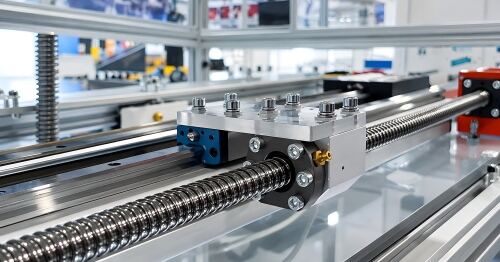
1. Reduced Transmission Accuracy
The biggest advantage of ball screws is their high positioning accuracy. If coaxial deviation or parallelism error occurs during installation, it will lead to deviation in the motion trajectory.
Typical manifestations include: inaccurate positioning, decreased repeatability, increased machining dimensional errors, and motion creep.
2. Increased Operating Noise and Vibration
When the ball screw is not parallel to the guide rail, the balls will be subjected to additional compression and impact during circulation, resulting in abnormal noise and vibration.
Common phenomena: Noticeable abnormal noise at high speeds, fluctuating motor load, equipment resonance, and increased vibration during acceleration and deceleration.
3. Shortened Ball Screw Lifespan
Installation errors can cause localized unbalanced loads between the balls and raceways, leading to uneven stress.
Ultimately, this may result in: accelerated raceway wear, ball shedding, lubrication failure, and abnormal temperature rise.
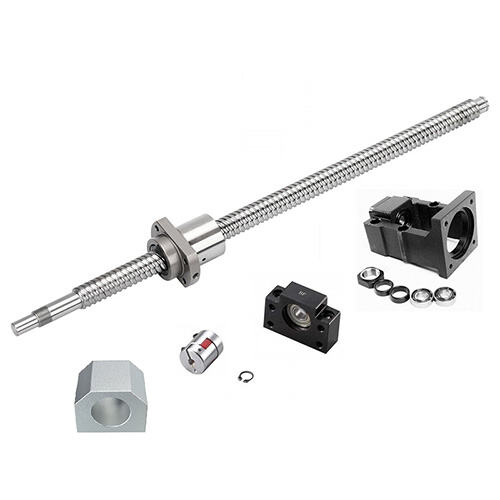
4. Increased Drive Load and Energy Consumption
Installation deviations increase motion resistance, requiring the servo motor to output greater torque to drive the system.
The consequences include:
5. Damage to bearings and couplings
If the lead screw is misaligned, it will transmit additional radial force to the support bearings and couplings.
Long-term operation can easily lead to:
Bearing overheating, coupling fatigue fracture, loose support, and mechanical structural deformation.
III. How to Quickly Determine if Equipment Has Installation Errors
Manual ball screw operation results in inconsistent resistance, not smooth and uniform throughout.
High-speed operation exhibits noticeable vibration and sharp noise.
The nut becomes hot shortly after startup.
The worktable exhibits a slight “pulling” or “offset” sensation during movement.
Frequent seal failures, frequent overheating, and repeated drift in accuracy.
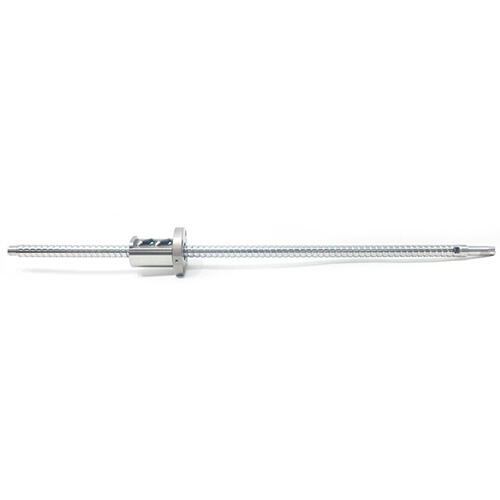
Ball screw installation errors are often the root cause of decreased accuracy, increased noise, and shortened lifespan in many devices. Especially in high-speed, high-precision automated equipment, even minor installation deviations can significantly impact overall machine performance.
“Coaxiality error” is one of the most common problems. Accurately detecting and correcting the ball screw coaxiality is a crucial step in ensuring the long-term stable operation of equipment.