 EN
EN
 AR
AR
 BG
BG
 CS
CS
 DA
DA
 NL
NL
 FI
FI
 FR
FR
 DE
DE
 EL
EL
 HI
HI
 IT
IT
 JA
JA
 KO
KO
 NO
NO
 PL
PL
 PT
PT
 RU
RU
 ES
ES
 SV
SV
 TL
TL
 ID
ID
 UK
UK
 VI
VI
 HU
HU
 TH
TH
 TR
TR
 FA
FA
 AF
AF
 MS
MS
 SW
SW
 GA
GA
 CY
CY
 BE
BE
 KA
KA
 LA
LA
 MY
MY
 TG
TG
 UZ
UZ



Google Description: Planetary screws guide—choose the right type, maintain precision, fix common faults (noise, wear, accuracy loss) for heavy-duty industrial automation & high-precision applications.
In industrial automation, where heavy loads meet tight precision requirements, planetary screws stand out as the “workhorse” of linear motion systems. Unlike standard ball screws, planetary screws leverage a unique multi-roller design to deliver unmatched load capacity, rigidity, and positioning accuracy—making them indispensable for aerospace assembly, heavy机床, medical robotics, and automotive manufacturing. After 10+ years of working with engineers to solve planetary screw challenges, I’ve learned that even the highest-quality screws fail without proper selection, installation, and maintenance. This blog cuts through generic advice to deliver field-tested insights, optimized for Google searches like “planetary screw selection,” “planetary screw maintenance tips,” and “how to fix planetary screw wear.”
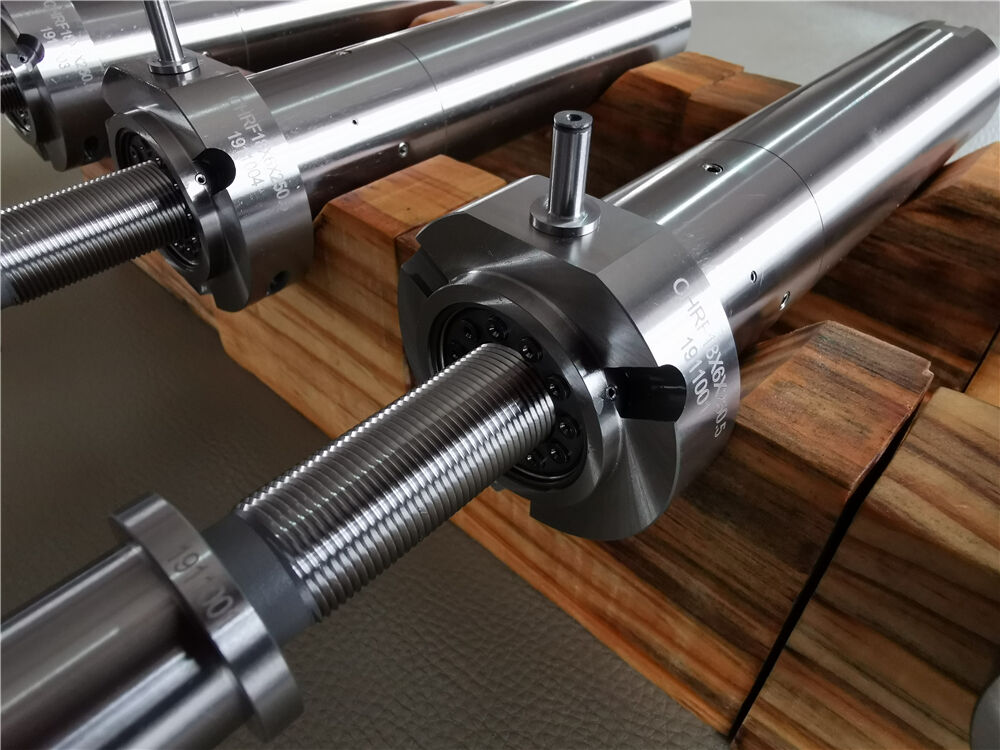
What Are Planetary Screws? How They Differ From Standard Ball Screws
Planetary screws (also called planetary roller screws) are advanced linear motion components designed to convert rotational motion into smooth, precise linear motion. Unlike ball screws, which use a single row of balls to transfer force, planetary screws feature multiple sets of planetary rollers that mesh with both the screw shaft and nut—creating a line-contact design that delivers superior performance in heavy-load, high-precision applications.
The key difference? Planetary screws act as a “heavy-duty upgrade” to ball screws, offering 2-3x the load capacity while maintaining micron-level precision. While ball screws work well for light to medium loads, planetary screws excel in scenarios where standard screws would bend, wear, or fail prematurely. For example, a heavy CNC机床工作台 or an aerospace component assembly arm needs the load-bearing power of planetary screws to maintain accuracy under constant stress.
Core benefits that make planetary screws a top choice (aligned with Google’s most-searched advantages):
-
Superior Load Capacity: Rated for dynamic loads up to 1000kN (far exceeding standard ball screws), thanks to the distributed force of planetary rollers. This makes them ideal for heavy-duty machinery and high-load linear motion tasks.
-
Micron-Level Precision: Maintain positioning accuracy of ±0.001mm to ±0.01mm (depending on grade), with minimal backlash (≤0.003mm) for repeatable performance in high-precision applications like medical robotics and semiconductor manufacturing.
-
Exceptional Rigidity: The line-contact between rollers and the screw shaft reduces deflection under heavy loads, ensuring stability even in high-vibration environments like automotive stamping plants.
-
Long Service Life: Hardened steel construction (HRC 60+) and evenly distributed load reduce wear, allowing planetary screws to last 2-3x longer than ball screws in heavy-duty applications—lowering maintenance costs and downtime.
-
High Efficiency: Retain the rolling friction advantage of ball screws, with a transmission efficiency of 80-90%, supporting medium to high speeds (up to 800rpm) while generating minimal heat.
Types of Planetary Screws: Which Is Right for Your Application?
Not all planetary screws are the same—selecting the right type depends on your load, precision, speed, and environmental requirements. Here’s how to choose, based on real-world applications:
1. Standard Planetary Screws (Roller Type)
The most common type, featuring cylindrical rollers arranged in a planetary pattern. They’re designed for heavy loads (up to 500kN) and high rigidity, making them perfect for:
-
Heavy CNC machine tool tables
-
Automotive stamping and assembly equipment
-
Industrial robotic arms (heavy payloads)
-
Large press machines and material handling systems
Best for general industrial applications where load capacity and rigidity are priorities. Pro tip: Opt for nitride-coated rollers for added wear resistance in dusty or high-vibration environments.
2. Precision Planetary Screws (Ultra-Low Backlash)
Engineered for applications where zero backlash and ultra-precision are critical. These screws use preloaded planetary rollers to eliminate play, maintaining accuracy even after thousands of cycles. Ideal for:
-
Medical robotics (surgical arms, patient positioning)
-
Aerospace component manufacturing and assembly
-
Semiconductor wafer handling equipment
-
High-precision measuring instruments
Note: Precision planetary screws have a slightly lower load capacity than standard models but excel in applications where positioning accuracy is non-negotiable. They typically meet C5-C7 precision grades (±0.02mm-±0.1mm).
3. Corrosion-Resistant Planetary Screws
Made from stainless steel (AISI 440C) or coated with TiAlN PVD, these screws are designed for harsh environments with moisture, chemicals, or saltwater. Perfect for:
-
Marine and offshore automation
-
Food and beverage processing equipment
-
Chemical processing plants
-
Medical equipment requiring sterile environments
Pair them with IP67 or IP69K sealing to prevent debris and moisture from entering the nut assembly—extending service life in corrosive conditions.
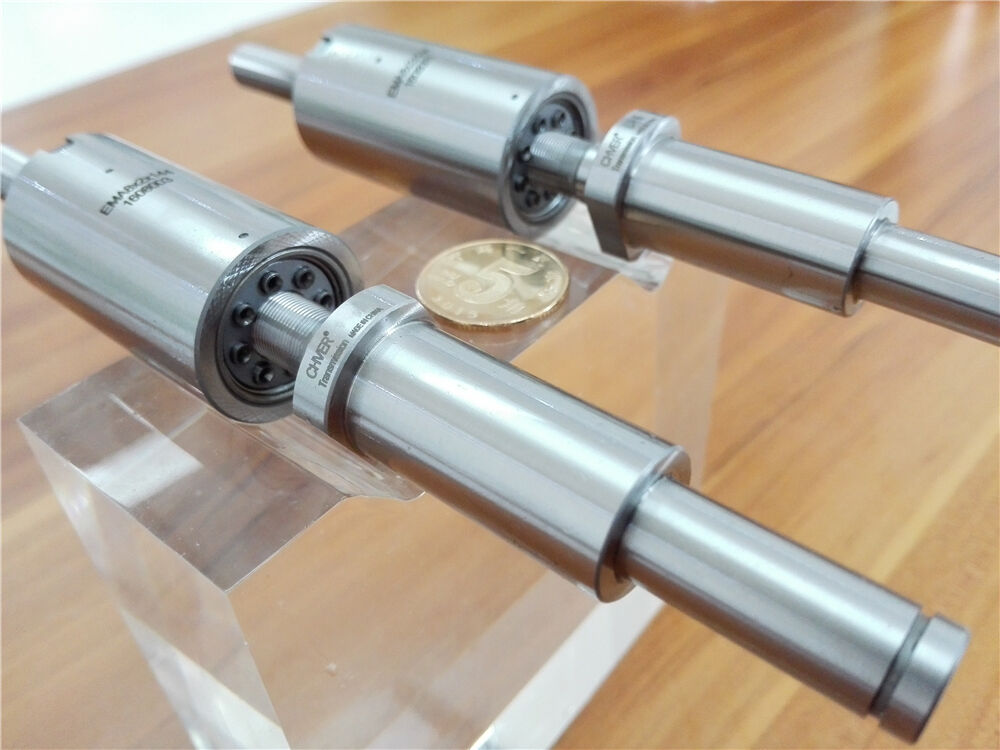
4 Critical Factors for Planetary Screw Selection (Google Search Focus)
Selecting the wrong planetary screw leads to premature failure, costly downtime, and poor performance. These four factors, aligned with top Google searches, will ensure you choose the right model:
1. Load Capacity & Safety Factor
Calculate both dynamic (operating) and static (idle) loads, including axial, radial, and moment loads. Always choose a planetary screw with a safety factor of 1.5-2.0 to account for unexpected load spikes (e.g., shock loads in stamping applications). For example, if your application requires a dynamic load of 300kN, opt for a screw rated for 450kN+ to avoid wear and premature failure. Overloading is the #1 cause of planetary screw damage, especially in heavy-industry settings.
2. Precision Grade & Backlash
Match the precision grade to your application’s tolerance requirements—don’t overbuy (or underbuy) precision:
-
C3-C5 Grade (±0.001mm-±0.005mm): Ultra-precision applications (aerospace, medical robotics).
-
C7-C10 Grade (±0.01mm-±0.05mm): Standard industrial precision (heavy机床, automotive assembly).
Backlash is equally critical: For high-repeatability tasks, choose screws with backlash ≤0.003mm; for general applications, ≤0.01mm is acceptable. Preloaded models eliminate backlash entirely but require careful maintenance to avoid overheating.
3. Environmental Conditions
Harsh environments (dust, moisture, extreme temperatures) degrade planetary screws faster than any other factor. Adapt your selection accordingly:
-
Dusty/Industrial: Carbon steel screws with nitride coating + IP65 scrapers to block debris.
-
Corrosive/Moist: Stainless steel (AISI 440C) + IP67 bellows covers to seal against moisture and chemicals.
-
High-Temperature (Up to 150°C): Alloy steel screws with TiAlN PVD coating + high-temperature synthetic lubricant.
4. Speed & Motion Profile
Planetary screws support speeds up to 800rpm, but high speeds generate heat—especially in preloaded models. For high-speed applications (400rpm+), choose screws with optimized roller design and adequate lubrication to reduce friction. Frequent start-stops require screws with high fatigue strength to avoid roller wear.

Common Planetary Screw Issues & How to Fix Them (Field-Tested Solutions)
Even the best planetary screws experience issues over time—but most can be fixed with simple, targeted steps. Below are the most common problems (aligned with Google searches like “planetary screw noise fix” and “how to resolve planetary screw accuracy loss”) and how to troubleshoot them:
1. Noise (Squeaking, Grinding, or Rattling)
Noise is almost always a sign of insufficient lubrication, misalignment, or debris in the nut assembly—similar to issues seen in planetary reducers. Fix:
-
Check lubrication: Reapply the correct grease (high-temperature synthetic for heavy loads, food-grade for clean environments) to the screw shaft and rollers. Insufficient lubrication causes metal-to-metal contact, leading to noise and wear.
-
Inspect for debris: Disassemble the nut (if possible) and clean the raceway with a manufacturer-recommended solvent. Debris trapped between rollers and the shaft causes grinding noises and premature wear.
-
Check alignment: Misalignment (radial or axial) causes uneven load distribution, leading to noise. Use a laser alignment tool to realign the screw and motor, ensuring parallelism ≤0.01mm/m.
2. Premature Wear (Rollers or Screw Shaft)
Wear typically stems from overloading, poor lubrication, or contaminated environments. Fix:
-
Verify load capacity: If the screw is overloaded, replace it with a higher-rated model (with the correct safety factor).
-
Establish a lubrication schedule: Reapply grease every 500 operating hours (200 hours in dusty environments). Use a grease gun to target the raceway—avoid over-greasing, which traps debris.
-
Replace worn components: If rollers are pitted or the screw shaft is scratched, replace them immediately. Worn rollers damage the raceway, leading to costly full screw replacement.
3. Accuracy Loss (Positioning Drift)
Accuracy loss is common in high-precision applications and is often caused by thermal drift, preload loss, or misalignment—similar to precision issues in planetary reducers. Fix:
-
Thermal compensation: Install a temperature sensor near the screw to adjust positioning based on thermal expansion. This reduces drift by 70% in high-temperature applications.
-
Adjust preload: If preload is lost (common in older screws), tighten the preload nut (per manufacturer specs) to eliminate backlash and restore accuracy.
-
Recalibrate: Use a laser interferometer to recalibrate positioning accuracy every 3 months (or after maintenance).
4. Leakage (Lubricant or Contaminants)
Leakage often occurs in sealed applications and can lead to lubricant loss or contamination—mirroring漏油 issues in planetary reducers. Fix:
-
Inspect seals: Replace worn or damaged seals (O-rings, lip seals) to prevent lubricant leakage and debris entry.
-
Check nut assembly: Ensure the nut is properly sealed and that lubricant levels are within the recommended range (over-filling causes leakage).
-
Clean surrounding area: Keep the screw and nut free of debris to prevent seals from becoming damaged.
Planetary Screw Maintenance Schedule (Field-Proven)
Preventive maintenance is the key to extending planetary screw service life and avoiding costly downtime. Below is a schedule we use with industrial clients:
-
Daily: Wipe down the screw shaft to remove debris; check for noise or unusual vibration during operation.
-
Weekly: Check lubrication levels; test backlash with a dial indicator; inspect seals for damage.
-
Monthly: Clean the raceway (if accessible); reapply grease (if needed); check alignment.
-
Quarterly: Recalibrate positioning accuracy; inspect rollers for wear; check bolt torque on mounting brackets.
-
Annually: Disassemble and inspect the nut assembly; replace worn rollers or seals; verify load capacity.
Conclusion: Maximize Your Planetary Screw Investment
Planetary screws are a significant investment—but one that pays off with superior performance, durability, and precision when selected and maintained properly. By following the field-tested advice in this guide, you’ll avoid common pitfalls, reduce downtime, and get the most out of your planetary screw system. Whether you’re selecting a screw for a heavy机床 or troubleshooting a precision issue in medical robotics, the key is to align the screw’s specs with your application’s unique needs—and prioritize preventive maintenance.
For more personalized advice, send us your application’s load, precision, and environmental requirements—we’ll help you choose the perfect planetary screw for your project.
Table of Contents
- What Are Planetary Screws? How They Differ From Standard Ball Screws
- Types of Planetary Screws: Which Is Right for Your Application?
- 4 Critical Factors for Planetary Screw Selection (Google Search Focus)
- Common Planetary Screw Issues & How to Fix Them (Field-Tested Solutions)
- Planetary Screw Maintenance Schedule (Field-Proven)
- Conclusion: Maximize Your Planetary Screw Investment