 EN
EN
 AR
AR
 BG
BG
 CS
CS
 DA
DA
 NL
NL
 FI
FI
 FR
FR
 DE
DE
 EL
EL
 HI
HI
 IT
IT
 JA
JA
 KO
KO
 NO
NO
 PL
PL
 PT
PT
 RU
RU
 ES
ES
 SV
SV
 TL
TL
 ID
ID
 UK
UK
 VI
VI
 HU
HU
 TH
TH
 TR
TR
 FA
FA
 AF
AF
 MS
MS
 SW
SW
 GA
GA
 CY
CY
 BE
BE
 KA
KA
 LA
LA
 MY
MY
 TG
TG
 UZ
UZ


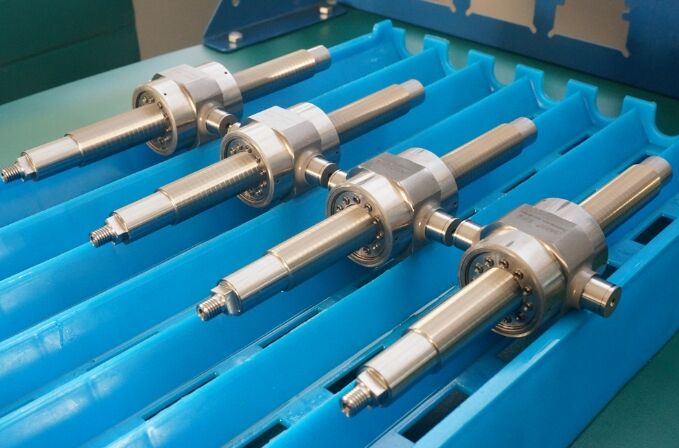
In the world of industrial automation, precision, load capacity, and durability are the cornerstones of reliable performance. As manufacturers push toward smarter, more efficient machinery—from heavy-duty injection molding machines to delicate semiconductor equipment—the demand for linear motion components that can keep up has never been higher. Enter planetary roller screws: a high-performance alternative to traditional ball screws, engineered to deliver superior strength, accuracy, and longevity in even the most demanding applications. But what sets these components apart, and how do they transform industrial systems? In this blog, we’ll break down their design, working principle, key advantages, real-world applications, and how to choose the right one for your project—backed by industry insights and real use cases.
What Are Planetary Roller Screws, and How Do They Work?
At their core, planetary roller screws are precision linear actuators designed to convert rotational motion into smooth, controlled linear motion—similar to ball screws, but with a critical difference in their rolling elements. Unlike ball screws, which use steel balls to transmit force through point contact, planetary roller screws utilize cylindrical, threaded rollers arranged in a planetary configuration around a threaded shaft. These rollers mesh with both the external thread of the screw shaft and the internal thread of the nut, creating multiple lines of contact that distribute load evenly across the component.
The “planetary” design is what makes these screws so effective. As the screw shaft rotates, the rollers orbit around it (like planets around the sun) while also spinning on their own axes. This dual motion eliminates the need for a recirculating mechanism (unlike ball screws) and ensures minimal friction, maximum efficiency, and consistent linear movement. The result is a component that can handle heavier loads, maintain tighter tolerances, and operate more reliably than standard ball screws—even in harsh industrial environments with dust, vibration, or high temperatures.
There are several common types of planetary roller screws, each tailored to specific applications: standard planetary (non-circulating) designs for high load and speed, recirculating roller screws for precision at moderate speeds, and inverted designs for compact installations. Each type leverages the same core principle of roller-based force transmission but with modifications to suit different load, speed, and space requirements.
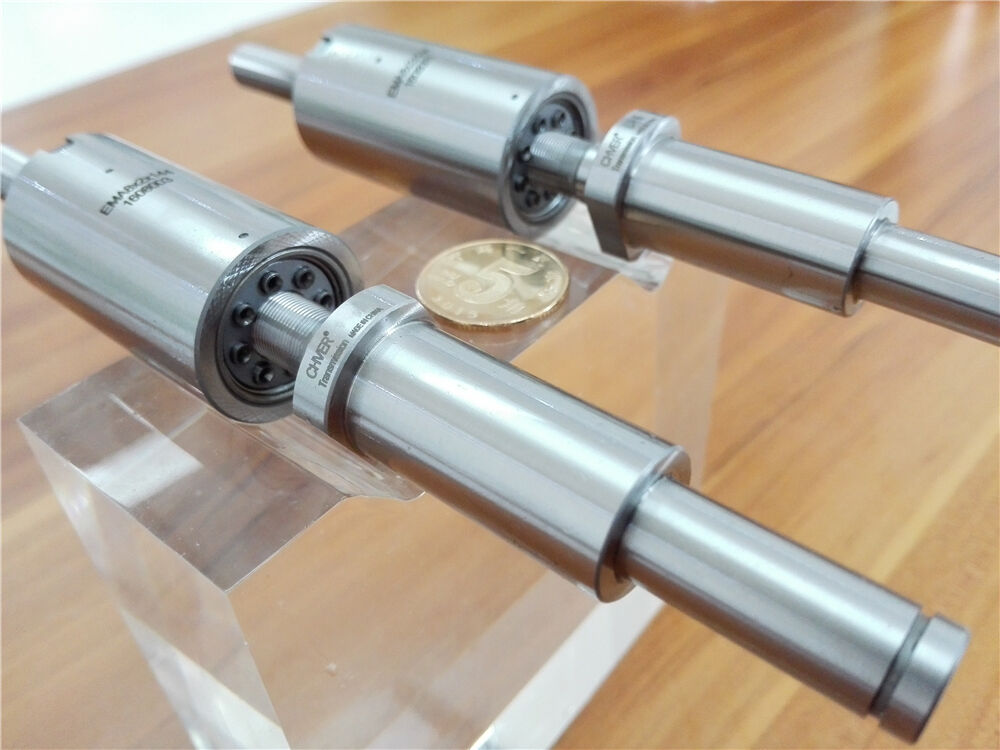
Key Advantages of Planetary Roller Screws Over Ball Screws
For engineers and manufacturers, the decision to switch to planetary roller screws often comes down to their unique performance benefits—many of which are rooted in their structural design. Here’s a detailed look at why these components are becoming the go-to choice for high-demand applications:
1. Higher Load Capacity & Rigidity
The most significant advantage of planetary roller screws is their ability to handle drastically higher loads than ball screws of the same size. Thanks to the line contact between the rollers and the screw/nut (compared to the point contact of ball screws), force is distributed across a larger surface area, reducing stress on individual components. This makes them ideal for heavy-duty applications: standard planetary roller screws can handle dynamic loads up to 222.4 kN (50,000 lbf) and static loads up to 1000 tonnes, far exceeding the capabilities of ball screws of the same diameter. Their high rigidity also minimizes deflection under heavy loads, ensuring consistent precision in applications like hydraulic presses, injection molding machines, and aerospace landing gear.
2. Superior Precision & Repeatability
Precision is non-negotiable in industries like semiconductor manufacturing, robotics, and medical equipment—and planetary roller screws deliver. With tight manufacturing tolerances and minimal backlash (often ≤0.01mm), they offer micron-level positioning accuracy and excellent repeatability. Unlike ball screws, which can experience wear-induced backlash over time, planetary roller screws maintain their precision even after thousands of operating cycles. Some designs even allow for lead sizes as small as 0.5mm, making them ideal for applications requiring ultra-fine positioning, such as wafer handling or surgical robotics.
3. Longer Service Life & Durability
Industrial equipment operates 24/7 in harsh conditions, and component wear can lead to costly downtime. Planetary roller screws are built to withstand these challenges: constructed from hardened steel with precision-ground threads and rollers, they resist wear, corrosion, and shock loads. According to industry data, their service life is 10–15 times longer than that of ball screws, thanks to the even load distribution and reduced friction. This longevity not only lowers maintenance costs but also improves overall system reliability—critical for maximizing productivity in automated production lines.
4. Higher Speed & Acceleration
For high-speed automation applications, planetary roller screws outperform ball screws by a significant margin. Their non-circulating design eliminates the risk of ball jamming, allowing for rotational speeds up to 5000 rpm and linear speeds up to 3124 mm/s (123 in/sec)—nearly twice the speed of standard ball screws. They also handle acceleration up to 3g (and even higher in specialized designs), making them suitable for fast-cycling applications like robotic assembly lines and packaging machinery.
5. Quiet & Efficient Operation
Friction and noise are common pain points in industrial environments, but planetary roller screws operate with minimal friction due to their rolling contact design. This not only improves energy efficiency (with efficiency ratings between 75–90%) but also reduces noise, making them suitable for cleanroom environments, medical devices, and consumer-facing automation systems where quiet operation is essential.
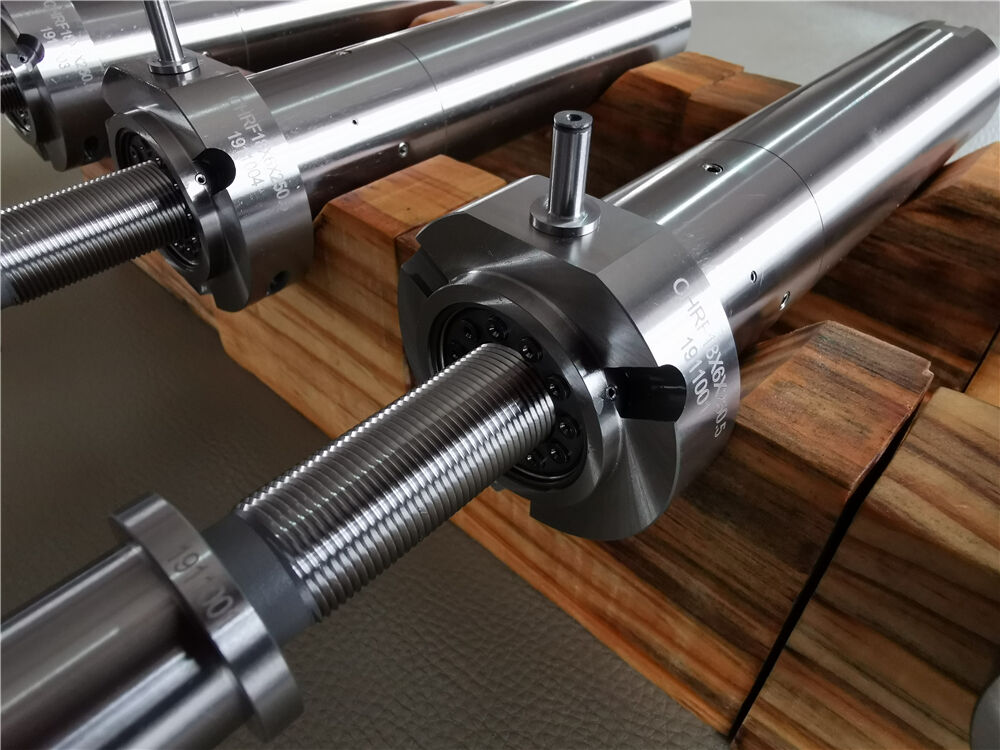
Real-World Applications of Planetary Roller Screws
Planetary roller screws are versatile and widely used across industries that demand high precision, heavy loads, or reliable performance. Here are some of the most common applications, backed by real industry use cases:
Automotive & Electric Vehicles (EVs)
In automotive manufacturing, planetary roller screws are used in robotic arms for welding, painting, and assembly—handling heavy components like engine blocks and body panels with precision. They’re also integral to electric vehicle systems, including steering actuators and battery assembly equipment, where their high load capacity and durability support the demands of EV production. As the global push toward electric vehicles accelerates, the demand for planetary roller screws in this sector is expected to grow significantly.
Aerospace & Defense
Aerospace and defense applications demand components that can withstand extreme conditions—high temperatures, vibration, and heavy loads. Planetary roller screws are used in aircraft landing gear, satellite positioning systems, missile guidance systems, and drone actuators, where reliability and precision are mission-critical. Their ability to operate in hostile environments (including dust, ice, and sand) makes them a preferred choice for defense applications.
Medical Equipment
From surgical robots to diagnostic machines, medical equipment requires ultra-precise, quiet motion. Planetary roller screws are used in devices like MRI scanners, robotic surgical arms, and patient positioning systems, where even the smallest error can have serious consequences. Their compact design and low noise also make them ideal for portable medical equipment, such as mobile ultrasound machines.
Semiconductor & Electronics
Semiconductor manufacturing involves handling delicate wafers and components with micron-level precision. Planetary roller screws are used in wafer handling systems, chip packaging equipment, and PCB assembly lines, ensuring accurate positioning and minimal damage to sensitive components. Their clean design and high precision make them suitable for cleanroom environments, where contamination must be avoided at all costs.
Heavy Machinery & Plastics Manufacturing
In heavy machinery like cranes, excavators, and hydraulic presses, planetary roller screws handle the high loads and repetitive motion required for daily operations. A notable use case is Italian manufacturer BMB S.P.A., a leading producer of injection molding machines, which switched to planetary roller screws to improve lead times and design flexibility for its hybrid and full-electric machines. The screws helped BMB enhance machine performance, reduce cycle times, and meet the demands of high-volume plastics production.
How to Choose the Right Planetary Roller Screw for Your Application
Selecting the right planetary roller screw depends on several key factors, including load capacity, speed, precision requirements, and environmental conditions. Here’s a step-by-step guide to help you make the right choice—backed by technical best practices:
-
Calculate Load Requirements: Determine the maximum dynamic and static loads your application requires. Choose a screw that can handle 1.2–1.5 times the dynamic load to ensure safety and durability. You can use technical formulas to verify the screw’s lifespan based on dynamic load: actual life (in revolutions) = (dynamic capacity / application dynamic load)³·³³ × 10⁴.
-
Define Precision & Backlash: For high-precision applications (like semiconductor manufacturing), opt for a screw with minimal backlash (≤0.01mm) and tight tolerances. For applications where precision is less critical (like heavy machinery), a standard backlash design may be sufficient.
-
Consider Speed & Acceleration: Calculate the required linear speed and rotational speed (rotational speed = linear speed / screw lead). Ensure the screw’s maximum speed and acceleration ratings meet or exceed your application’s needs—some designs can handle rotational speeds over 3000 rpm and accelerations over 12,000 rad/sec².
-
Evaluate Environmental Conditions: If your application operates in dusty, wet, or high-temperature environments, choose a screw with protective seals and corrosion-resistant materials (such as stainless steel). This will prevent contamination and extend the component’s service life.
-
Check Installation & Configuration: Consider the available space and mounting requirements. Planetary roller screws are available in various configurations (cylindrical, flanged, preloaded) and configurable stroke lengths, making them easy to integrate into existing systems. Some manufacturers also offer custom screw ends to match OEM specifications.

The Future of Planetary Roller Screws: Market Trends & Innovations
The global planetary roller screw market is growing rapidly, driven by the rise of industrial automation, Industry 4.0, and the expansion of sectors like aerospace, EVs, and semiconductor manufacturing. Valued at approximately USD 2.4 billion in 2023, the market is projected to reach USD 4.1 billion by 2032, with a compound annual growth rate (CAGR) of 6.2%. Key trends shaping the market include:
-
Technological advancements in manufacturing processes, leading to more compact, efficient, and cost-effective designs.
-
Increased demand for custom solutions to meet the unique needs of specialized applications (e.g., aerospace, medical).
-
Growing adoption of planetary roller screws in electric vehicles, as manufacturers seek to improve actuator performance and reliability.
-
Integration of smart sensors to monitor screw performance, enabling predictive maintenance and reducing downtime.
Final Thoughts: Why Planetary Roller Screws Are Essential for Modern Automation
As industrial automation becomes more advanced, the demand for high-performance linear motion components will only continue to grow. Planetary roller screws offer a unique combination of load capacity, precision, speed, and durability that makes them indispensable for the most demanding applications—from heavy-duty machinery to delicate medical devices. Whether you’re designing a new piece of equipment or upgrading an existing system, choosing the right planetary roller screw can improve performance, reduce maintenance costs, and increase productivity.
At YOSO, we specialize in manufacturing high-quality planetary roller screws tailored to your specific needs. Our screws are engineered with strict quality control standards, using premium hardened steel and precision machining to ensure consistent performance and reliability. We offer a range of configurations—including standard, recirculating, and custom designs—to meet the unique requirements of your application. If you’re ready to take your industrial automation system to the next level, contact our team today to learn more about how our planetary roller screws can benefit your business.
Table of Contents
- What Are Planetary Roller Screws, and How Do They Work?
- Key Advantages of Planetary Roller Screws Over Ball Screws
- Real-World Applications of Planetary Roller Screws
- How to Choose the Right Planetary Roller Screw for Your Application
- The Future of Planetary Roller Screws: Market Trends & Innovations
- Final Thoughts: Why Planetary Roller Screws Are Essential for Modern Automation