 EN
EN
 AR
AR
 BG
BG
 CS
CS
 DA
DA
 NL
NL
 FI
FI
 FR
FR
 DE
DE
 EL
EL
 HI
HI
 IT
IT
 JA
JA
 KO
KO
 NO
NO
 PL
PL
 PT
PT
 RU
RU
 ES
ES
 SV
SV
 TL
TL
 ID
ID
 UK
UK
 VI
VI
 HU
HU
 TH
TH
 TR
TR
 FA
FA
 AF
AF
 MS
MS
 SW
SW
 GA
GA
 CY
CY
 BE
BE
 KA
KA
 LA
LA
 MY
MY
 TG
TG
 UZ
UZ


In the world of industrial automation, not all linear motion components are created equal. For applications that demand extreme load capacity, uncompromising precision, and long-term reliability—where ball screws fall short—planetary roller screws stand as the industry’s gold standard. These precision-engineered components are designed to tackle the most rigorous workflows, from heavy machinery actuation to life-saving medical robotics, delivering performance that keeps critical operations running smoothly. This blog breaks down what planetary roller screws are, why they outperform traditional alternatives, their real-world applications, and how to choose the right one for your project—all tailored to help you make informed decisions for your automation needs.
What Are Planetary Roller Screws & How Do They Work?
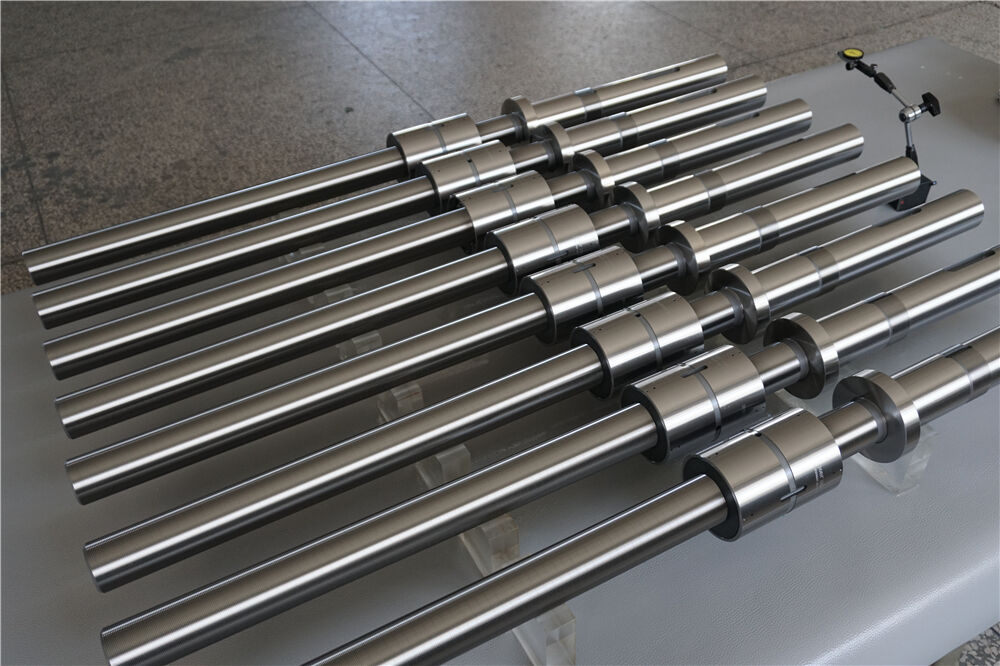
At their core, planetary roller screws are linear motion actuators that convert rotary motion into precise linear movement—but their design sets them apart from standard ball screws. Unlike ball screws, which use steel balls to create point contact between the screw shaft and nut, industrial planetary roller screws feature multiple threaded rollers that orbit the screw shaft in a planetary pattern. These rollers mesh with both the external thread of the screw and the internal thread of the nut, creating line contact across the entire engagement surface.
This line contact design is the secret to their superior performance: it distributes load evenly, eliminates localized stress points, and delivers unmatched rigidity. Without the ball recirculation mechanism that limits ball screws, planetary roller screws can operate at higher speeds, faster acceleration, and with smoother motion—making them ideal for mission-critical applications where every micron and every cycle counts.

Why Planetary Roller Screws Outperform Ball Screws & Traditional Solutions
Ball screws have long been a staple for general precision tasks, but they struggle to keep up in high-load, high-cycle, or extreme-environment applications.high-precision planetary roller screws solve these pain points by offering advantages that directly translate to better efficiency, less downtime, and higher product quality:
1. Exceptional Load Capacity & Rigidity
Thanks to line contact, planetary roller screws can handle 3–5 times the static and dynamic load of ball screws of the same size. This makes them perfect for heavy-duty applications like injection molding machines, metal stamping presses, and wind turbine pitch control—where rigidity under load is non-negotiable. They minimize deflection, ensuring consistent performance even under the most demanding conditions.
2. Extended Service Life & Reduced Maintenance
By distributing stress evenly, planetary roller screws experience less wear and tear, resulting in a service life up to 15 times longer than ball screws (per Hertzian contact theory). This reduces unplanned downtime and maintenance costs—critical for industrial operations where every minute of downtime impacts productivity. Unlike ball screws, which often require full replacement when worn, only the rollers need to be replaced on planetary models, further cutting maintenance expenses.
3. Superior Precision & Consistency
Planetary roller screws maintain micron-level precision (grades KL5 to KL10) over millions of cycles, outperforming ball screws that lose accuracy as balls and races wear. This consistency is vital for applications like semiconductor manufacturing, surgical robotics, and CNC machining—where even the smallest deviation can ruin a part or compromise safety.
4. High Speed & Acceleration Without Limits
Free from the DN value constraints of ball recirculation systems, planetary roller screws can reach rotational speeds up to 5000 rpm and linear speeds of 2000mm/s, with accelerations up to 3g. This makes them ideal for high-volume production lines, where speed and precision must work hand in hand.
Real-World Applications: Where Planetary Roller Screws Excel
Planetary roller screws are not just a “better” option—they’re indispensable in industries where performance directly impacts safety, compliance, and profitability. Here are their most impactful use cases:
1. Heavy Machinery & Industrial Automation
In injection molding machines, planetary roller screws for heavy machinery power mold clamping systems, eliminating hydraulic leakage risks while maintaining precise pressure. In metal stamping and CNC machines, they deliver rapid, repeatable motion, reducing defects and boosting production efficiency by up to 40% compared to ball screw-equipped systems.
2. Medical Devices & Surgical Robotics
Precision and sterility are non-negotiable in healthcare, and planetary roller screws deliver both. In surgical robots, they enable ultra-fine, quiet movement (below 55dB) of instruments, with repeat positioning accuracy down to ±0.005mm—supporting minimally invasive procedures. Their sealed designs prevent contamination, making them ideal for MRI scanners and drug delivery systems.
3. Aerospace & Defense
Extreme environments demand extreme reliability, and planetary roller screws are trusted in aircraft, spacecraft, and military systems. They control aircraft flap and landing gear actuation, withstanding extreme temperatures (-50°C to 120°C) and vibration. In missile guidance systems, their shock resistance ensures precise positioning even under explosive launch forces.
4. Automotive & New Energy
The shift to electric vehicles (EVs) and renewable energy has amplified demand for planetary roller screws for EVs. They power EV electronic brakes and active suspensions, delivering faster response times than hydraulic alternatives. For wind turbines, they adjust blade pitch to optimize energy capture, withstanding outdoor elements for 20+ years and reducing maintenance costs.
5. Semiconductor & Electronics
Semiconductor manufacturing requires sub-micron precision in cleanrooms. Planetary roller screws drive wafer handling and lithography machine stages, with low particle emission and cleanroom compatibility—ensuring no contamination of delicate microchips.
How to Choose the Right Planetary Roller Screw for Your Project
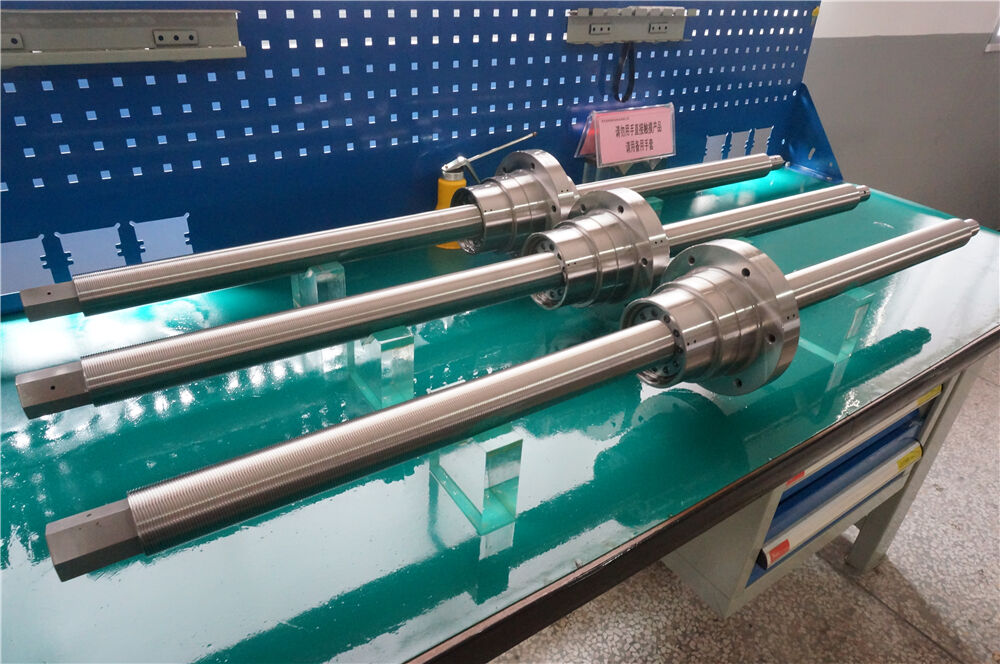
Selecting the right planetary roller screw comes down to matching its specifications to your application’s unique needs. Focus on these four key factors:
-
Load Requirements: Calculate maximum static/dynamic loads and operating cycles. Opt for heavy-duty rollers with nitrided surfaces for high-cycle applications.
-
Precision Grade: Choose KL5 for ultra-precision (e.g., robotics), KL7 for standard heavy load (e.g., injection molding), and KL10 for general use.
-
Environmental Conditions: Use 316 stainless steel for harsh or sterile environments; sealed nuts for cleanrooms.
-
Installation & Maintenance: Consider space constraints (miniature models for tight enclosures) and access for maintenance—self-lubricating options reduce service needs.
Conclusion: Planetary Roller Screws = Long-Term Value for Critical Automation
Planetary roller screws are more than just a linear motion component—they’re an investment in the reliability and performance of your automation systems. For applications where ball screws can’t keep up, they eliminate downtime, reduce defects, and ensure consistent, high-quality results.
Whether you’re designing a surgical robot, scaling an EV production line, or upgrading heavy machinery, planetary roller screws deliver the performance you need to stay competitive. By choosing the right model for your application, you’ll unlock smoother, more efficient operations that stand the test of time.
Have questions about which planetary roller screw fits your project? Share your load, precision, and environmental needs, and our team will provide a customized recommendation.
Table of Contents
- What Are Planetary Roller Screws & How Do They Work?
- Why Planetary Roller Screws Outperform Ball Screws & Traditional Solutions
- Real-World Applications: Where Planetary Roller Screws Excel
- How to Choose the Right Planetary Roller Screw for Your Project
- Conclusion: Planetary Roller Screws = Long-Term Value for Critical Automation