EN
EN
 AR
AR
 BG
BG
 CS
CS
 DA
DA
 NL
NL
 FI
FI
 FR
FR
 DE
DE
 EL
EL
 HI
HI
 IT
IT
 JA
JA
 KO
KO
 NO
NO
 PL
PL
 PT
PT
 RU
RU
 ES
ES
 SV
SV
 TL
TL
 ID
ID
 UK
UK
 VI
VI
 HU
HU
 TH
TH
 TR
TR
 FA
FA
 AF
AF
 MS
MS
 SW
SW
 GA
GA
 CY
CY
 BE
BE
 KA
KA
 LA
LA
 MY
MY
 TG
TG
 UZ
UZ


Collaborative robots (cobots) greatly boost flexible manufacturing, but their fixed working envelope limits multi-station industrial automation operations. Adding a 7th axis linear guide travel base extends the cobot’s working reach, letting one collaborative robot serve multiple CNC machines, injection molding presses and automated assembly stations. At the heart of this robot moving platform is the industrial linear guide rail system, which directly determines mechanical rigidity, positioning repeatability and long-term equipment uptime.
The heavy duty linear guide bears complex combined loads: static weight of the cobot, gripper and workpiece, plus dynamic overturning moments during acceleration, deceleration and pick-and-place automation tasks. Poorly selected linear guide rails will cause vibration, positioning deviation and premature wear under continuous cyclic industrial operation.
Core Requirements for Linear Guides on Cobot 7th Axis System
1. High moment load capacity Cobot arms generate large tilting moments when fully extended. Wide profile linear guide blocks and rails with 4-way equal load design are ideal, resisting pitch, yaw and roll moments. Even with offset payloads, the precision linear guide maintains stable linear movement without mechanical deflection.
2. Precision grade & preload performance For industrial machine tending, typical positioning repeatability requirements range from ±0.01 mm to ±0.05 mm. Preloaded linear guide rails eliminate internal backlash and improve motion stability. C3 / C5 precision grades are widely used for high-accuracy cobot linear transfer systems. Light preload suits low-vibration long-stroke linear motion; medium preload is recommended for heavy payload robot base linear guide applications.
3. Rigidity and vibration suppression During high-speed linear movement or sudden stop, rigid industrial linear guide assemblies effectively dampen vibration. This protects matching ball screw and servo motor components, preserving long-term positioning accuracy for years of 24/7 industrial production.
4. Industrial environmental protection Workshops such as injection molding and metal cutting produce dust, plastic debris and coolant mist. Linear guide rails equipped with scrapers, dust covers and grease fittings prevent contamination, reducing maintenance frequency and extending the service life of linear motion components.
Practical Application: Injection Molding Machine Tending Workstation
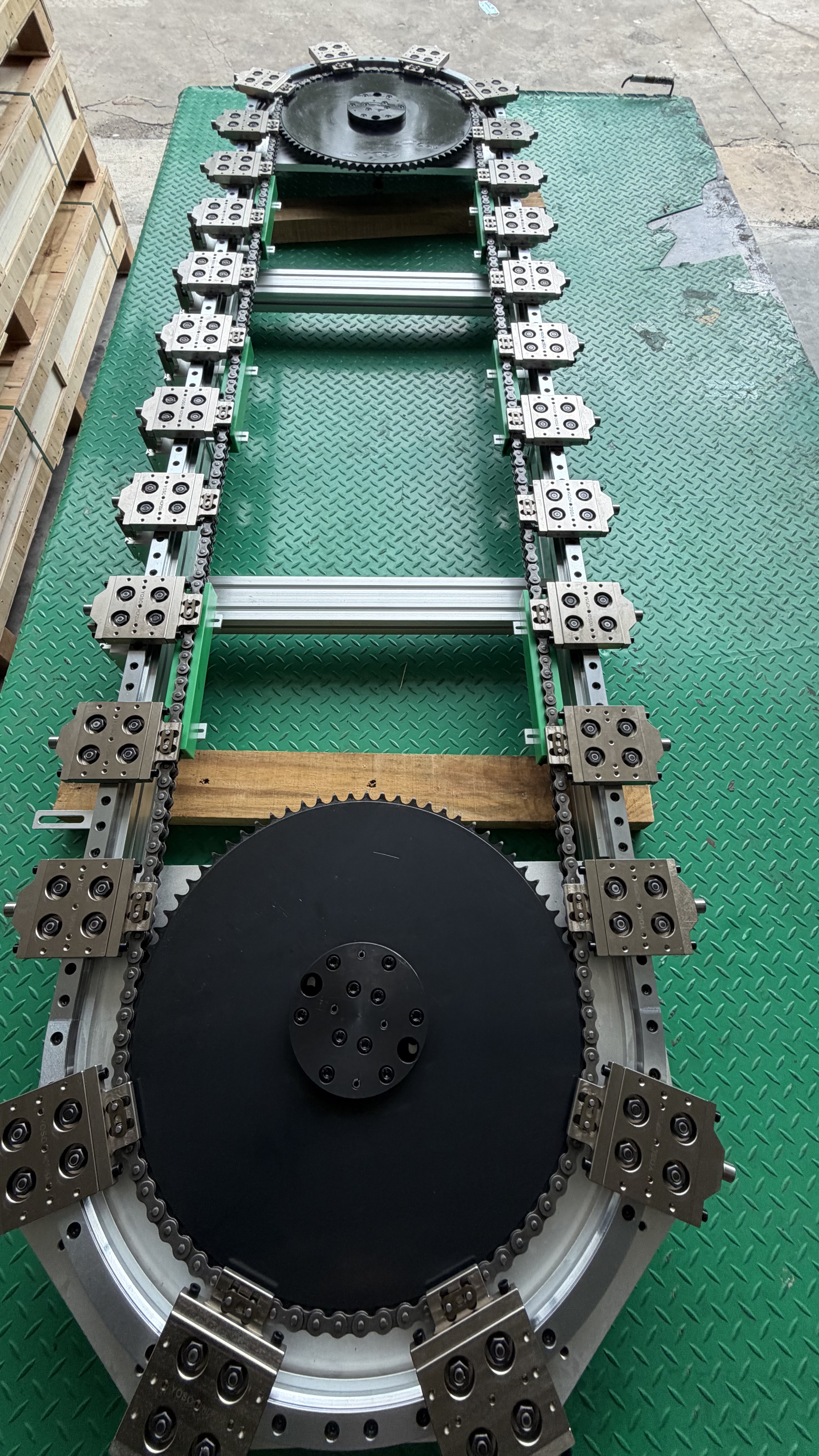
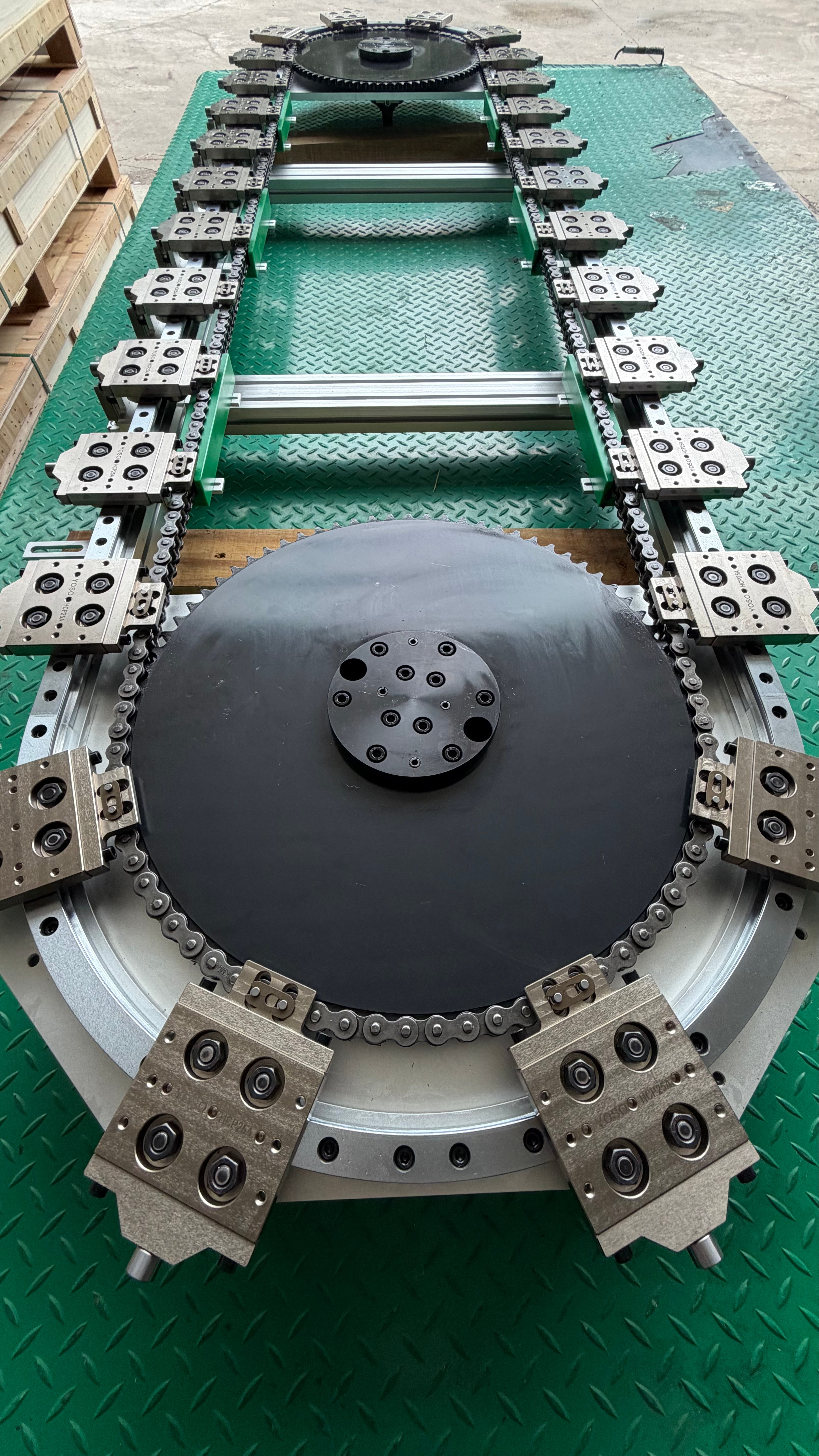
As shown in our automation workstation, heavy-duty linear guide rails support the rotary platform and collaborative robot. Driven by precision ball screw, the whole linear motion assembly slides smoothly between multiple molding machines. Instead of deploying separate cobots for each press, this 7th axis linear guide solution cuts hardware investment and saves factory floor space significantly.
Thelinear guide system adopts a modular structure. Automation integrators can customize stroke length, mount orientation and protective cover kits according to actual site layout. YOSO linear guide rails and blocks are fully interchangeable, shortening project lead time and simplifying industrial spare part management.
Summary
Linear guide rails are not just simple sliding parts for a cobot 7th axis. They are the core foundation of system stability and precision motion performance. Always calculate composite moment loads before linear guide selection, match precision grade and preload to your industrial automation task. Properindustrial linear guide choice reduces equipment downtime and maximizes the ROI of your collaborative robot automation cell.