EN
 AR
 BG
 CS
 DA
 NL
 FI
 FR
 DE
 EL
 HI
 IT
 JA
 KO
 NO
 PL
 PT
 RU
 ES
 SV
 TL
 ID
 UK
 VI
 HU
 TH
 TR
 FA
 AF
 MS
 SW
 GA
 CY
 BE
 KA
 LA
 MY
 TG
 UZ


Aluminium extrusion is one of the harshest operating environments for linear motion components. Fine aluminium swarf, fluctuating operating temperatures, cyclic shock loads and near-continuous duty cycles combine to accelerate wear on rails, carriages and sealing systems. Many plant engineers default to familiar brand specifications without matching guide features to the actual conditions on the handling gantry, leading to premature failure, unplanned stops and inconsistent cut-to-length accuracy.
Extrusion gantries perform multiple sequential tasks: pulling profiles from the runout table, transferring workpieces to the saw station, clamping during cutting, and stacking finished sections. These cycles impose a mix of radial load, moment load and intermittent impact, rather than steady static loading. A guide sized only for static load capacity will often underperform in real service. It is important to calculate the equivalent dynamic load based on the actual motion cycle, travel speed and number of direction reversals, then apply a service factor that accounts for dust and vibration.
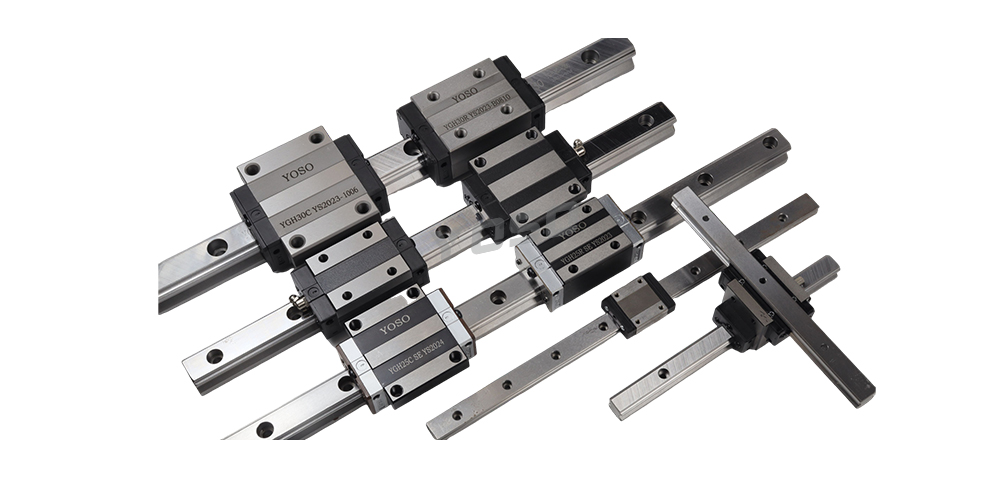
Sealing deserves close attention in this application. Standard end seals alone rarely block fine aluminium powder. Combined sealing packages – including inner seals, scraper plates and optional bellows covers – reduce contaminant ingress. Powder trapped inside the carriage acts as an abrasive compound, scoring raceways and rolling elements. The damage progresses quietly at first, showing up as gradual loss of positioning repeatability long before obvious noise appears.
Preload class is another common point of misselection. Light preload suits low-friction, high-speed transfer where minor backlash is acceptable. Medium preload is preferred for saw gantries and clamping axes, where rigidity directly controls cutting tolerance. Over-specifying heavy preload increases running torque, heat generation and lubricant consumption, shortening service life unnecessarily.
Thermal expansion should not be overlooked. Long travel gantries experience temperature drift as production runs extend. Rails mounted with fixed-free support arrangements help compensate for thermal growth. Lubrication intervals also need adjustment: dust laden environments contaminate grease faster, so extending relubrication cycles according to the datasheet defaults is risky.
A properly specified linear guide system does not eliminate maintenance, but it shifts work from emergency breakdown repair to scheduled inspection. For extrusion lines targeting consistent throughput and tight dimensional control, matching guide hardware to the site’s load, dust and thermal profile delivers a more reliable return than simply upgrading to a higher nominal load rating.