 EN
EN
 AR
AR
 BG
BG
 CS
CS
 DA
DA
 NL
NL
 FI
FI
 FR
FR
 DE
DE
 EL
EL
 HI
HI
 IT
IT
 JA
JA
 KO
KO
 NO
NO
 PL
PL
 PT
PT
 RU
RU
 ES
ES
 SV
SV
 TL
TL
 ID
ID
 UK
UK
 VI
VI
 HU
HU
 TH
TH
 TR
TR
 FA
FA
 AF
AF
 MS
MS
 SW
SW
 GA
GA
 CY
CY
 BE
BE
 KA
KA
 LA
LA
 MY
MY
 TG
TG
 UZ
UZ


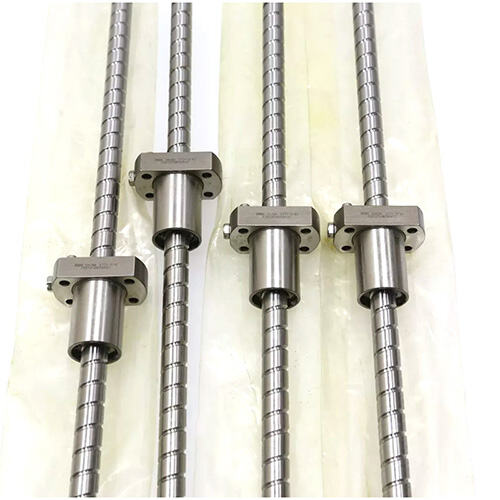
Ball screws are the core transmission components of industrial automation equipment, widely used in CNC machines, linear modules, robotic arms, and precision transmission systems. For automation manufacturers, procurement teams, and engineers, selecting the right ball screw and maintaining it properly is crucial to ensuring equipment precision, reducing downtime, and controlling operation costs. However, many enterprises face challenges such as inaccurate model selection, rapid wear, poor stability, and high maintenance costs when using ball screws. This blog provides a practical guide to ball screw selection, installation, maintenance, and common problem solving, helping you maximize the performance and service life of ball screws.
Key Factors for Ball Screw Selection (Avoid Common Mistakes)
Selecting the right ball screw requires comprehensive consideration of working conditions, load requirements, precision needs, and environmental factors. Below are the core selection factors and common mistakes to avoid, helping you select the most suitable product in one step.
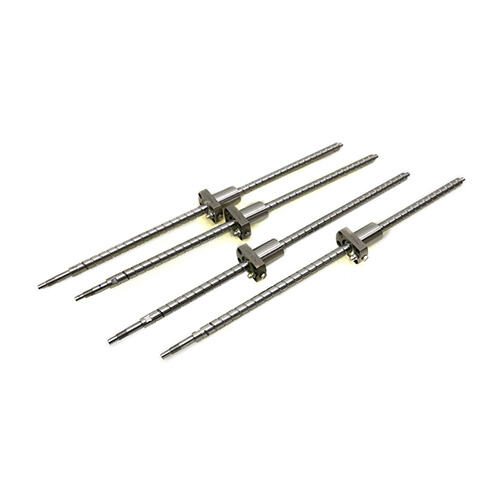
1. Load Capacity: Match Dynamic & Static Loads Accurately
The load-bearing capacity of ball screws is mainly reflected in dynamic load (Cr) and static load (C0r). Dynamic load refers to the maximum load that the ball screw can bear during continuous operation without fatigue damage; static load refers to the maximum load that can be borne without permanent deformation when the ball screw is stationary.
-
Calculate actual load: According to the equipment’s working conditions, clarify the radial load, axial load, and overturning moment borne by the ball screw. It is recommended to reserve 20%-30% of the load margin to avoid overload operation, which will lead to rapid wear and shortened service life.
-
Avoid mistake: Blindly pursuing large load capacity, resulting in increased cost and reduced motion efficiency; or selecting a ball screw with insufficient load capacity, leading to premature failure.
2. Precision Grade: Match with Equipment Requirements
Ball screw precision grades are usually divided into C0-C5 (common grades) and C7-C10 (general precision grades), which directly affect the positioning accuracy and repeat positioning accuracy of the equipment. Different application scenarios have different precision requirements:
-
High-precision scenarios (such as CNC machining centers, precision measuring instruments): Choose C1-C3 grade ball screws to ensure positioning accuracy within ±0.005mm.
-
General automation scenarios (such as packaging equipment, conveying lines): C5-C7 grade ball screws can meet the requirements, balancing cost and performance.
Tip: Do not blindly pursue high precision, which will greatly increase costs; choosing a precision grade that is too low will affect product quality.
3. Lead Selection: Balance Speed & Precision
The lead of a ball screw refers to the distance that the nut moves linearly when the screw rotates one full turn. The selection of lead is closely related to the motion speed and precision of the equipment:
-
High-speed scenarios (such as rapid feeding equipment): Choose a ball screw with a larger lead (10mm-20mm) to achieve higher linear speed without increasing the rotation speed of the motor.
-
High-precision scenarios (such as precision positioning equipment): Choose a ball screw with a smaller lead (2mm-5mm) to improve positioning accuracy and repeatability.
4. Material & Surface Treatment: Adapt to Working Environment
The material and surface treatment of ball screws determine their wear resistance, corrosion resistance, and service life. The common materials and surface treatments are as follows:
-
Material: High-carbon chromium bearing steel (100Cr6/SUJ2) is widely used, with high hardness (HRC58-62) and excellent wear resistance. For corrosive environments (such as food processing, chemical industry), choose stainless steel ball screws.
-
Surface treatment: Nitriding treatment can improve the surface hardness and wear resistance; chrome plating treatment can enhance corrosion resistance; black oxide treatment is suitable for general industrial environments.
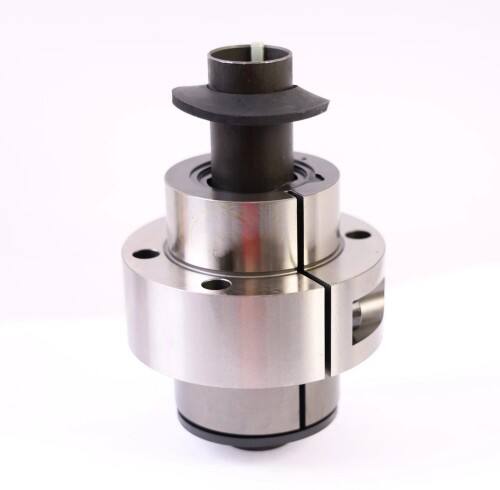
Common Problems of Ball Screws & Practical Solutions
Even if the right ball screw is selected, problems such as noise, vibration, positioning deviation, and oil leakage may occur during use. Below are common problems, causes, and solutions to help you quickly troubleshoot and solve problems.
1. Problem: Abnormal Noise During Operation
Causes: Lack of lubrication, foreign objects (dust, chips) entering the raceway, uneven wear of balls or raceway, loose installation.
Solutions: Add appropriate lubricating oil/grease (choose according to working temperature and speed); clean the raceway to remove foreign objects; check the wear of balls and raceway, replace damaged parts; re-tighten the installation bolts to ensure stable installation.
2. Problem: Positioning Deviation or Inaccuracy
Causes: Precision grade does not match, lead error, loose installation, motor synchronization problem, wear of ball screw.
Solutions: Replace the ball screw with the appropriate precision grade; check and adjust the lead error; re-install and fix the ball screw to ensure no looseness; check the motor synchronization and adjust parameters; replace worn ball screws.
3. Problem: Oil Leakage
Causes: Excessive lubrication, damaged oil seal, improper installation of oil seal.
Solutions: Reduce the amount of lubricating oil/grease to the appropriate level; replace the damaged oil seal; re-install the oil seal to ensure a tight fit.
4. Problem: Rapid Wear
Causes: Overload operation, lack of lubrication, harsh working environment (dust, corrosion), poor material or surface treatment.
Solutions: Adjust the load to avoid overload; regularly add lubricating oil/grease; install dust covers to protect the ball screw from dust and corrosion; choose ball screws with high-quality materials and surface treatment.
Ball Screw Maintenance Tips: Extend Service Life by 50%
Regular maintenance is the key to extending the service life of ball screws. Below is a simple and practical maintenance plan suitable for most industrial scenarios:
-
Daily maintenance: Clean the surface of the ball screw with a clean cloth to remove dust and debris; check the lubrication status and add lubricating oil/grease if necessary.
-
Weekly maintenance: Check the installation tightness of the ball screw and motor connection; check the operation status (noise, vibration, temperature) and record abnormalities.
-
Monthly maintenance: Disassemble and clean the raceway; replace the lubricating oil/grease; check the wear of balls, raceway, and oil seal; adjust the positioning accuracy if necessary.
-
Quarterly maintenance: Conduct a comprehensive inspection of the ball screw, including lead error, precision, and load-bearing capacity; replace worn parts in a timely manner.
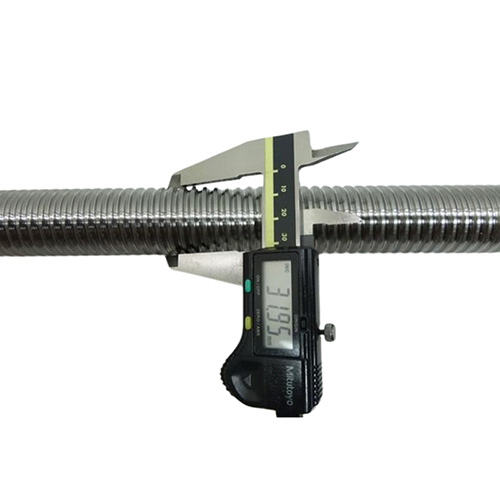
Conclusion: Choose the Right Ball Screw, Improve Automation Efficiency
As the core transmission component of industrial automation equipment, the performance of ball screws directly affects the stability, precision, and efficiency of the production line. By mastering the key selection factors, avoiding common mistakes, solving problems in a timely manner, and doing a good job in regular maintenance, you can maximize the performance and service life of ball screws, reduce operation costs, and avoid costly downtime.
If you are facing ball screw selection, customization, or maintenance problems, or need a one-stop ball screw solution for your specific industry scenario (such as CNC machining, 3C electronics, automotive manufacturing), please contact us. Our professional technical team will provide you with pre-sales consultation, product selection, customization, installation, and after-sales maintenance services to help you solve all ball screw-related problems.