 EN
EN
 AR
AR
 BG
BG
 CS
CS
 DA
DA
 NL
NL
 FI
FI
 FR
FR
 DE
DE
 EL
EL
 HI
HI
 IT
IT
 JA
JA
 KO
KO
 NO
NO
 PL
PL
 PT
PT
 RU
RU
 ES
ES
 SV
SV
 TL
TL
 ID
ID
 UK
UK
 VI
VI
 HU
HU
 TH
TH
 TR
TR
 FA
FA
 AF
AF
 MS
MS
 SW
SW
 GA
GA
 CY
CY
 BE
BE
 KA
KA
 LA
LA
 MY
MY
 TG
TG
 UZ
UZ


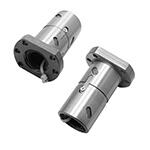
Ball screws are prone to temperature rise during high-speed operation. Temperature rise affects positioning accuracy, operational stability, and service life. Common cooling methods include forced cooling, optimized lubrication, improved structural design, and thermal compensation.
I. Core Causes of Rapid Temperature Rise in High-Speed Ball Screws
- Rotation speed far exceeds the screw's allowable Dm-N value, causing rapid heat generation through ball circulation friction.
- Excessive preload setting, resulting in a significant increase in frictional resistance at high speeds.
- Incompatible grease type, excessive viscosity, or overfilling.
- Misalignment or parallelism during installation, leading to lateral friction at high speeds.
- A poorly ventilated, fully enclosed protective cover prevents heat dissipation.
- Frequent sudden starts and stops, and high-speed reversals, exacerbating heat generation due to impact loads.
Note: The DN value is commonly used to measure the high-speed performance of ball screws: DN value = screw diameter × rotational speed.
A higher DN value places higher demands on heat dissipation, lubrication, and structural design.
II. The following methods can be used to reduce the temperature rise during high-speed operation of ball screws:
1. Forced cooling technology (most direct and effective)
(1) Internal cooling of hollow ball screws (hollow technology)
Ball screws with a hollow structure can be cooled by circulating cooling oil or coolant inside the screw, which can directly remove internal heat.
(2) External cooling system
A cooling system can be installed outside the screw, using methods such as cold air, cold air, or spray cooling to cool the surface of the screw.
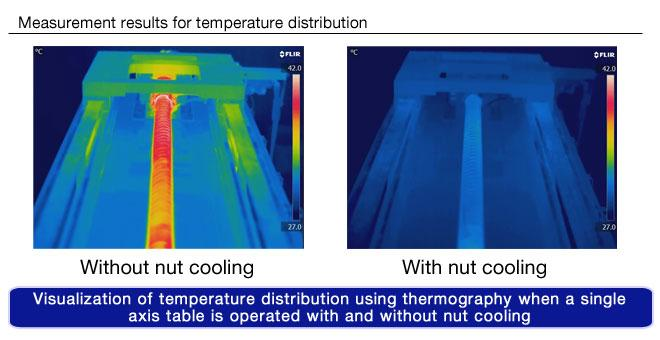
2. Optimize Lubrication Strategies
(1) Use High-Speed Specialized Lubricants
Using high-temperature resistant, extreme-pressure resistant, and low-friction coefficient specialized greases or synthetic lubricants can effectively reduce frictional heat generation.
(2) Optimize Lubrication Methods
During high-speed operation, the amount of lubricant used should be controlled to avoid excessive grease causing stirring heat.
3. Optimize Structural Design and Operating Parameters
(1) Use Hollow Leadscrew Structure
Hollow leadscrews not only facilitate internal cooling but also reduce rotational inertia, which is beneficial for internal cooling. This reduces the heat load during high-speed operation.
(2) Optimize Ball Circulation and Contact Structure
By optimizing the ball circulation method, contact angle, and effective ball configuration, rolling friction loss can be reduced, thereby reducing heat generation.
(3) Reduce Frictional Torque
By optimizing the internal structure of the lead screw pair, dynamic frictional torque can be effectively reduced, thereby reducing heat generation during high-speed operation.
(4) Rationally Control DN Value
Limit the maximum speed to avoid exceeding the allowable DN limit specified in the sample.
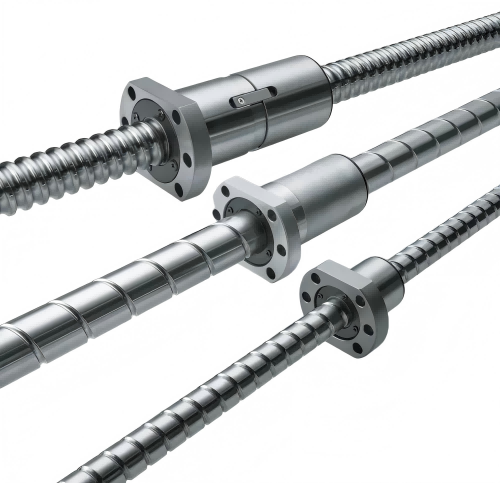
4. Thermal Compensation and Maintenance
(1) Pre-tensioning Design
Applying pre-tension to the ball screw can improve stiffness and compensate for thermal expansion, reducing thermal deformation caused by temperature rise.
(2) Reasonable Preload:
Set the preload reasonably according to the operating speed. Excessive preload will increase frictional heat generation.
(3) Environmental Thermal Insulation
Properly insulate the ball screw from high-temperature components (such as the motor) to prevent external heat conduction.
III. Daily Precautions for High-Speed Ball Screw Operation (Avoiding Overheating)
- Do not operate continuously at high speeds exceeding the rated speed for extended periods.
- Do not simultaneously perform high-speed reciprocating motion under heavy load conditions.
- Do not use ordinary low-speed grease instead of high-speed grease.
- Do not completely seal the screw, as this will trap heat and hinder heat dissipation.
- Do not excessively increase preload for the sake of precision; high speed should be moderate.
If your equipment experiences severe ball screw overheating, positioning drift, or high-speed noise, it is recommended to promptly check the lubrication, installation, and preload parameters. If necessary, upgrade to a high-speed dedicated structure.