EN
EN
 AR
AR
 BG
BG
 CS
CS
 DA
DA
 NL
NL
 FI
FI
 FR
FR
 DE
DE
 EL
EL
 HI
HI
 IT
IT
 JA
JA
 KO
KO
 NO
NO
 PL
PL
 PT
PT
 RU
RU
 ES
ES
 SV
SV
 TL
TL
 ID
ID
 UK
UK
 VI
VI
 HU
HU
 TH
TH
 TR
TR
 FA
FA
 AF
AF
 MS
MS
 SW
SW
 GA
GA
 CY
CY
 BE
BE
 KA
KA
 LA
LA
 MY
MY
 TG
TG
 UZ
UZ


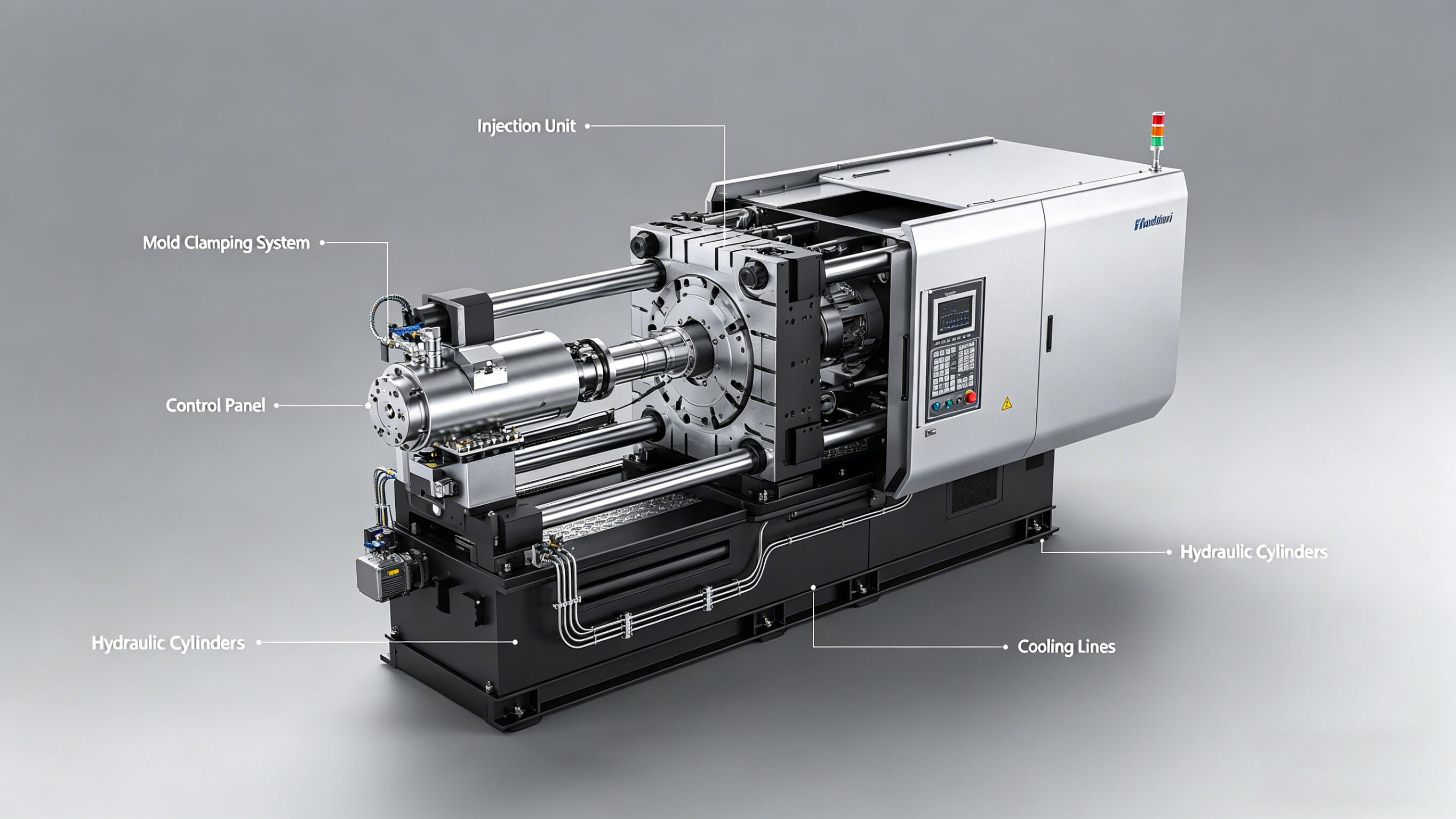
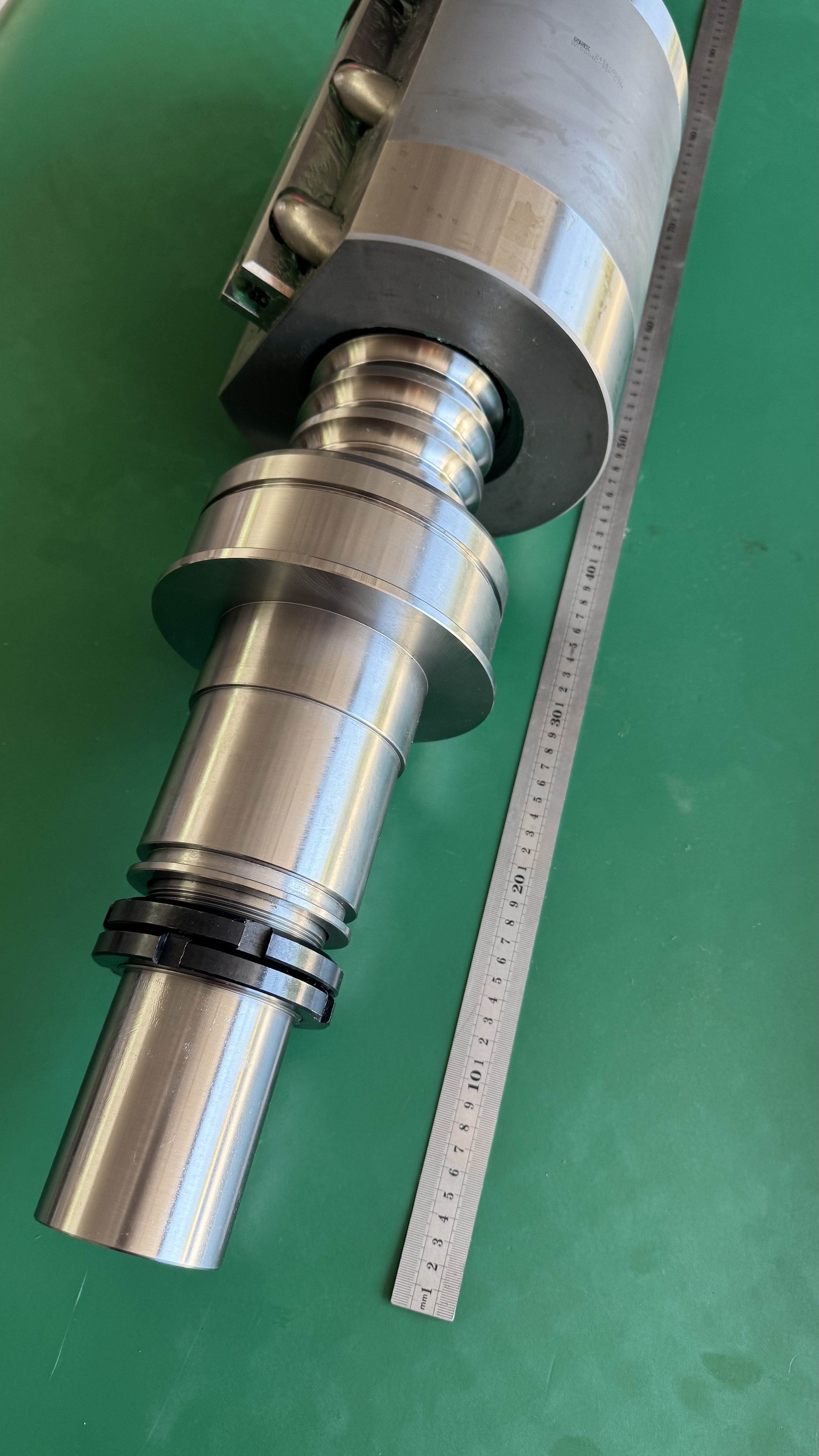
As the core transmission component of electric injection molding machines, ball screws directly determine injection molding accuracy, operating speed and overall equipment stability. Under long-term high-load and high-frequency production conditions, ball screws are prone to various failures due to inadequate lubrication, improper installation and harsh working conditions. These issues greatly reduce production efficiency, increase equipment maintenance costs and raise defective product rates. This article summarizes the most common ball screw failures, root causes and practical repair & maintenance solutions to help plastic processing factories minimize downtime loss and extend ball screw service life.
1. Four Common Ball Screw Failures and Root Cause Analysis
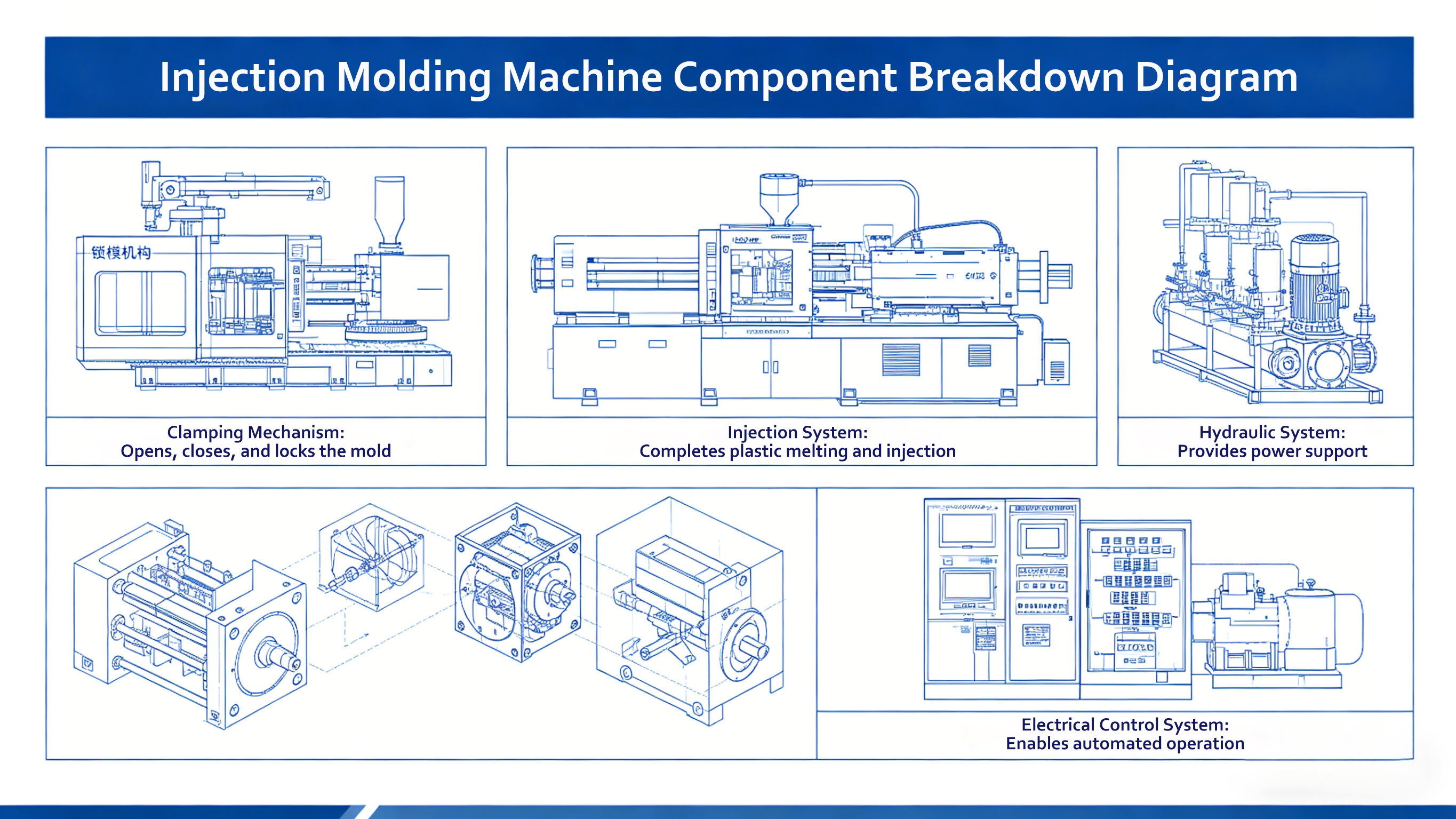
Most ball screw failures on injection molding machines are related to lubrication status, load conditions, installation accuracy and foreign contamination. Accurate fault diagnosis enables efficient troubleshooting and avoids secondary damage caused by blind maintenance.
1.1 Abnormal Operating Noise (Most Common)
Symptoms: Unusual buzzing, squeaking or clicking sounds during operation; noise intensifies at high speed, accompanied by slight mechanical vibration.
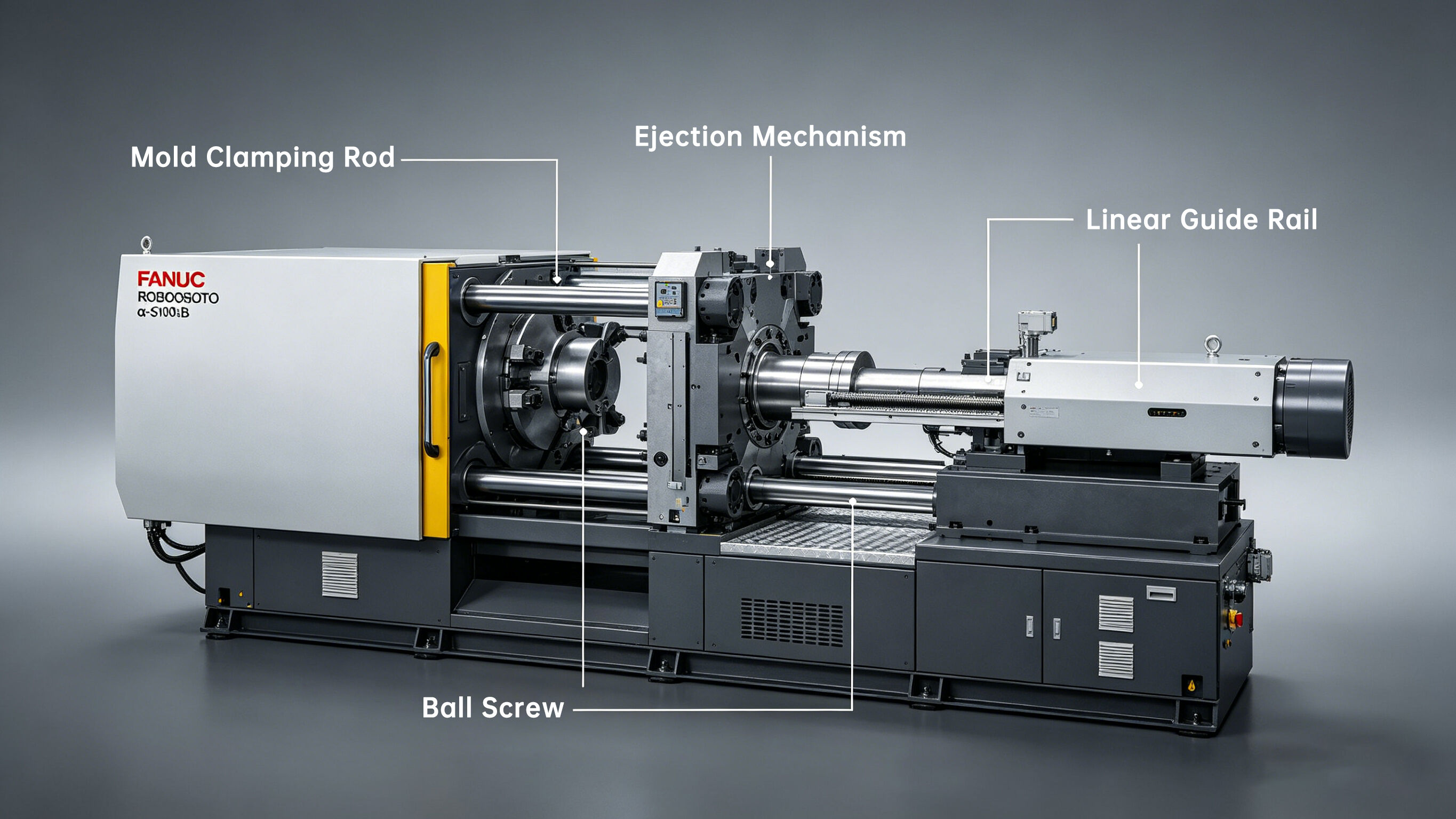
Root Causes: 1. Insufficient or deteriorated grease leading to increased friction between balls and raceways; 2. Dust and plastic debris entering the raceway and causing abrasive friction; 3. Worn steel balls or damaged ball circulation system resulting in irregular rolling tracks; 4. Misalignment between the ball screw, motor and linear guide, causing uneven force distribution.
1.2 Positioning Deviation and Reduced Molding Accuracy
Symptoms: Inconsistent product dimensions, uneven wall thickness, poor positioning repeatability and frequent dimensional errors in finished plastic parts.
Root Causes: 1. Insufficient or loose preload leading to excessive axial backlash; 2. Thermal deformation caused by long-term high-speed operation; 3. Desynchronized encoder signals and screw transmission movement; 4. Worn raceways or damaged steel balls reducing transmission precision.
1.3 Excessive Axial Backlash
Symptoms: Visible looseness when manually pushing the screw nut; axial jerking during injection movement and unstable injection pressure output.
Root Causes: 1. Long-term loaded operation causing wear on balls and raceways; 2. Loosened preload nuts without timely adjustment; 3. Installation misalignment leading to eccentric force and clearance deviation; 4. Material fatigue causing minor screw deformation.
1.4 Stuck Movement and Operation Failure
Symptoms: Jerky movement, complete jamming or failure to extend/retract normally, resulting in equipment alarms and even motor burnout in severe cases.
Root Causes: 1. Foreign particles blocking the ball circulation path; 2. Solidified or caked lubricant restricting ball movement; 3. Bent screw shaft causing nut jamming; 4. Loose or disconnected coupling between motor and ball screw.
2. Practical Ball Screw Repair Solutions for Injection Molding Machines
All maintenance operations follow the principle of "diagnosis first, repair later" to avoid unnecessary part replacement. The targeted repair methods below apply to all tonnages of injection molding machines.
-
Abnormal Noise Repair: Stop the machine and inspect lubrication conditions. Refill with high-temperature resistant specialized grease after cleaning deteriorated lubricant. Remove and clean the nut assembly thoroughly to eliminate internal dust and plastic residues. Replace worn balls or damaged circulation components and recalibrate shaft concentricity.
-
Positioning Deviation Repair: Readjust screw preload to standard tolerance range. Optimize equipment heat dissipation to reduce thermal deformation. Recalibrate encoder synchronization signals. Replace worn or degraded ball screws to restore high-precision transmission performance.
-
Excessive Backlash Repair: Adjust preload nuts to eliminate axial clearance. Replace worn steel balls or nuts if wear is severe, or replace the entire ball screw assembly when necessary. Realign installation precision to ensure coaxiality with motors and guide rails.
-
Stuck Screw Repair: Power off the equipment completely before disassembly. Clean solidified grease and contaminants inside raceways. Inspect screw straightness and correct or replace deformed screws. Fasten loose coupling components to restore smooth transmission.
3. Daily Maintenance Guidelines to Reduce Failures and Extend Service Life
Most ball screw failures are preventable through standardized daily maintenance. Factories can formulate customized maintenance schedules based on daily operating hours and working environments.
-
Lubrication Maintenance: Check grease volume before daily startup to ensure full raceway lubrication. Clean surrounding plastic dust and debris weekly. Replace lubricant monthly (every 20 days for high-temperature working conditions) using only high-temperature and wear-resistant specialized grease.
-
Cleaning Maintenance: Regularly inspect dust seals and replace aged or damaged seals to prevent foreign contamination. Clean surface dust with compressed air monthly to avoid particle accumulation.
-
Operation Maintenance: Avoid overload startup and frequent high-speed forward/reverse switching to reduce impact load. Maintain good heat dissipation to prevent thermal deformation. Record operating status daily and resolve minor abnormal noises or positioning deviations at an early stage.
-
Periodic Calibration: Calibrate installation accuracy, preload force and positioning precision quarterly to maintain stable transmission and prevent accelerated wear caused by long-term deviation.
Conclusion: Most injection molding machine ball screw failures result from insufficient maintenance and improper operation. Accurate fault diagnosis, timely repair and standardized daily maintenance effectively extend ball screw service life, reduce downtime losses and ensure stable production and consistent product precision.