 EN
EN
 AR
AR
 BG
BG
 CS
CS
 DA
DA
 NL
NL
 FI
FI
 FR
FR
 DE
DE
 EL
EL
 HI
HI
 IT
IT
 JA
JA
 KO
KO
 NO
NO
 PL
PL
 PT
PT
 RU
RU
 ES
ES
 SV
SV
 TL
TL
 ID
ID
 UK
UK
 VI
VI
 HU
HU
 TH
TH
 TR
TR
 FA
FA
 AF
AF
 MS
MS
 SW
SW
 GA
GA
 CY
CY
 BE
BE
 KA
KA
 LA
LA
 MY
MY
 TG
TG
 UZ
UZ


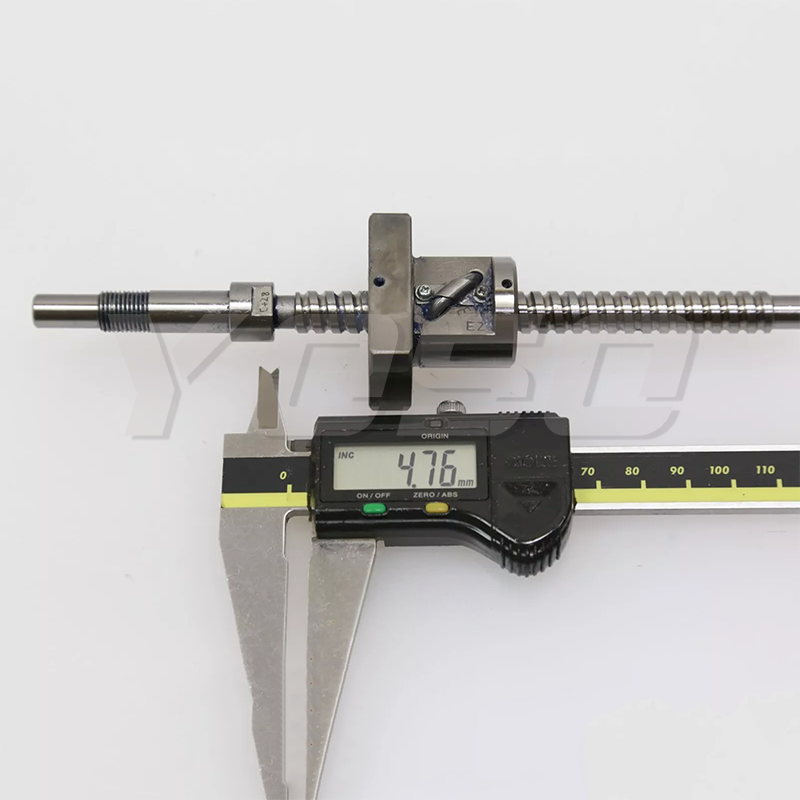
In an era where industrial automation demands faster speeds, tighter tolerances, and longer operational lifespans, the components that power linear motion are no longer just “parts”—they’re the backbone of innovation. Enter ball screws: the unsung innovators that have evolved far beyond basic motion conversion, becoming a critical differentiator for businesses looking to outperform competitors in CNC machining, robotics, and advanced manufacturing.
At Yosomotion, we don’t just supply ball screws—we engineer solutions that align with the future of automation. Unlike generic guides that only scratch the surface, this blog dives into the next-generation capabilities of ball screws, debunks common myths, and shows you how to leverage their full potential to solve real-world industrial pain points. Optimized for Google search, this guide is your go-to resource for everything from core mechanics to cutting-edge applications.
Beyond Basic Motion: What Makes Modern Ball Screws a Game-Changer?
Gone are the days when ball screws were viewed as simple “rotary-to-linear” converters. Today’s high-performance ball screws are precision-engineered to address the most pressing challenges in automation: minimizing energy waste, reducing maintenance downtime, and delivering micron-level accuracy—even in harsh industrial environments.
Unlike traditional lead screws (plagued by sliding friction and rapid wear) or low-quality ball screws that fail under stress, modern ball screws use recirculating steel or ceramic balls to create near-frictionless motion. But what truly sets them apart is their adaptability—they’re now customizable to fit everything from compact medical devices to heavy-duty industrial machinery.
Core Structure: The Innovation Behind the Precision
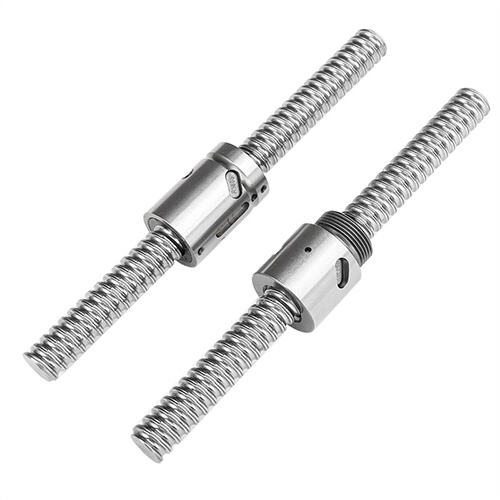
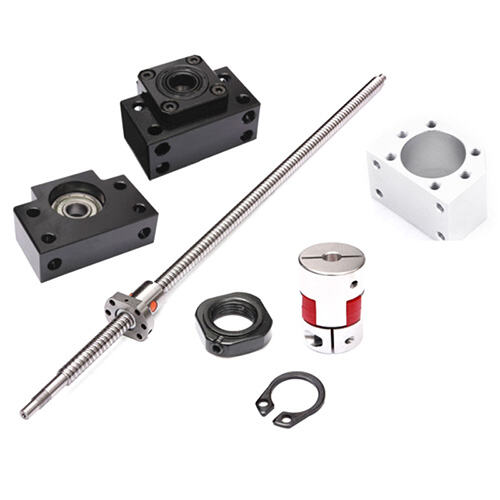
While the foundational design of ball screws remains rooted in three key components, modern advancements have elevated each part to new heights. Here’s a fresh breakdown of how they work—without the technical jargon:
-
Precision-Ground Screw Shaft: Crafted from heat-treated alloy steel (GCr15) or corrosion-resistant stainless steel, today’s screw shafts feature ultra-smooth helical grooves ground to tolerances as tight as ±0.001mm. Advanced coating options (like TiN or black oxide) add durability, making them resistant to wear, corrosion, and extreme temperatures—critical for harsh industrial settings.
-
Optimized Nut Assembly: The nut is no longer just a “housing” for balls. Modern designs integrate internal or external recirculation systems (with innovative ball return paths) that eliminate jitter, reduce noise, and extend service life. Some high-end models even feature self-lubricating nuts, cutting maintenance time by up to 50%.
-
High-Performance Rolling Balls: Beyond standard steel balls, ceramic balls are now used for high-speed, high-temperature applications (up to 300°C), offering lighter weight, higher hardness, and resistance to chemical corrosion. This upgrade is a game-changer for industries like aerospace and semiconductor manufacturing.
The magic happens in the rolling motion: as the screw shaft rotates, the balls glide along the helical groove, translating rotational force into smooth linear motion. The recirculation system ensures the balls loop continuously, creating a seamless, efficient movement that outperforms traditional motion components by a factor of 10.
Innovative Ball Screw Types: Tailored for Tomorrow’s Automation
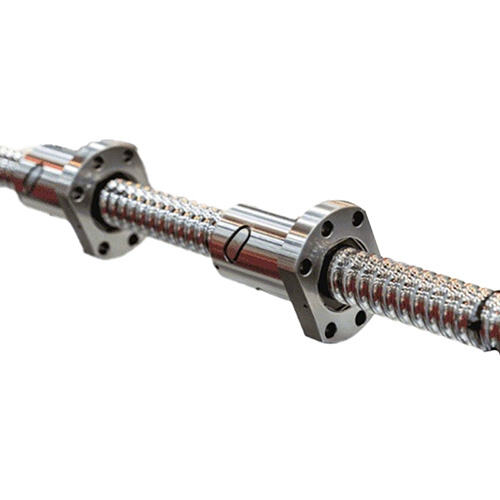
One of the biggest misconceptions about ball screws is that “one size fits all.” Modern ball screws are designed with specific use cases in mind, with innovations that address unique industry needs. Here’s a fresh look at the most in-demand types—focused on how they solve real problems:
1. Internal vs. External Circulation: More Than Just a Design Choice
-
Internal Circulation Ball Screws: With the recirculation path built into the nut (no external channels), these screws are compact, quiet, and ideal for tight spaces—think medical robots or small-scale automation. The internal design also protects the ball path from dust and debris, reducing maintenance and extending life. Perfect for applications where space is a constraint and precision is non-negotiable.
-
External Circulation Ball Screws: Featuring external ball return tubes, these screws are built for high-speed, heavy-load applications (like CNC machine tools or industrial presses). The external design allows for larger ball sizes, increasing load capacity and rigidity—critical for machinery that operates 24/7. They’re also easier to maintain, with accessible return tubes that can be inspected or replaced without disassembling the entire unit.
2. Preloaded Ball Screws: Eliminating Backlash for Unmatched Precision
Backlash (the small gap between the screw and nut) is a major enemy of precision—and modern preloaded ball screws solve this problem with innovative designs. Unlike traditional preloading methods (which add friction), today’s preloaded screws use dual nuts or offset grooves to eliminate backlash entirely, while maintaining smooth motion and high efficiency. This makes them perfect for applications like 3D printing, semiconductor testing, and robotic arm positioning, where even the smallest deviation can ruin a project.
3. Miniature & Micro Ball Screws: Powering Compact Automation
As automation becomes smaller (think wearable tech, medical devices, or micro-robots), ball screws have shrunk too—without sacrificing precision. Miniature ball screws (with diameters as small as 3mm) are engineered to deliver the same accuracy as their larger counterparts, making them essential for compact equipment. They’re lightweight, low-noise, and designed to fit in spaces where traditional motion components can’t—opening up new possibilities for innovation.
Why Ball Screws Outperform Every Other Linear Motion Solution
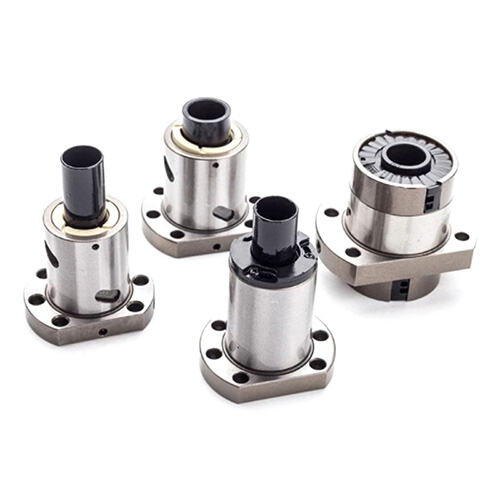
It’s easy to assume all linear motion components are the same—but ball screws stand out for three key reasons that matter to modern manufacturers. Here’s a fresh take on their advantages, focused on real-world value:
1. Efficiency That Cuts Costs
With a friction coefficient of just 0.001–0.003, ball screws are up to 95% efficient—compared to 50–70% efficiency for lead screws. This means less energy waste, lower operating costs, and longer motor life. For businesses running 24/7 production lines, this efficiency translates to thousands of dollars in savings annually.
2. Precision That Drives Quality
Modern ball screws offer repeat positioning accuracy of ±0.005mm or better—critical for applications like CNC machining, where a single micron of deviation can ruin a part. Unlike lead screws, which wear over time and lose precision, ball screws maintain their accuracy for years, ensuring consistent product quality and reducing waste.
3. Durability That Reduces Downtime
Thanks to high-quality materials, advanced coatings, and optimized designs, modern ball screws have a service life of up to 100,000 operating hours—far longer than lead screws or plain bearings. This means less downtime for maintenance, fewer replacements, and higher productivity for your business.
Real-World Applications: Where Ball Screws Are Transforming Industries
Ball screws aren’t just “parts”—they’re enabling innovation across industries. Here are some of the most exciting applications where modern ball screws are making a difference (beyond the usual CNC machines):
-
Aerospace & Defense: Used in aircraft landing gear, satellite positioning systems, and missile guidance—where precision and durability are life-critical.
-
Medical Devices: Powering surgical robots, MRI scanners, and insulin pumps—where compact size, low noise, and micron-level accuracy are essential.
-
Renewable Energy: Used in wind turbine pitch control and solar panel tracking systems—where efficiency and reliability reduce energy costs.
-
3D Printing & Additive Manufacturing: Delivering precise layer-by-layer deposition—critical for creating high-quality 3D-printed parts.
How to Choose the Right Ball Screw for Your Project (Avoid Common Mistakes)
Choosing the wrong ball screw can lead to wasted time, money, and project failure. Here’s a fresh, practical guide to selecting the perfect one—focused on avoiding the most common pitfalls:
-
Don’t Overlook Load Requirements: Calculate both radial and axial loads, plus any overturning moments—choosing a screw that’s too small will lead to premature failure, while one that’s too large wastes space and money.
-
Match Precision to Your Application: You don’t need ±0.001mm accuracy for a packaging line—but you do for semiconductor testing. Choose a precision level that aligns with your project’s needs, not just the highest available.
-
Consider the Environment: Harsh environments (dust, moisture, high temperatures) require specialized coatings and sealing—don’t use a standard ball screw in a corrosive or high-heat setting.
Yosomotion’s Ball Screw Difference: Engineering for the Future
At Yosomotion, we understand that modern automation demands more than just “good enough” components. Our ball screws are engineered with the latest innovations—from self-lubricating nuts to corrosion-resistant coatings—to help you stay ahead of the competition. We offer custom solutions tailored to your specific application, whether you need a miniature screw for a medical device or a heavy-duty screw for an industrial press.
Final Thoughts: The Future of Linear Motion Is Here
Ball screws have come a long way from their basic origins—and their evolution is far from over. As automation becomes more advanced, ball screws will continue to play a critical role in driving precision, efficiency, and innovation. Whether you’re upgrading an existing system or designing a new one, choosing the right ball screw is the first step toward building a more productive, reliable, and competitive operation.
Ready to take your linear motion to the next level? Contact Yosomotion today to learn how our high-performance ball screws can transform your project.
Table of Contents
- Beyond Basic Motion: What Makes Modern Ball Screws a Game-Changer?
- Innovative Ball Screw Types: Tailored for Tomorrow’s Automation
- Why Ball Screws Outperform Every Other Linear Motion Solution
- Real-World Applications: Where Ball Screws Are Transforming Industries
- How to Choose the Right Ball Screw for Your Project (Avoid Common Mistakes)
- Yosomotion’s Ball Screw Difference: Engineering for the Future
- Final Thoughts: The Future of Linear Motion Is Here