 EN
EN
 AR
AR
 BG
BG
 CS
CS
 DA
DA
 NL
NL
 FI
FI
 FR
FR
 DE
DE
 EL
EL
 HI
HI
 IT
IT
 JA
JA
 KO
KO
 NO
NO
 PL
PL
 PT
PT
 RU
RU
 ES
ES
 SV
SV
 TL
TL
 ID
ID
 UK
UK
 VI
VI
 HU
HU
 TH
TH
 TR
TR
 FA
FA
 AF
AF
 MS
MS
 SW
SW
 GA
GA
 CY
CY
 BE
BE
 KA
KA
 LA
LA
 MY
MY
 TG
TG
 UZ
UZ


Backlash — the axial play between a ball screw and nut — is one of the most common causes of precision loss in all-electric injection molding machines. When the screw reverses direction, that small gap translates directly into lost motion, inconsistent shot weight, and dimensional variation in molded parts.
For molders producing medical components, optical lenses, or thin-wall packaging, even a few micrometers of backlash can push parts out of specification. This article explains what causes backlash, how to measure it accurately, and the engineering solutions that eliminate it.
What Is Ball Screw Backlash?
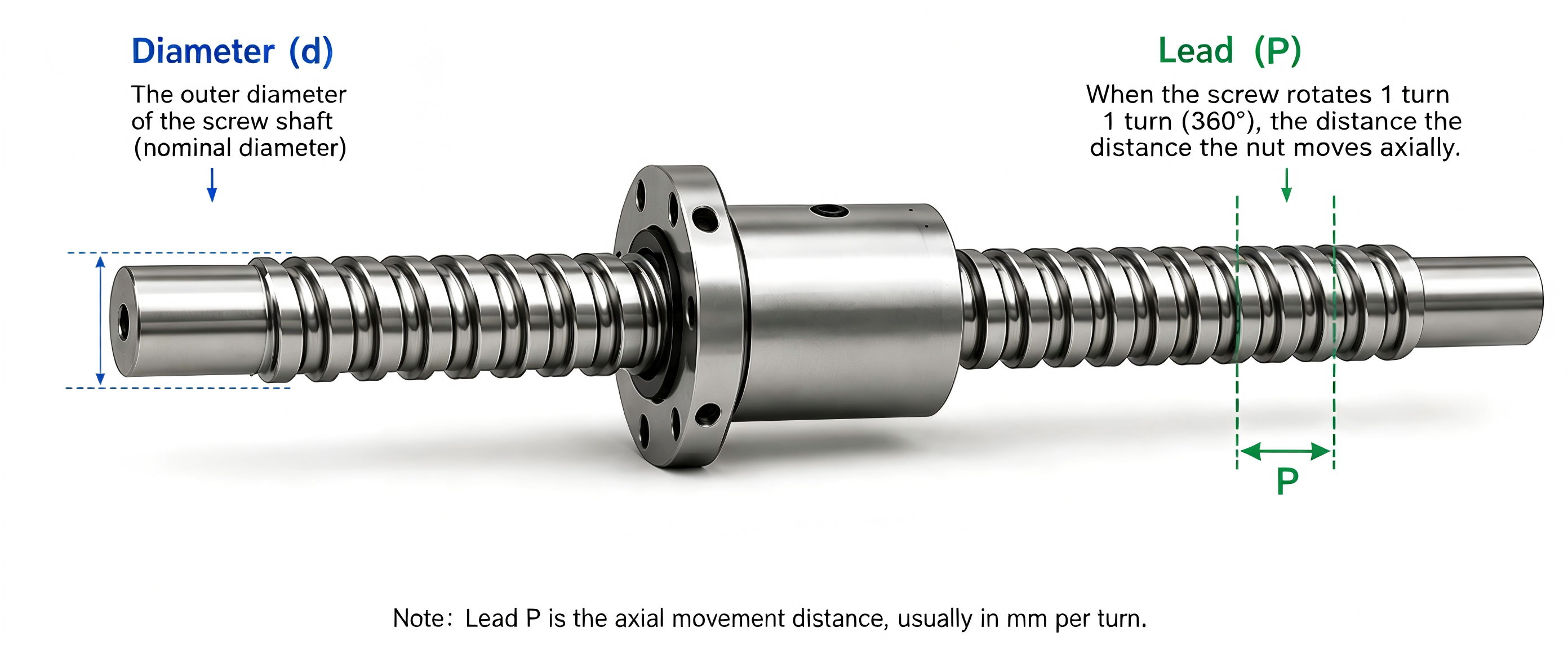
Backlash (also called axial play or lost motion) is the distance the nut can move axially without the screw rotating, or vice versa. It occurs when there is clearance between the balls and the raceway grooves.
In an ideal preloaded ball screw, the balls are slightly oversized relative to the groove pitch, creating zero clearance and a continuous elastic load. When preload is lost — through wear, improper assembly, or manufacturing variation — clearance appears, and backlash results.
In injection molding, backlash manifests as:
- Shot-to-shot weight variation on the injection axis
- Ejector pin position inconsistency between cycles
- Mold closing position drift on toggle clamping systems
- Audible "clunk" on direction reversals
- Poor surface finish on parts requiring precise holding pressure
Root Causes of Backlash in Injection Molding Applications
1. Normal Wear Over Time
This is the most common cause in production environments. Every ball screw loses preload gradually as the raceways wear. The rate depends on:
- Load magnitude: Heavier clamping and injection forces accelerate wear
- Cycle count: High-speed packaging machines running millions of cycles per year wear faster
- Lubrication condition: Poor grease maintenance dramatically shortens wear life
- Contamination: Dust, plastic particles, and cooling water ingress accelerate abrasive wear
A typical injection machine ball screw may maintain factory preload for 5–10 million cycles under normal conditions. After that, preload gradually decreases until measurable backlash appears.
2. Incorrect Initial Preload
If the screw was assembled with insufficient preload from the start, backlash can appear almost immediately. This sometimes happens with low-cost replacement screws where the manufacturer skips proper preload calibration.
3. Ball Return System Damage
Damaged or misaligned ball return tubes (in external-circulation screws like SFU/DFU series) can cause balls to bind or skip, creating intermittent backlash. This is often accompanied by unusual noise during operation.
4. Bearing Support Wear
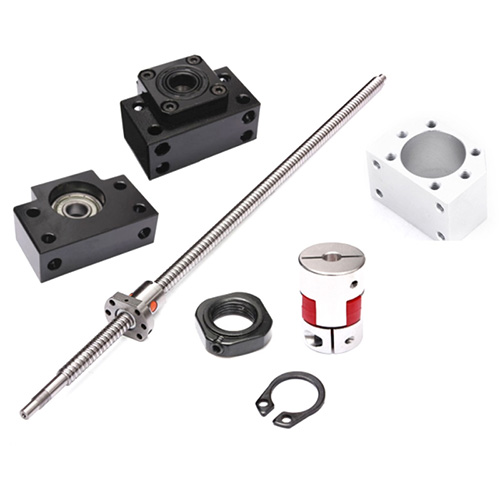
Backlash isn't always in the nut. Worn or improperly preloaded support bearings at the screw ends also create axial play that feels identical to nut backlash. This is a common misdiagnosis — technicians blame the nut when the actual problem is the thrust bearing.
5. Overloading Beyond Rated Capacity
Consistently operating above the screw's dynamic load rating causes permanent plastic deformation of the raceway surfaces (Brinelling), creating permanent backlash that cannot be adjusted out.
How to Measure Ball Screw Backlash
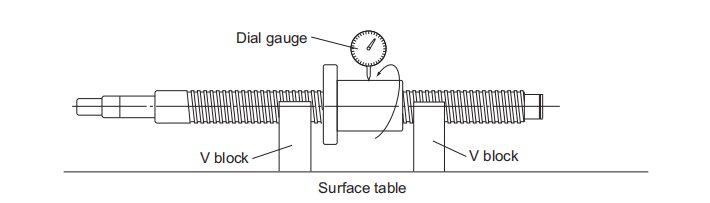
Accurate measurement is essential before deciding on a solution. Here are the three most reliable methods:
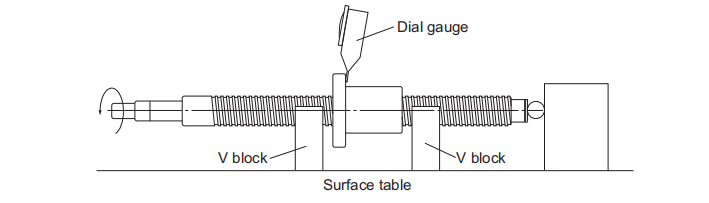
Method 1: Dial Indicator Test (Most Common)
This is the standard shop-floor method.
Procedure:
- Mount a magnetic-base dial indicator on the machine frame
- Position the indicator plunger against the nut housing or driven load, aligned with the screw axis
- Apply a light axial force in one direction by hand or with a lever, zero the indicator
- Apply force in the opposite direction without rotating the screw
- The indicator reading equals the total axial backlash
For injection machines: Perform this test at several positions along the full travel, not just one spot. Wear is often uneven — typically worst at the most-used stroke positions.
Method 2: Laser Interferometer (Highest Precision)
For precision machines, a laser interferometer measures positioning accuracy and repeatability across the full travel. Backlash appears as a characteristic "jump" on the reverse-direction data points.
This method is more expensive but captures the full picture, including lead error and thermal drift alongside backlash.
Method 3: Motor Torque Signature
By monitoring servo motor torque during direction reversals, you can detect backlash indirectly. A sudden drop in torque at the reversal point indicates the screw is passing through a backlash zone. This method is useful for continuous monitoring without machine teardown.
Solutions for Ball Screw Backlash
Solution 1: Preload Adjustment (Double-Nut Screws Only)
If the screw uses a double-nut design (DFU, DFI, DFS series), preload can often be restored by adjusting the spacer between the two nuts.
How it works:
- Double-nut screws create preload by offsetting two nuts with a spacer
- As wear occurs, the spacer can be ground thinner or shimmed to re-establish preload
- This effectively "resets" the screw to near-factory condition
Advantages:
- Much cheaper than full screw replacement
- Can be done on-site with proper tools
- Extends total service life by 30–50%
Limitations:
- Only works on double-nut designs; single-nut preloaded screws cannot be adjusted
- Requires skilled technicians — over-adjusting creates excessive preload that accelerates wear
Solution 2: Nut Replacement
For single-nut preloaded screws (FSW, FSC, SFU single-nut), when preload is lost the nut must be replaced.
Best practice:
- Keep a spare nut on hand for critical production machines
- Match the new nut to the existing screw if the shaft is still within tolerance
- Verify preload and run-in the new nut before resuming production
Solution 3: Full Screw Assembly Replacement
When the screw shaft itself shows significant wear (visible grooving, pitting, or measured lead error exceeding specification), the complete assembly should be replaced.
Signs it's time:
- Backlash exceeds 0.05 mm and cannot be adjusted out
- Visible wear tracks on the screw shaft
- Positioning repeatability degrades across the full travel
- Noise and vibration have increased noticeably
Solution 4: Software Compensation (Temporary Fix)
Modern CNC controls can compensate for backlash by adding an offset during direction reversals. The controller "over-travels" by the measured backlash amount to ensure the load actually reaches the commanded position.
Important caveats:
- This is a band-aid, not a fix — it masks the symptom but doesn't address wear
- Compensation accuracy decreases as backlash worsens over time
- Does not improve rigidity or reduce vibration
- Should only be used as a temporary measure until mechanical repair is possible
Prevention: Maximizing Backlash-Free Service Life
Proper Lubrication
Grease is the #1 factor in wear life. Follow these guidelines:
- Use the manufacturer-specified grease grade (not generic grease)
- Implement automatic lubrication with calibrated dosing
- Monitor grease condition and replenish based on operating hours, not calendar time
- Seal the nut properly to keep contamination out
Correct Preload Specification
Don't over-specify preload thinking "more is better." Excessive preload generates heat and accelerates wear, actually shortening backlash-free life. Match preload class to actual application requirements:
- Ejection axes → Z1 light preload
- Injection axes → Z1–Z2
- Clamping axes → Z2 medium preload
Environmental Protection
Injection molding shops are harsh environments with plastic dust, cooling mist, and temperature swings. Protect the screw with:
- Bellows covers or telescopic way covers
- Wiper seals on both ends of the nut
- Positive pressure air purge on critical axes
Regular Inspection
Schedule backlash checks as part of preventive maintenance:
- New machine: Baseline measurement at commissioning
- Every 6 months: Check and record backlash values
- Trend analysis: Track the rate of increase to predict replacement timing
Conclusion
Ball screw backlash is an inevitable consequence of wear, but understanding its causes and measurement methods allows molders to manage it proactively rather than reactively.
Key takeaways:
- Measure first, diagnose second — always confirm backlash is in the nut, not the support bearings
- Double-nut designs save money long-term — adjustability extends service life significantly
- Lubrication is the cheapest insurance — proper grease maintenance delays wear more than any other factor
- Software compensation is temporary — mechanical repair is the real solution
For precision injection molding operations, a proactive backlash monitoring program pays for itself through reduced scrap, fewer unplanned downtime events, and consistent part quality over the full life of the machine.