 EN
EN
 AR
AR
 BG
BG
 CS
CS
 DA
DA
 NL
NL
 FI
FI
 FR
FR
 DE
DE
 EL
EL
 HI
HI
 IT
IT
 JA
JA
 KO
KO
 NO
NO
 PL
PL
 PT
PT
 RU
RU
 ES
ES
 SV
SV
 TL
TL
 ID
ID
 UK
UK
 VI
VI
 HU
HU
 TH
TH
 TR
TR
 FA
FA
 AF
AF
 MS
MS
 SW
SW
 GA
GA
 CY
CY
 BE
BE
 KA
KA
 LA
LA
 MY
MY
 TG
TG
 UZ
UZ


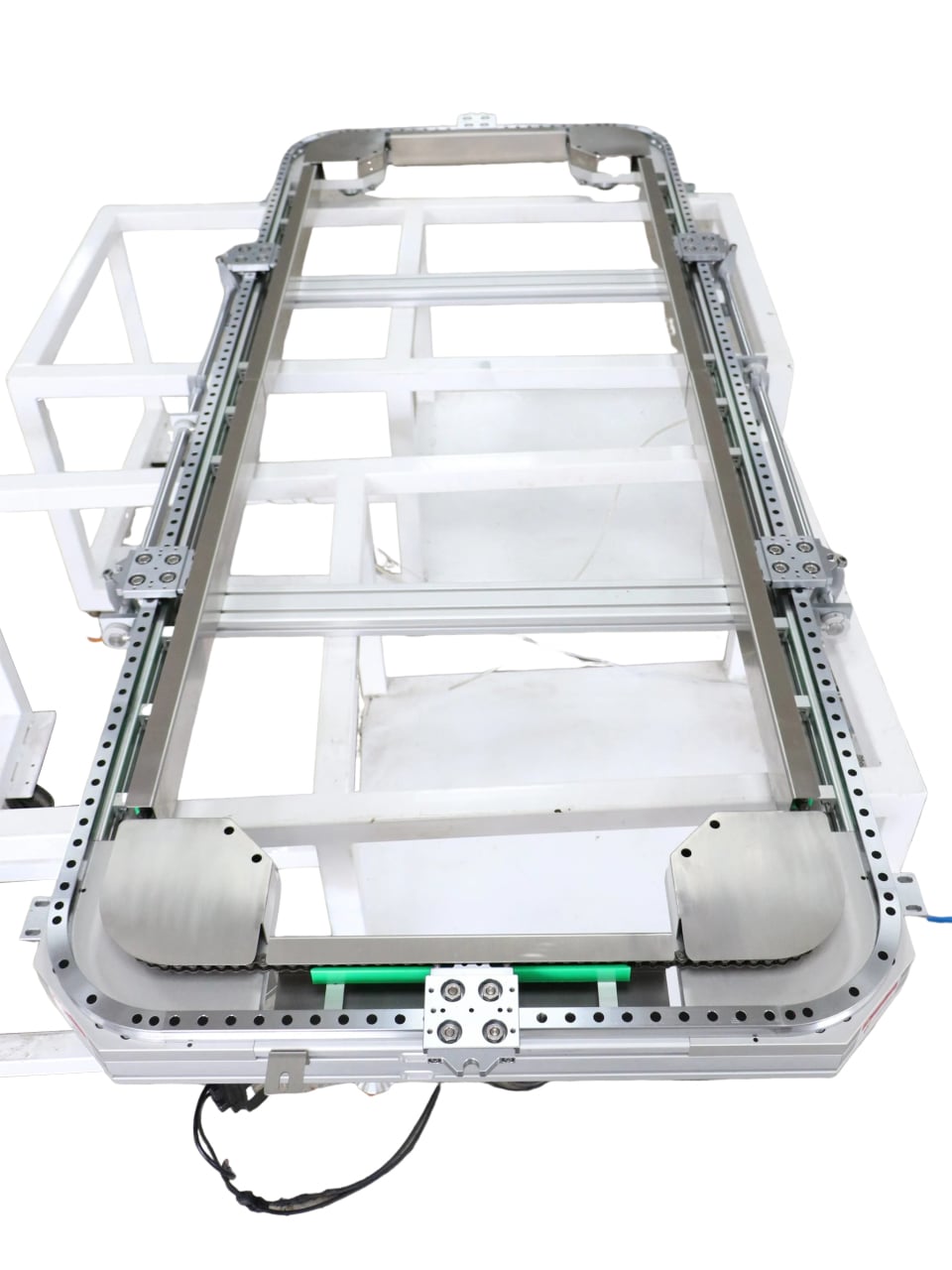
When designing automation machinery that needs cyclic motion, engineers often face the choice: rotary table or arc guide rail? Rotary tables are suitable for intermittent index rotation, while arc guide rails support continuous, uninterrupted movement. Depending on the machine layout, arc motion tracks can be divided into circular, rectangular loop, vertical curved rail and custom special-shaped curved guides. Each type has unique features and applicable scenarios.
1. Circular arc guide rail
Circular guide forms a closed circular track. Its core parameter is the circle diameter or arc radius. This type is commonly used in rotary assembly workstations and continuous product inspection lines. Multiple sliders can move synchronously along the full circle. The motion path is uniform, vibration is low. Note that the minimum radius is limited by slider size; too small radius will increase ball wear and reduce service life.
2. Rectangular loop curved rail system
Rectangular arc track combines straight rail segments and four corner arc sections to form a closed rectangular loop. It is the most popular option for conveyor lines. The straight sections handle long-distance transportation, and four arc corners realize direction change. Designers can separately set the radius of the four corner arcs. This flexible layout maximizes the use of workshop floor space and is widely used in packaging automation.
3. Vertical curved guide rail
Most curved rails run on horizontal planes. Vertical curved rail realizes arc motion in vertical direction, lifting or lowering carriers along the curved path. It helps save floor space for compact automated storage and handling systems. Vertical arc design has stricter load and anti-drop requirements, so slider locking structure and load rating need careful verification.
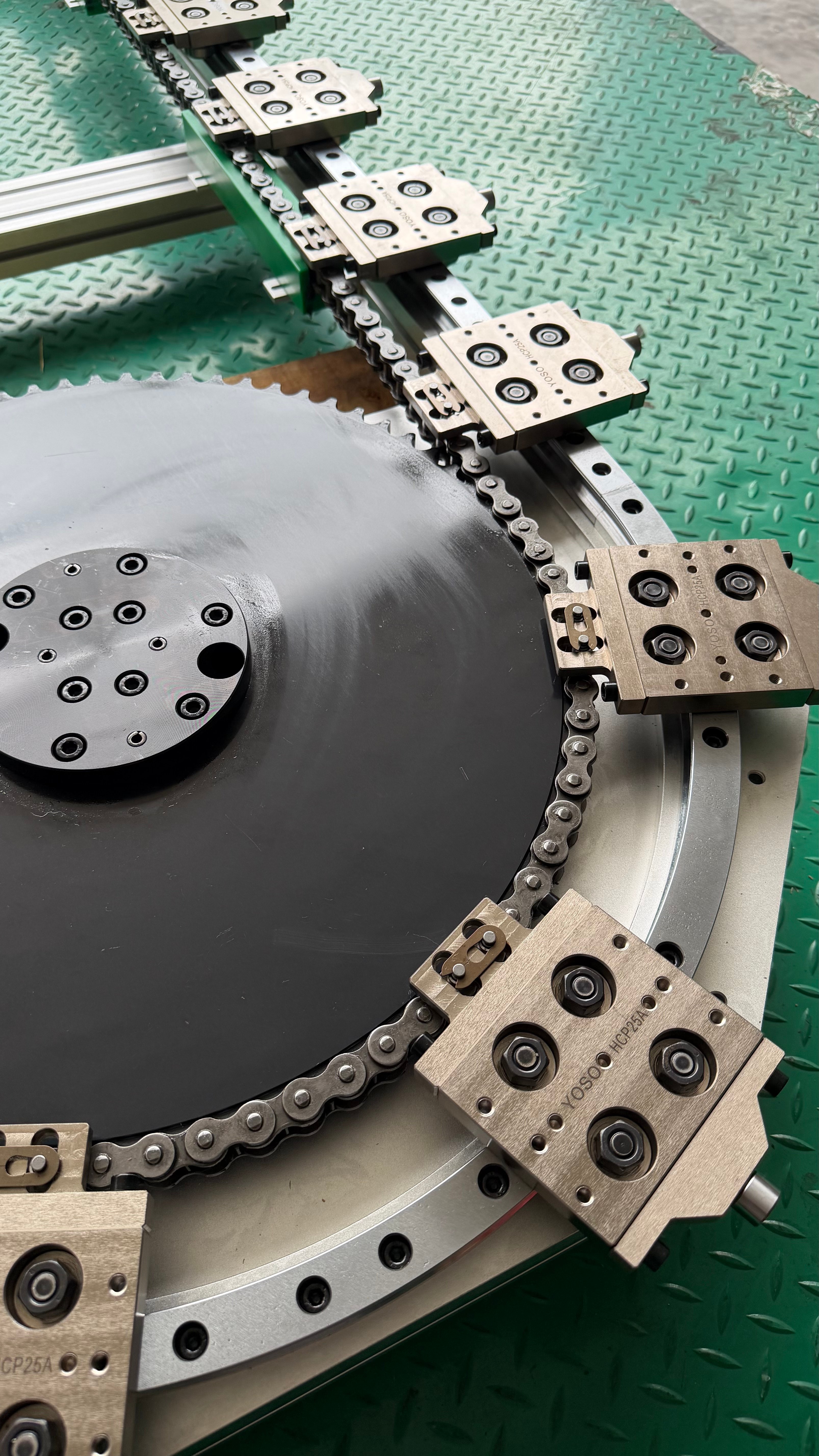
Custom special-shaped curved guide
For non-standard equipment, standard circular or rectangular tracks cannot meet requirements. Special-shaped curved rails are customized based on CAD drawings. The arc radius changes along the path, combining multiple curved and straight segments. This solution is for unique test machines and custom automation equipment, with longer lead time compared with standard curved rails.
Radius & diameter: The most critical technical parameters
Arc radius directly determines performance:
- Small radius: Compact installation, suitable for light load and low speed; higher stress on rolling elements.
- Large radius: Smoother operation, higher load capacity, longer service life; requires larger installation space.
When you send inquiry to suppliers, provide these information at first: track type (circular / rectangular / vertical / special shape), arc radius or diameter, working load, travel speed, number of sliders, installation orientation and accuracy requirement.
Curved rail VS traditional rotation mechanism
- Higher continuous running speed than rotary indexing tables
- Multiple sliders can run on one single track at the same time
- Lower cumulative positioning error than assembled straight rail + turning mechanism
- Flexible path: circular, rectangular, vertical or custom shape
Arc guide rail technology keeps evolving. With more manufacturers adopting high-precision grinding process, curved motion systems are gradually applied in semiconductor, medical automation and intelligent logistics equipment. If you are evaluating curved motion solutions for your machine, confirm your radius and dimension requirements first to get accurate quotation and technical drawing support.