EN
EN
 AR
AR
 BG
BG
 CS
CS
 DA
DA
 NL
NL
 FI
FI
 FR
FR
 DE
DE
 EL
EL
 HI
HI
 IT
IT
 JA
JA
 KO
KO
 NO
NO
 PL
PL
 PT
PT
 RU
RU
 ES
ES
 SV
SV
 TL
TL
 ID
ID
 UK
UK
 VI
VI
 HU
HU
 TH
TH
 TR
TR
 FA
FA
 AF
AF
 MS
MS
 SW
SW
 GA
GA
 CY
CY
 BE
BE
 KA
KA
 LA
LA
 MY
MY
 TG
TG
 UZ
UZ


Step into any modern manufacturing workshop—whether it’s a CNC router shop shaping aluminum parts, an automotive plant stamping car body panels, or a logistics center sorting parcels—and you’ll find a unsung hero driving the action: the rack and pinion system. Last quarter, a new engineering intern at a Shenzhen 3C factory pulled me aside and asked, “Why do we use this ‘toothed bar’ instead of a belt drive for our precision assembly line?” It’s a question that gets to the heart of how manufacturing motion works—and one worth breaking down for anyone who works with industrial equipment.
Rack and pinion systems are everywhere, but their simplicity hides remarkable engineering. In this guide, we’ll start with the basics: what a rack and pinion actually is, how it converts motion, the key types you’ll encounter in factories, and why choosing the right one matters more than you think. No jargon overload—just clear, practical science tailored for manufacturers.
First Things First: What Is a Rack and Pinion?
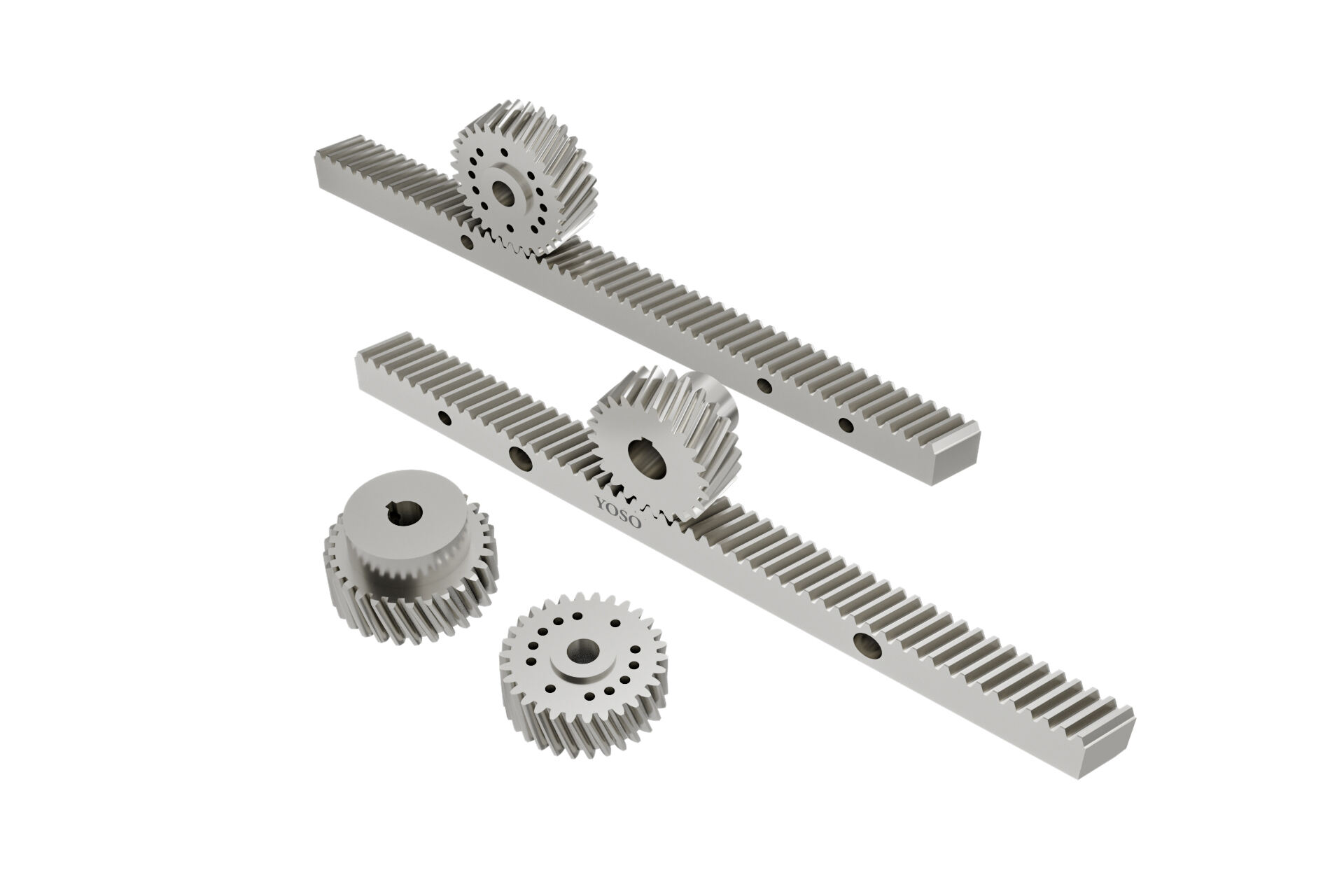
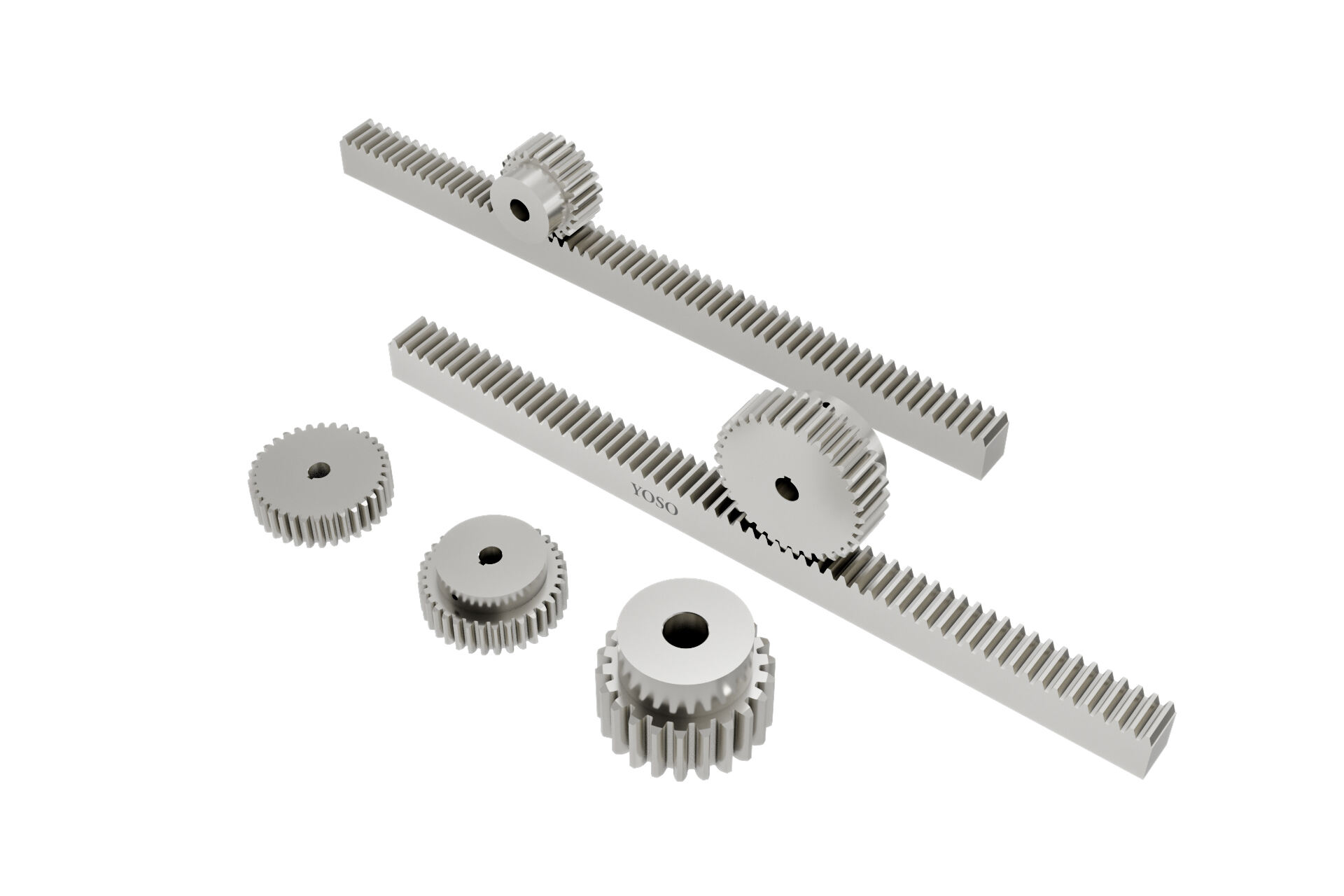
At its core, a rack and pinion is a mechanical transmission system that converts rotational motion (like a motor spinning) into linear motion (like a machine slide moving back and forth)—or vice versa. It has two key components:
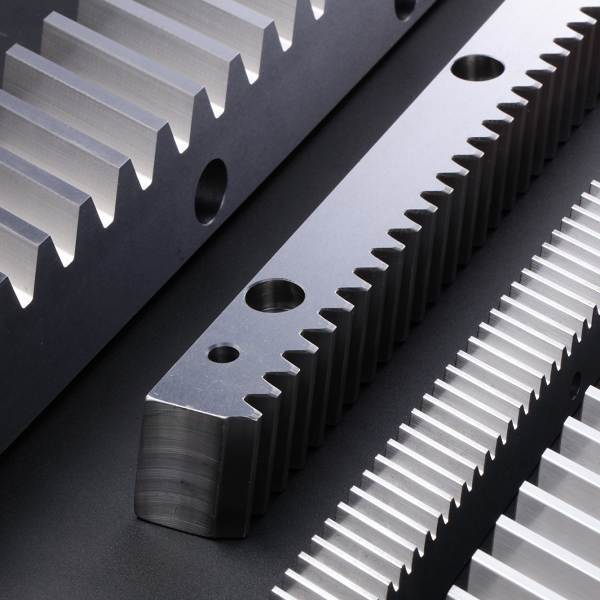
The Rack: Think of it as a “straight-line gear.” It’s a long bar (usually made of steel or alloy) with evenly spaced teeth cut along one side. Racks come in standard lengths (1m, 2m, 3m) and can be joined end-to-end for longer travel distances—critical for large machines like gantry CNCs.
The Pinion: This is a small, round gear that meshes (interlocks) with the rack’s teeth. It’s attached to a motor or hand crank; when it spins, its teeth push against the rack’s teeth, moving the rack in a straight line. Reverse the pinion’s spin, and the rack moves in the opposite direction.
Here’s a real-world example: When a CNC router cuts a straight line in a wooden board, the router head moves along a rack. The machine’s servo motor spins the pinion, which drives the rack (and thus the router head) precisely along the cutting path. No slippage, no lag—just smooth, controlled motion.
How It Works: The Science of Motion Conversion
The magic of rack and pinion lies in gear ratio and mechanical advantage. Let’s break it down with simple numbers (no advanced math required):
-
Tooth Count Matters: A typical pinion has 10–20 teeth. If a pinion with 10 teeth spins once, it moves the rack forward by 10 teeth’s worth of distance.
-
Module = Tooth Size: The “module” (a standard measurement) tells you the distance between each tooth’s center. A 2-module rack has 2mm between tooth centers. So 10 teeth = 10 × 2mm = 20mm of linear travel per pinion rotation.
-
Speed vs. Force: Smaller pinions spin faster but deliver less force; larger pinions spin slower but generate more force. This is why heavy-duty machines (like 10-ton stamping presses) use larger pinions—they trade speed for the torque needed to move heavy loads.
Key Advantage: Unlike belt drives (which can slip) or lead screws (which wear out quickly under heavy loads), rack and pinion systems have minimal to no slippage and handle high loads—making them ideal for precision or heavy-duty applications.
The 3 Main Types of Racks (And When to Use Each)
Not all racks are the same. The type you choose depends on your application: precision needs, load weight, and environment. Here are the three most common types in manufacturing, with real-world use cases from our clients:
1. Straight-Tooth Racks (Spur Racks)
The most basic and widely used type: teeth are cut straight across the rack’s length, perpendicular to its direction of travel. They’re simple to manufacture, cost-effective, and work well for most general applications.
Real Application: A Foshan furniture factory uses our YR100 straight-tooth racks on their wood-cutting CNC machines. They don’t need ultra-high precision (±0.1mm is sufficient for furniture parts), and the straight teeth are easy to maintain. The racks have run for 18 months with only routine lubrication.
Best For: General CNC, packaging machines, light-duty assembly lines (load ≤5 tons, precision ±0.05mm–±0.1mm).
2. Helical Racks
Teeth are cut at an angle (usually 15° or 30°) instead of straight. This angled design means more tooth surface area meshes with the pinion at any given time—reducing noise, increasing smoothness, and handling higher loads than straight-tooth racks.
Real Application: A Shanghai automotive factory uses our YR125 helical racks on their welding robots. Welding requires smooth motion to avoid uneven welds, and the factory needed to reduce noise (helical racks run at 65dB vs. 80dB for straight-tooth models). The helical racks also handle the robot’s 7-ton load with ease.
Best For: High-speed machines (≥1m/s), heavy loads (5–15 tons), low-noise environments (automotive, electronics assembly).
3. Corrosion-Resistant Racks
These racks are treated with special coatings (chrome plating) or made from corrosion-resistant materials (stainless steel, ceramic) to resist rust and damage from coolants, chemicals, or wet environments. They’re not a “style” of tooth—they’re a material or coating upgrade for harsh conditions.
Real Application: A Wuxi PCB (printed circuit board) factory uses our YR150-CR chrome-plated racks on their etching machines. The machines use water-based coolant that would rust standard steel racks in 3 months. Our corrosion-resistant racks have run for 12 months with no rust, and precision (±0.01mm for PCB cuts) stays consistent.
Best For: Wet environments (coolant, washing stations), chemical exposure (etching, painting), coastal factories (salt air).
4 Common Myths About Racks (Busted)
After 10 years in transmission engineering, I’ve heard my share of misconceptions about racks. Let’s set the record straight:
-
Myth 1: “All racks are the same—just pick the cheapest.” Busted: A $50 generic straight-tooth rack will fail in 2 months on a 10-ton press. Our YR200 heavy-duty rack (made of 42CrMo alloy steel) runs for 2+ years on the same press. Material quality and heat treatment (HRC58–60 hardness) make all the difference.
-
Myth 2: “Racks need constant lubrication.” Busted: It depends on the environment. Clean rooms (3C assembly) need lubrication every 4 weeks; dusty CNC shops need it every 2 weeks. We provide a custom schedule with every rack—no guesswork.
-
Myth 3: “Helical racks are always better.” Busted: Helical racks cost 20% more than straight-tooth. If you’re cutting wooden furniture (low precision, light load), straight-tooth is more cost-effective. Only upgrade if you need smoothness, speed, or heavy load.
-
Myth 4: “Racks can’t be repaired—just replace them.” Busted: Minor tooth wear can be fixed with regrinding (we offer this service for our racks). Alignment issues (a top cause of premature wear) can be fixed with shim plates—no need for a new rack.
Alibaba's best-selling rack and pinion store
How to Choose the Right Rack for Your Factory
Choosing a rack doesn’t have to be complicated. We use a 4-step process with our clients—you can use it too:
-
Define Your Load: How much weight does the rack need to move? (e.g., 3 tons for a 3C assembly robot, 12 tons for a stamping press)
-
Set Precision Goals: How accurate does the motion need to be? (e.g., ±0.01mm for PCB cutting, ±0.1mm for furniture)
-
Assess the Environment: Is it dusty? Wet? High-temperature? (e.g., welding shops need heat-resistant racks; PCB shops need corrosion-resistant)
-
Calculate Travel Length: How far does the rack need to support motion? (e.g., 5m for a gantry CNC—join two 3m racks with our alignment pins)
When in doubt, send us your application details—we’ll recommend the right rack for free. We even send sample pinions so you can test meshing before placing a full order.
Final Thought: The Rack as a Foundation of Manufacturing
Rack and pinion systems are easy to overlook—until they fail. A cheap, mismatched rack can cause 4 hours of downtime (costing $10,000+) on a busy assembly line. A well-chosen, properly maintained rack runs quietly and precisely for years, becoming an invisible but critical part of your production success.
Whether you’re an intern just learning the ropes or a plant manager looking to reduce downtime, understanding racks helps you make smarter equipment decisions. And if you ever have a question—about tooth type, lubrication, or repair—our engineering team is here to help.
Want a custom rack recommendation for your machine? Send us a short note with your load, precision, and environment. We’ll reply with a free quote and a copy of our “Rack Maintenance Checklist”—no obligation, just practical help from people who know racks inside and out.