 EN
EN
 AR
AR
 BG
BG
 CS
CS
 DA
DA
 NL
NL
 FI
FI
 FR
FR
 DE
DE
 EL
EL
 HI
HI
 IT
IT
 JA
JA
 KO
KO
 NO
NO
 PL
PL
 PT
PT
 RU
RU
 ES
ES
 SV
SV
 TL
TL
 ID
ID
 UK
UK
 VI
VI
 HU
HU
 TH
TH
 TR
TR
 FA
FA
 AF
AF
 MS
MS
 SW
SW
 GA
GA
 CY
CY
 BE
BE
 KA
KA
 LA
LA
 MY
MY
 TG
TG
 UZ
UZ


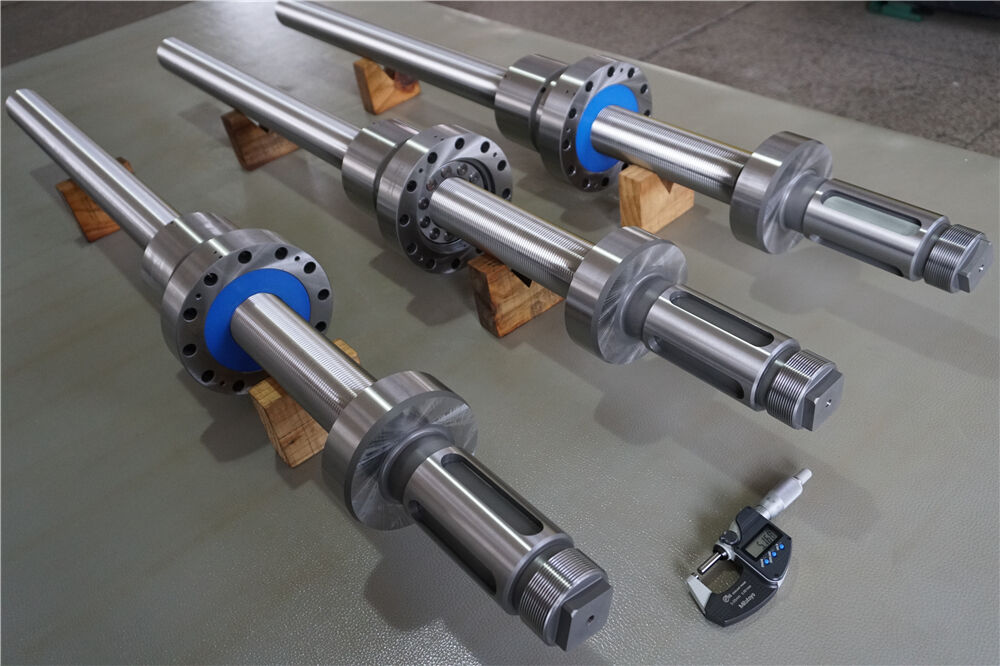
Introduction
In the field of high-precision motion control, planetary roller screws stand out as a premium solution for converting rotational motion into linear motion (and vice versa). Unlike traditional ball screws, these advanced mechanical components leverage planetary roller technology to deliver exceptional load capacity, rigidity, speed, and lifespan—making them indispensable in demanding industrial applications. From aerospace and robotics to medical equipment and automotive manufacturing, planetary roller screws are the backbone of systems requiring reliable, precise actuation. This comprehensive guide breaks down their design, working principles, types, advantages, selection criteria, and real-world applications to help engineers and buyers make informed decisions.
What Are Planetary Roller Screws? Core Structure & Working Principles
Planetary roller screws (also known as satellite roller screws) are high-precision actuators that use threaded rollers instead of balls to transfer load between the screw shaft and nut. This design creates line contact (rather than point contact) between components, enabling superior performance in heavy-load, high-cycle scenarios. With efficiency ranging from 75% to 90% and dynamic load ratings exceeding 130 tons of force, they outperform many linear motion alternatives in harsh operating conditions.
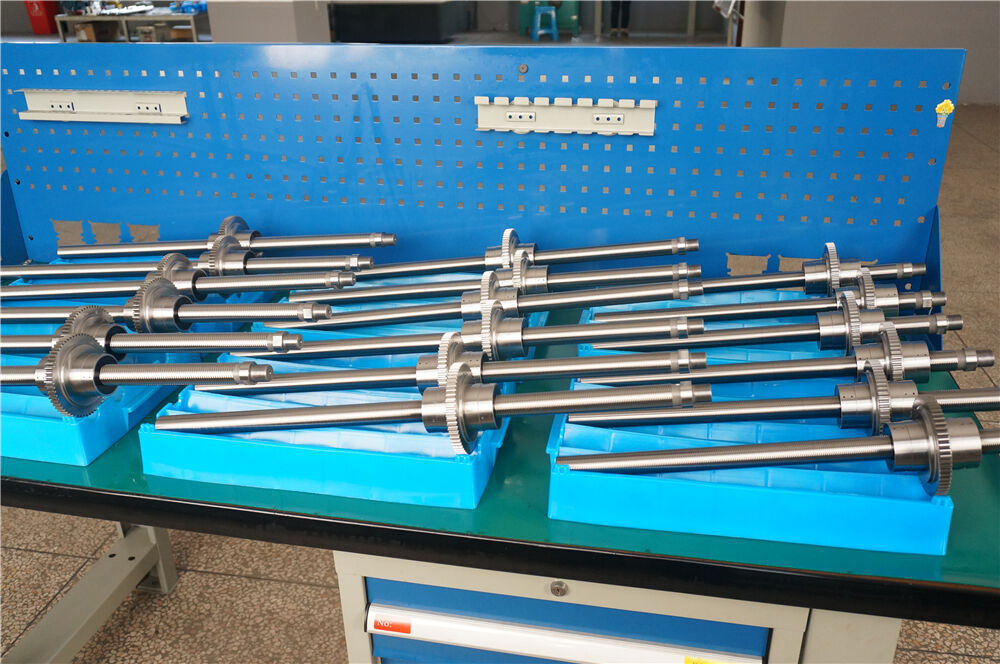
Key Components of Planetary Roller Screws
-
Screw Shaft: A cylindrical shaft with multi-start V-shaped threads, serving as the primary rotating element. Typically crafted from alloy structural steel for durability, its precision-ground threads ensure consistent contact with rollers.
-
Nut: The stationary or moving component encapsulating the rollers, featuring internal threads matching the screw shaft. High-carbon chromium bearing steel is commonly used for the nut to enhance wear resistance.
-
Planetary Rollers: 6-12 threaded rollers arranged radially around the screw shaft, acting as load-transfer elements. These rollers spin and orbit the screw (like planet gears around a sun gear), creating smooth, low-friction motion. Their convex flanks minimize friction at contact points.
-
Auxiliary Components: Internal gear rings (for standard types) guide roller rotation, cages maintain roller spacing, and elastic retaining rings secure components. Lubrication systems and protective seals extend service life in harsh environments.
How Planetary Roller Screws Work
When the screw shaft rotates, the planetary rollers engage with both the screw’s external threads and the nut’s internal threads. The rollers orbit the screw while spinning, converting rotational motion into linear displacement of the nut (or vice versa). This planetary motion ensures uniform load distribution across multiple rollers, eliminating stress concentrations and enabling high precision. Unlike ball screws, the line contact between rollers and threads delivers superior rigidity and impact resistance—critical for heavy-duty applications.
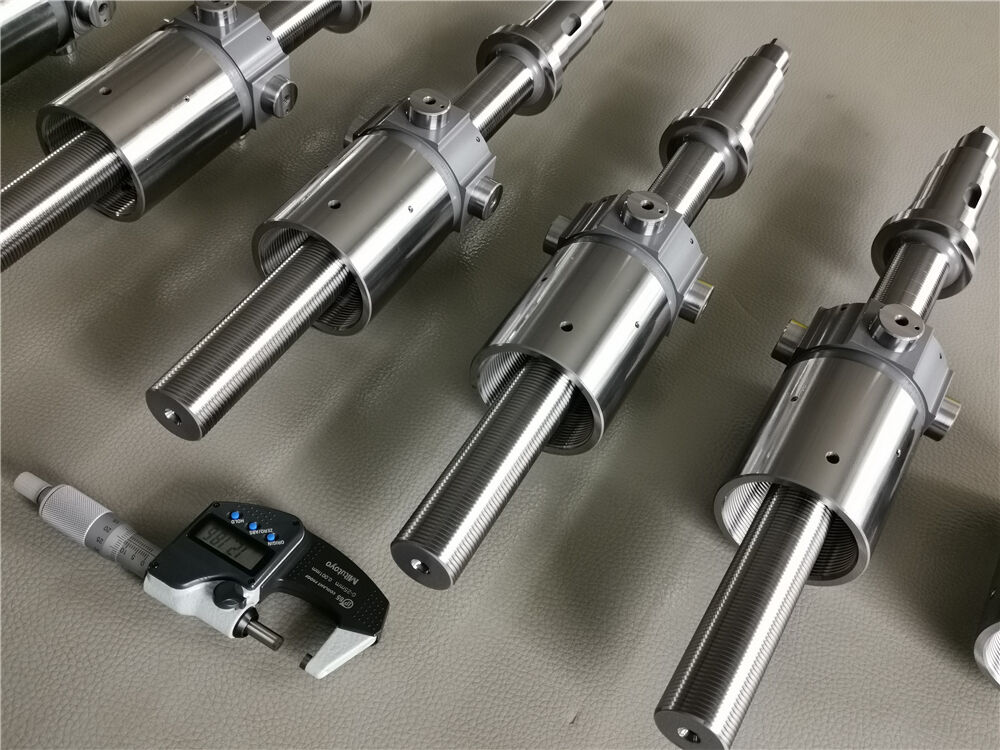
Planetary Roller Screws vs. Ball Screws: Key Differences & Advantages
While both components convert rotational motion to linear motion, their design and performance characteristics differ significantly. The table below highlights core distinctions:
|
Feature
|
Planetary Roller Screws
|
Ball Screws
|
|---|---|---|
|
Contact Type
|
Line contact (multiple rollers)
|
Point contact (balls)
|
|
Load Capacity
|
Higher (handles tens of kilonewtons)
|
Moderate (limited by ball size)
|
|
Rigidity & Precision
|
Superior (minimal deflection under load)
|
Good (prone to slight deflection)
|
|
Lifespan
|
Longer (resists wear in high-cycle applications)
|
Shorter (ball wear reduces precision over time)
|
|
Cost
|
Higher (complex manufacturing)
|
Lower (simpler design)
|
Beyond these differences, planetary roller screws offer unique advantages for critical applications:
-
High-Speed Performance: Maintains efficiency and precision at high rotational speeds, outperforming ball screws in rapid actuation scenarios.
-
Shock Resistance: Line contact and robust construction withstand impact loads, making them ideal for rugged environments like construction machinery.
-
Compact Design: Delivers higher load capacity in a smaller footprint compared to ball screws of the same nut diameter.
Types of Planetary Roller Screws: Choose for Your Application
Planetary roller screws are classified into several types to suit diverse operating requirements, each with unique structural features:
By Structural Design
-
Standard Planetary Roller Screws: The most common type, featuring an internal gear ring to guide roller motion. The screw acts as the driving element, and the nut delivers linear output. Suitable for large strokes, heavy loads, and harsh environments—widely used in precision machine tools and robotics .
-
Inverted Planetary Roller Screws: Lacks an internal gear ring; instead, the screw’s end teeth mesh with roller gears. The nut serves as the driving element, and its length is larger than the standard type. Ideal for small-to-medium loads, short strokes, and high speeds, with the nut potentially integrating with a motor rotor for compact electromechanical actuators .
-
Recirculating Planetary Roller Screws: Replaces the gear ring with a cam ring (similar to ball screw returners) to recirculate rollers. Increases engaged thread count for higher precision, suitable for applications requiring continuous cyclic motion .
-
Differential Planetary Roller Screws: Optimized for ultra-precise positioning, using dual-thread designs to achieve micro-adjustments. Common in optical instruments and semiconductor equipment.
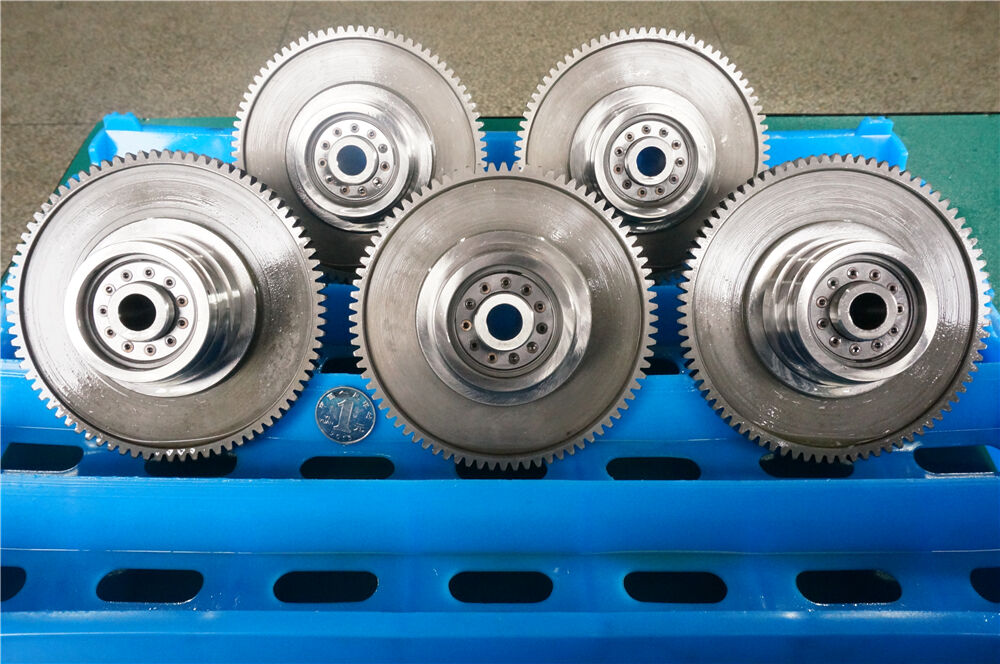
Critical Selection Tips for Planetary Roller Screws
Selecting the right planetary roller screw requires rigorous analysis of load, speed, precision, and environmental factors. Follow these steps to avoid premature failure and optimize performance:
-
Define Core Requirements: Clarify maximum dynamic/static load, linear speed, acceleration/deceleration rates, stroke length, and positioning precision (repeatability, parallelism). Consider operating temperature and environmental conditions (dust, moisture).
-
Calculate Load & Lifespan:
-
Dynamic Load Rating (C): Use manufacturer specs to determine the load the screw can handle for 1 million revolutions.
-
Lifespan Calculation: For variable loads, compute the mean load (Fₘ) using \( F_m = \sqrt[3]{\frac{F_1^3 \times u_1 + F_2^3 \times u_2 + ...}{u_{total}}} \), then calculate actual lifespan with \( \text{Actual Revolutions} = \left( \frac{C}{F_m} \right)^{3.33} \times 10^4 \) .
-
-
Check Critical Speed & Buckling: Ensure rotational speed stays below the critical limit (calculated via \( \text{Critical Speed (rpm)} = \frac{10^7 \times f_1 \times J}{L^2} \), where \( f_1 \) = support factor, \( J \) = root diameter, \( L \) = screw length) to avoid vibration . For compression loads, verify buckling resistance using manufacturer formulas.
-
Match Accessories to Environment: Choose food-grade lubrication for medical/packaging applications, corrosion-resistant materials for wet environments, and sealed designs for dusty conditions.
Top Applications of Planetary Roller Screws Across Industries
The global precision planetary roller screws market is projected to reach USD 3.346 billion by 2031 (CAGR 42.4%), driven by demand across high-growth sectors . Key applications include:
Aerospace & Defense
Used in aircraft landing gear actuators, missile guidance systems, and satellite positioning mechanisms. Their high rigidity and shock resistance withstand extreme temperatures and vibration, ensuring reliable performance in critical missions.
Robotics & Automation
Integrated into industrial robot arms, pick-and-place systems, and automated assembly lines. Enables high-speed, precise actuation for heavy-load tasks like robotic welding and material handling .
Medical Equipment
Critical for surgical robots, medical imaging devices (e.g., CT scanners), and reagent filling systems. Smooth, quiet operation and easy sterilization meet strict hygiene and precision standards .
Automotive Manufacturing
Applied in robotic welding systems, powertrain assembly lines, and electric vehicle (EV) actuator components. Resists continuous high-load operation, supporting 24/7 production efficiency.
Precision Machine Tools
Used in CNC lathes, milling machines, and grinding equipment. Delivers ultra-precise positioning to ensure tight tolerances in component manufacturing.
Installation & Maintenance Best Practices
Proper installation and maintenance maximize the lifespan of planetary roller screws. Follow these guidelines:
Installation Tips
-
Ensure the screw shaft is parallel to guide rails to avoid misalignment and uneven wear .
-
Secure the nut firmly and test motion across the full stroke to verify smooth operation. For multi-start screws, reassemble if friction torque differs from the original value .
-
Use precision mounting surfaces (milled or scraped) to maintain alignment and rigidity.
Maintenance Guidelines
-
Lubricate regularly with compatible grease (based on speed and environment) to reduce wear and friction.
-
Clean components periodically to remove dust and debris—critical for preserving precision and lifespan.
-
Monitor for abnormal noise, vibration, or reduced precision, which indicate wear. Replace rollers, seals, or lubricant promptly.
-
Adjust preload carefully: Higher preload improves precision but increases torque and shortens lifespan .

Conclusion
Planetary roller screws represent the pinnacle of high-precision linear motion technology, offering unmatched load capacity, rigidity, and durability for critical applications. While they come at a higher cost than ball screws, their performance advantages justify the investment in industries where reliability and precision are non-negotiable. By understanding their design, types, selection criteria, and maintenance needs, engineers can unlock their full potential in aerospace, robotics, medical, and automotive systems.
As the global market grows, partnering with a reputable manufacturer ensures access to customized solutions—from standard designs to inverted or recirculating types tailored to unique application needs. With proper选型 and care, planetary roller screws deliver consistent, high-performance actuation for years to come.
FAQs
Q1: Are planetary roller screws suitable for cleanroom applications? A1: Yes—choose stainless steel components, cleanroom-compatible lubrication, and sealed designs to meet ISO cleanroom standards.
Q2: How does preload affect planetary roller screw performance? A2: Preload enhances rigidity and precision but increases torque and wear. Select preload based on application precision requirements and load conditions .
Q3: What is the maximum speed of planetary roller screws? A3: Speed varies by size and type, but high-performance models can operate at rotational speeds exceeding 3,000 rpm while maintaining efficiency and precision.
Table of Contents
- What Are Planetary Roller Screws? Core Structure & Working Principles
- Planetary Roller Screws vs. Ball Screws: Key Differences & Advantages
- Types of Planetary Roller Screws: Choose for Your Application
- Critical Selection Tips for Planetary Roller Screws
- Top Applications of Planetary Roller Screws Across Industries
- Installation & Maintenance Best Practices
- Conclusion
- FAQs