 EN
EN
 AR
AR
 BG
BG
 CS
CS
 DA
DA
 NL
NL
 FI
FI
 FR
FR
 DE
DE
 EL
EL
 HI
HI
 IT
IT
 JA
JA
 KO
KO
 NO
NO
 PL
PL
 PT
PT
 RU
RU
 ES
ES
 SV
SV
 TL
TL
 ID
ID
 UK
UK
 VI
VI
 HU
HU
 TH
TH
 TR
TR
 FA
FA
 AF
AF
 MS
MS
 SW
SW
 GA
GA
 CY
CY
 BE
BE
 KA
KA
 LA
LA
 MY
MY
 TG
TG
 UZ
UZ


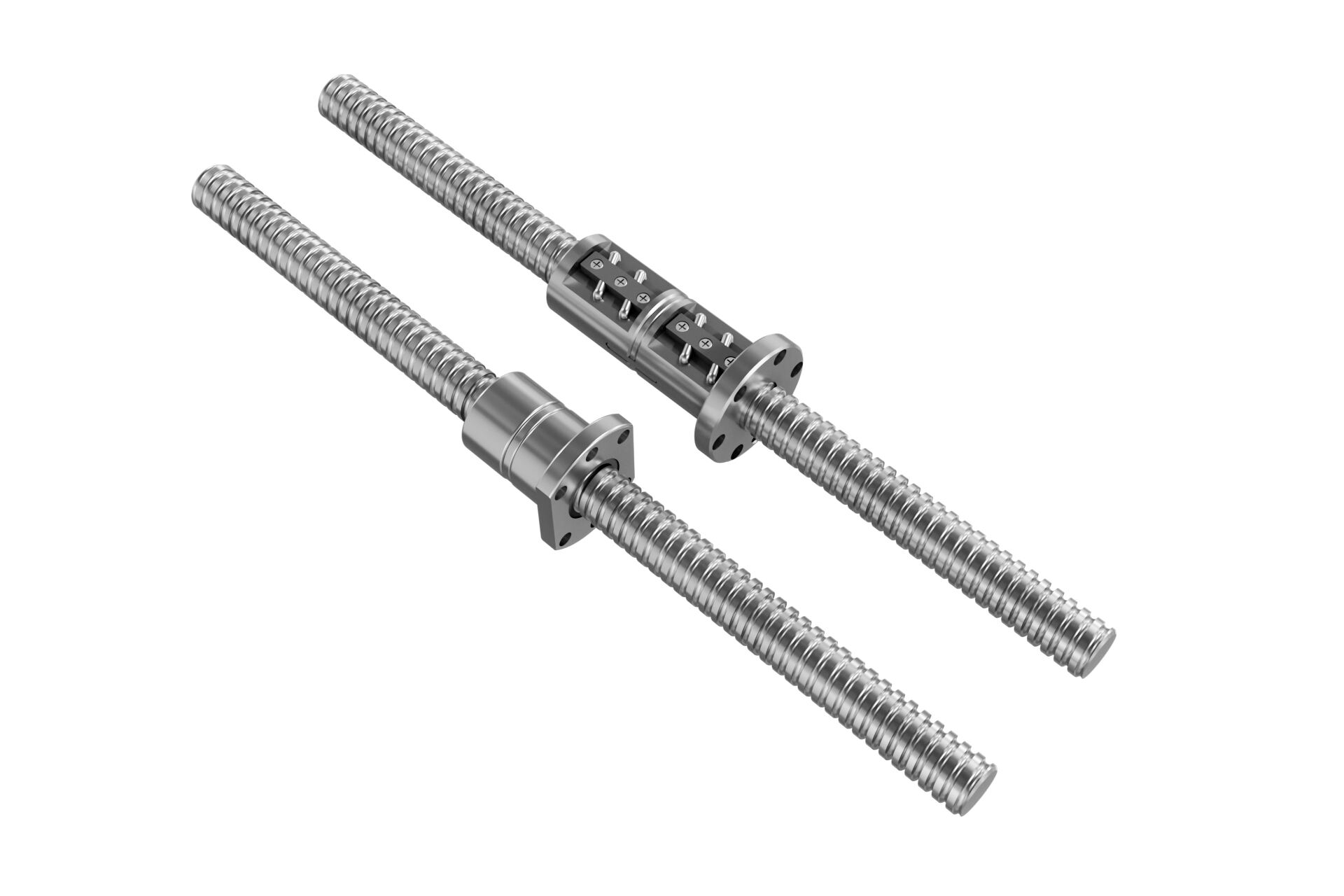
In industrial automation and precision manufacturing, ball screws are the unsung heroes of reliable motion control. These critical transmission components seamlessly convert rotary motion to linear motion—delivering the speed, accuracy, and efficiency that power everything from CNC machining centers and robotic arms to semiconductor packaging lines. For mechanical engineers, plant managers, or anyone tasked with optimizing automation systems, a deep understanding of ball screws isn’t just helpful—it’s essential. This guide breaks down ball screw basics, types, selection, and maintenance with real-world context, no jargon required.
1. What Is a Ball Screw? Basics & How It Actually Works
At its core, a ball screw (or ball bearing screw) is a mechanical component that translates rotary motion into precise linear motion (and vice versa) using tiny, high-precision steel balls. Unlike old-school sliding screws—like trapezoidal screws—that rely on sliding friction (which wastes energy and wears out fast), ball screws use rolling friction between the screw shaft, nut, and steel balls. This design cuts energy loss dramatically and extends service life, making them a staple in high-performance automation.
Let’s break down the working mechanism in simple terms—no engineering degree needed: First, the screw shaft has a spiral groove (called a raceway), and the matching nut has a corresponding groove on the inside. High-precision steel balls fill the gap between these two raceways. When a servo motor (or other power source) spins the screw shaft, the steel balls roll along the spiral raceway, pushing the nut forward or backward in a straight line. To keep the motion smooth and continuous, a circulation system (also called a return device) guides the steel balls back to the start of the raceway—so they can keep rolling without getting stuck or colliding.
2. The 5 Key Components of a Ball Screw Assembly
A ball screw isn’t just a single part—it’s a system. Each component works together to ensure accuracy, durability, and smooth operation. Here’s what you need to know about the five essential parts:
-
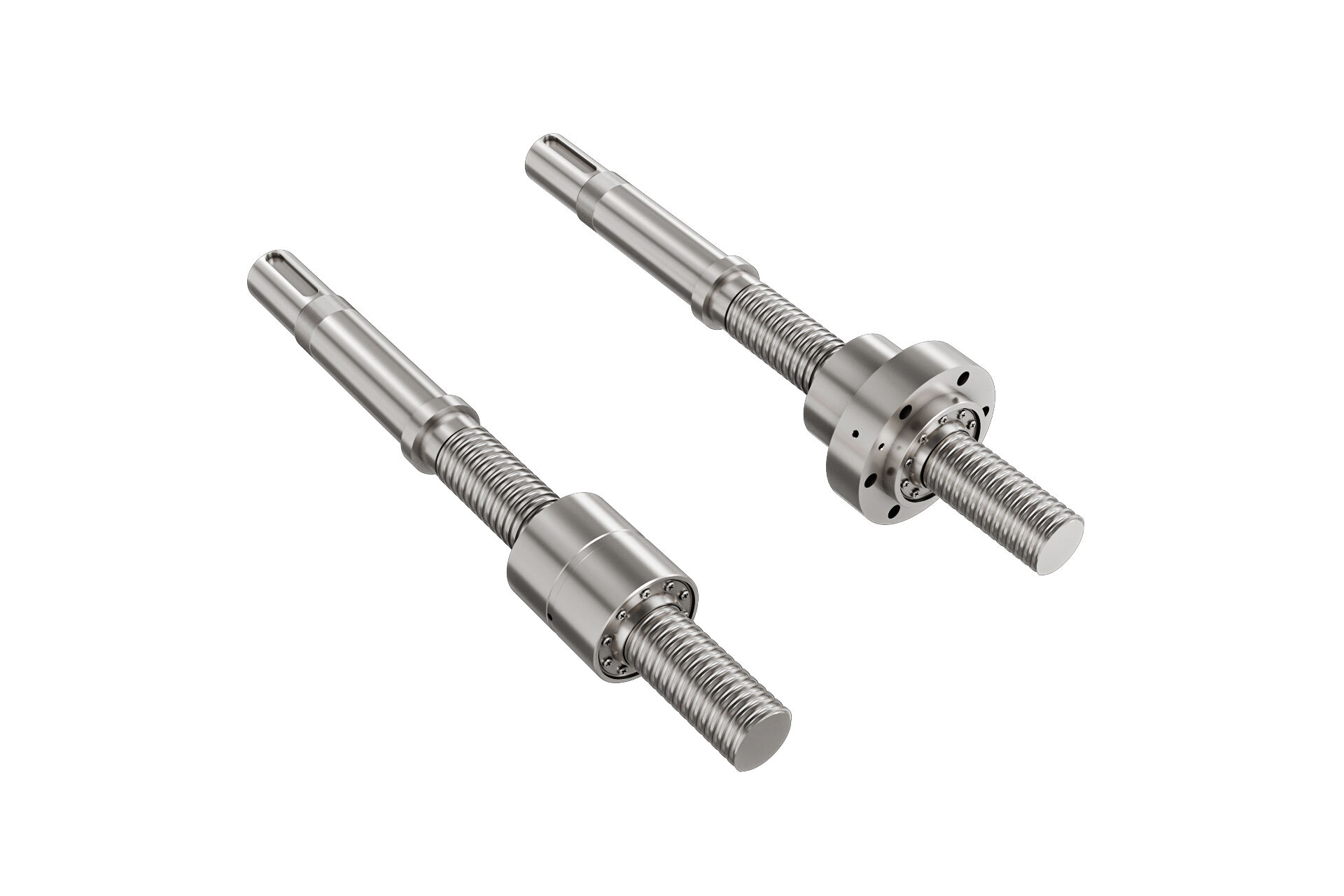
Screw Shaft: The rotating heart of the system, with a precision-machined spiral raceway. Most are made from high-carbon chromium bearing steel (SUJ2) or alloy steel (SCM440)—materials chosen for strength. After quenching (heat treatment) and precision grinding, the shaft reaches a hardness of HRC58-62 and a surface smoothness of Ra ≤ 0.2 μm. This ensures the steel balls roll smoothly and resist wear, even in high-speed applications.
-
Nut: The part that moves linearly, mating perfectly with the screw shaft. Its internal raceway is ground to match the screw’s groove exactly, and it has mounting holes to attach to linear components (like a machine tool workbench). Using the same material as the shaft ensures consistent wear and compatibility.
-
Steel Balls: The tiny components that reduce friction. Made from G10-G3 grade high-precision bearing steel (with a diameter tolerance of just ±0.001mm), their size and number directly impact how much load the ball screw can handle (load capacity) and how stiff it is (rigidity). Think of them as the "rollers" that make the whole system efficient.
-
Circulation System (Return Device): The "traffic cop" for the steel balls. It guides balls back to the start of the raceway so motion doesn’t stop. There are two main types—internal and external circulation (we’ll cover these later). A well-designed circulation system keeps noise low and motion smooth.
-
Sealing Device: The protector. Installed at the ends and outer edge of the nut, seals keep dust, metal chips, and cutting fluid out of the raceway—while keeping lubricant in. Common types include contact seals (rubber or felt) for dusty environments and non-contact labyrinth seals for high-speed applications. Choosing the right seal is key to long service life.
3. Common Types of Ball Screws: How to Choose the Right One
Not all ball screws are the same. They’re classified by practical features that match them to specific applications. Below are the three most important classification methods used in the industry—so you can pick the right type for your project.
3.1 By Ball Circulation Mode (Internal vs. External)
The way steel balls circulate is the biggest difference between ball screw types. Here’s how to choose between internal and external circulation:
-
Internal Circulation Ball Screws: Balls circulate inside the nut through a built-in reverse channel. Pros: Compact design (great for tight spaces), quiet operation (≤ 60dB), and high-speed capability (up to 3000 rpm). Perfect for high-precision applications like CNC machining centers and semiconductor packaging equipment. Cons: More complex to manufacture, so they cost a bit more.
-
External Circulation Ball Screws: Balls circulate outside the nut via a separate return pipe or guide groove. Pros: Simple to make (lower cost), easy to maintain, and you can add multiple circuits to boost load capacity. Cons: Bulkier nut size, louder operation, and lower maximum speed (≤ 2000 rpm). Ideal for general automation equipment and heavy machinery where precision isn’t the top priority.
3.2 By Precision Grade (What Do C1-C16 Mean?)
Precision grade is all about lead error—the difference between how far the nut should move and how far it actually moves. It follows international (ISO 3408) and national (GB/T 17587.1-2017) standards. Here’s what each grade means for your application:
-
High Precision (C1-C5): Ultra-tight lead error (as low as ≤ 0.003mm/300mm for C1 grade). Used in applications where every micron counts—like semiconductor packaging machines and optical instrument positioning stages. These are the top-tier options for precision-critical work.
-
Medium Precision (C7-C10): The most popular grade for industrial use. Lead error ranges from 0.025mm/300mm (C7) to 0.050mm/300mm (C10). It balances precision and cost, making it ideal for general CNC machine tools, robotic arms, and linear modules. If you’re not sure which grade to pick, this is a safe bet.
-
General Precision (C16): Lead error up to ≤ 0.100mm/300mm. Made via rolling forming (fast and cheap), these are for low-precision applications like automatic doors, simple conveyors, or any system where exact positioning isn’t critical. They’re a cost-effective choice for basic motion control.
3.3 By Installation Type (Fixed-Fixed, Fixed-Free, Fixed-Supported)
How you fix the screw shaft at both ends affects its rigidity (stiffness) and maximum stroke. Here’s which installation type to choose for different scenarios:
-
Fixed-Fixed: Both ends fixed with angular contact bearings. Pros: Highest rigidity, can handle large axial loads, and supports high critical speeds (no resonance). Perfect for long-stroke, high-speed applications like large CNC machine tools or industrial robots. Cons: Requires precise installation to avoid thermal expansion issues.
-
Fixed-Free: One end fixed, the other free (no bearing). Pros: Super easy to install, and the free end compensates for thermal expansion (when the screw heats up and expands). Cons: Low rigidity, limited load capacity. Best for short-stroke, low-speed applications like small electronic devices or light-duty linear slides.
-
Fixed-Supported: One end fixed, the other supported by a deep groove ball bearing. Pros: Balances rigidity and ease of installation. Can handle moderate axial loads and strokes. Cons: Not as rigid as fixed-fixed. Ideal for medium-stroke, medium-speed automation modules—like pick-and-place robots or packaging equipment.
4. Key Technical Indicators to Evaluate Ball Screws
When shopping for a ball screw, don’t get overwhelmed by technical specs. Focus on these five core indicators to ensure it fits your equipment’s needs:
-
Lead (P): The distance the nut moves when the screw rotates one full turn (measured in mm). Lead determines two key things: speed (linear speed = lead × rotational speed) and positioning resolution. Use fine leads (≤ 5mm) for precise positioning (like in optical equipment) and coarse leads (≥ 20mm) for high-speed applications (like in packaging lines).
-
Axial Load Capacity: The maximum axial force (in Newtons, N) the ball screw can handle without damage. It’s determined by the size and number of steel balls, plus the raceway shape. Overloading a ball screw will cause premature wear and reduce precision—so always choose one with a load capacity higher than your system’s needs.
-
Rigidity: How well the ball screw resists deformation under load. Axial rigidity is the most important for positioning accuracy—if the screw bends or stretches under load, your positioning will be off. Boost rigidity by choosing a larger screw diameter, using a fixed-fixed installation, or adding preloading (we’ll cover preloading later).
-
Critical Speed: The maximum speed (in rpm) the screw can rotate without resonance (violent shaking). If you exceed this speed, the screw will vibrate, ruining precision and potentially damaging the system. Critical speed depends on the screw’s diameter, length, and installation type—longer, thinner screws have lower critical speeds.
-
Transmission Efficiency: The ratio of output power to input power. Ball screws are incredibly efficient—90-98%—compared to just 30-50% for sliding screws. High efficiency means less energy waste, which reduces your motor’s workload and saves on energy costs.
5. Step-by-Step Guide to Selecting the Right Ball Screw
Choosing the wrong ball screw can lead to poor performance, frequent breakdowns, and wasted money. Follow these five steps to pick the perfect one for your application:
-
Clarify Your Application Requirements: Start by writing down your key needs: What’s your required positioning accuracy? How much load will the ball screw handle? What’s the maximum speed? How long is the stroke? Answering these questions will narrow down your options (e.g., high accuracy = C1-C5 grade; heavy load = larger diameter screw).
-
Choose the Circulation Mode: Go with internal circulation if you need high speed, low noise, or a compact design (e.g., CNC machining centers). Choose external circulation if you’re on a budget, need easy maintenance, or have space for a larger nut (e.g., general automation equipment).
-
Match the Precision Grade: Ultra-precision (C1-C5) for semiconductors, optics, or medical equipment. Medium precision (C7-C10) for most CNC machines, robots, and linear modules. General precision (C16) for low-cost, low-precision tasks like automatic doors or conveyors.
-
Account for the Working Environment: If your system is in a dusty, humid, or corrosive environment (like a metalworking shop), choose ball screws with enhanced seals and anti-corrosion treatment (nickel or chrome plating). For high-temperature environments (like near furnaces), use high-temperature-resistant materials and lubricants.
-
Decide on Preloading Needs: Preloading removes backlash (play) between the screw and nut, boosting rigidity and positioning accuracy. Use preloaded ball screws (double nut, offset, or lead preloading) for applications like CNC machining or 3D printing. Skip preloading for general tasks to save cost—non-preloaded ball screws are fine for most basic motion control.
6. Maintenance Tips to Extend Ball Screw Life
With proper maintenance, a ball screw can last for years—saving you time and money on replacements. Here are four key practices to keep your ball screws in top shape:
-
Regular Lubrication: Lubricant reduces friction and wear. Use lubricating oil for high-speed applications (it flows better at high speeds) and grease for low-speed, heavy-load tasks (it stays in place longer). Reapply every 200-500 operating hours—set a reminder to avoid missing this critical step.
-
Keep It Clean & Sealed: Inspect seals regularly for damage—replace them if they’re cracked or worn. Wipe down the screw shaft and nut periodically to remove dust and debris. For harsh environments (like woodworking or metalworking), add a telescopic protective cover to keep contaminants out.
-
Check Precision Regularly: Use a dial indicator (for basic checks) or a laser interferometer (for precise measurements) to test positioning accuracy and lead error. If you notice a drop in precision—like parts coming out of tolerance—it’s time to adjust or replace the ball screw.
-
Avoid Overload & Overspeed: Stick to the ball screw’s rated load and speed limits. Overloading can bend the screw or damage the raceway; overspeed causes resonance and vibration. If your system needs more power, upgrade to a larger ball screw—don’t push a small one beyond its limits.
Wrapping Up
Ball screws are the backbone of precise, efficient motion control in industrial automation. From their basic components and working principle to the different types, selection steps, and maintenance tips—every detail impacts how well your automation system performs. By taking the time to understand your application needs and match them to the right ball screw, you’ll optimize performance, reduce downtime, and get more value from your equipment.
As manufacturing continues to move toward smarter, more precise operations, ball screws will keep evolving—becoming faster, more accurate, and more durable. Mastering the basics we’ve covered here is a great first step toward making informed decisions about ball screws in your next automation project.
Table of Contents
- 1. What Is a Ball Screw? Basics & How It Actually Works
- 2. The 5 Key Components of a Ball Screw Assembly
- 3. Common Types of Ball Screws: How to Choose the Right One
- 4. Key Technical Indicators to Evaluate Ball Screws
- 5. Step-by-Step Guide to Selecting the Right Ball Screw
- 6. Maintenance Tips to Extend Ball Screw Life
- Wrapping Up