 EN
EN
 AR
AR
 BG
BG
 CS
CS
 DA
DA
 NL
NL
 FI
FI
 FR
FR
 DE
DE
 EL
EL
 HI
HI
 IT
IT
 JA
JA
 KO
KO
 NO
NO
 PL
PL
 PT
PT
 RU
RU
 ES
ES
 SV
SV
 TL
TL
 ID
ID
 UK
UK
 VI
VI
 HU
HU
 TH
TH
 TR
TR
 FA
FA
 AF
AF
 MS
MS
 SW
SW
 GA
GA
 CY
CY
 BE
BE
 KA
KA
 LA
LA
 MY
MY
 TG
TG
 UZ
UZ


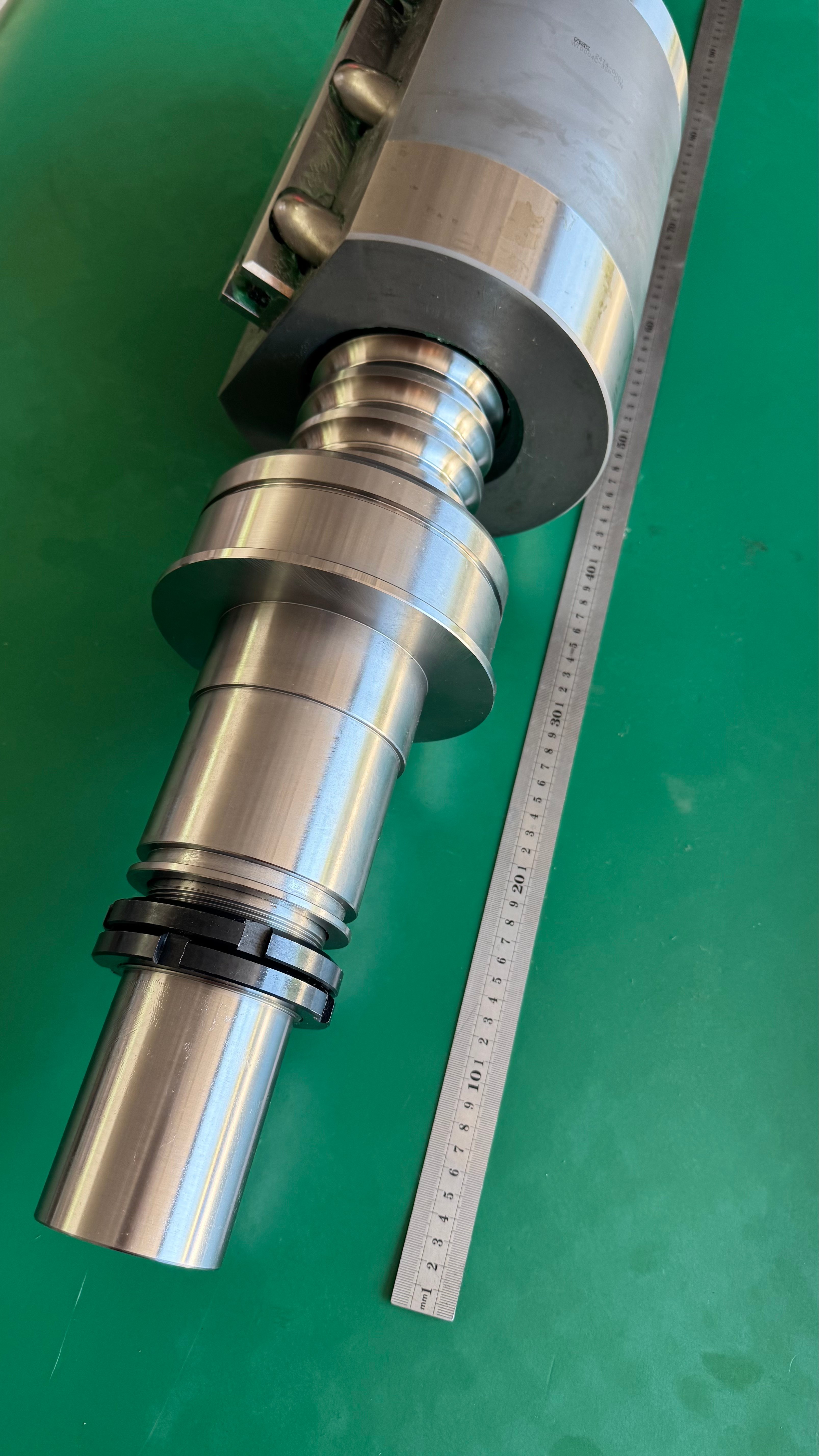
In all-electric injection molding, dimensional consistency depends heavily on positioning accuracy of the clamping, injection, and ejection axes. Yet one hidden factor undermines precision every shift: ball screw thermal growth. As screws rotate continuously under load, friction generates heat that causes axial expansion — often measured in tens of micrometers per 100 mm of travel. For medical, optical, and thin-wall packaging parts, this drift directly pushes dimensions out of tolerance.
This article explains why thermal growth occurs, how it impacts injection molding processes, and what engineering solutions prevent it from ruining production quality.
Why Ball Screws Heat Up During Injection Molding
Ball screw temperature rise comes from three primary sources in molding applications:
1. Friction in the ball nut circuit
Preloaded nuts create rolling resistance between the balls and raceways. High-speed injection strokes and frequent direction reversals accelerate heat generation, especially in C3 and C5 grade screws with tight preload.
2. Load-induced friction
Clamping and injection axes carry very high axial forces. Under heavy load, contact stress between balls and grooves increases, converting mechanical energy into heat.
3. Inadequate lubrication
Degraded or insufficient grease raises friction coefficients. Over time, this creates a vicious cycle: more heat → thinner lubricant film → more metal contact → even more heat.
In a typical 200-ton all-electric machine running 24/7, a ball screw can easily reach 10–15 °C above ambient temperature after several hours of continuous operation.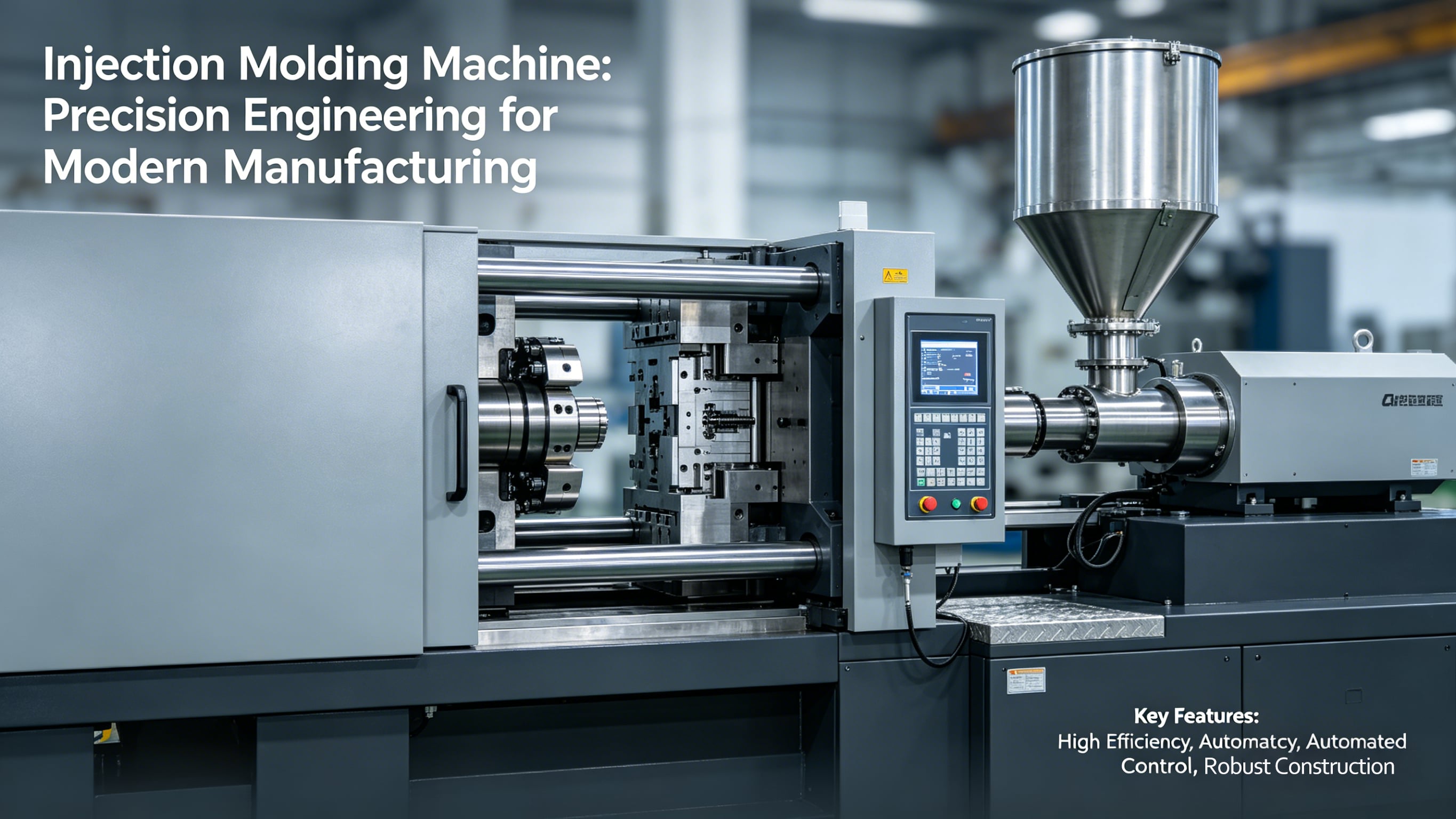
How Thermal Growth Affects Molding Accuracy
Ball screws expand axially as temperature increases. The coefficient of thermal expansion for bearing steel is approximately 11.7 × 10⁻⁶ /°C. For a 1,000 mm screw with a 10 °C temperature rise, the linear expansion equals:
1000 mm × 11.7e-6 × 10 °C = 0.117 mm
That is 117 micrometers of positional drift — enough to reject precision parts with ±0.05 mm tolerance. In practice, the impact appears as:
- Shot-to-shot weight variation on the injection axis
- Mold parting line mismatch on the clamping axis
- Ejector pin depth inconsistency causing part sticking or surface marks
- Gradual dimensional shift over a production shift, requiring repeated operator adjustments
For optical lenses, medical connectors, and microfluidic parts, even 20 µm of drift renders parts unusable.
Solution 1: Cooled Ball Screw Systems (Active Thermal Control)
The most effective method for high-precision machines is hollow-shaft cooled ball screws (such as HIWIN Cool Type II or equivalent premium grade screws).
How it works:
Coolant oil or water circulates through a bore running the full length of the screw shaft. A temperature-controlled chiller maintains the screw at a stable setpoint, typically 2–3 °C above ambient.
Benefits for injection molding:
- Reduces thermal drift to below 10 µm per meter
- Stabilizes preload force across the entire shift
- Extends grease life by keeping lubricant within optimal temperature range
- Enlights lights-out production with minimal dimensional adjustment
Best for: Optical molding, medical device manufacturing, thin-wall precision packaging, and any process running 24-hour production with tight tolerances.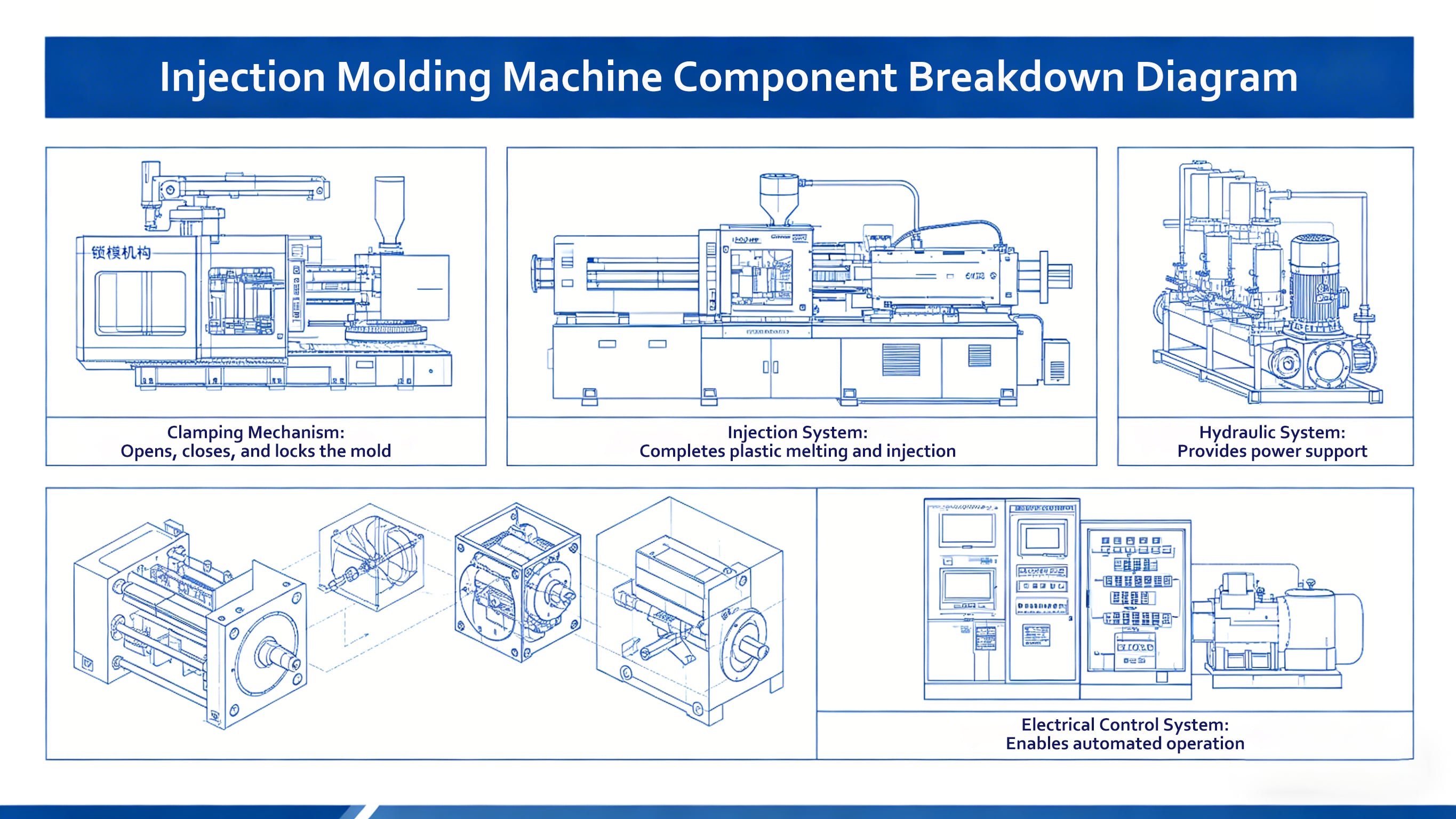
Solution 2: Thermal Compensation via Software
For machines without cooled screws, software-based thermal compensation provides a cost-effective alternative.
Implementation:
- Temperature sensors mounted on the nut housing and both bearing supports
- Control algorithm calculates expected expansion in real time
- CNC controller offsets the commanded position to cancel out the drift
Limitations:
- Compensation accuracy depends on sensor placement and thermal model calibration
- Does not address uneven temperature distribution along the screw
- Less effective during warm-up transients when thermal gradients are highest
This approach works well for general precision molding where ±30–50 µm accuracy is acceptable.
Solution 3: Mechanical Design Optimization
Several design choices reduce heat generation at the source:
Proper preload selection
Over-preloading is a common mistake. Z1 light preload is sufficient for most injection axes; only high-rigidity clamping axes need Z2 medium preload. Excessive preload wastes energy as heat.
High-DN screw designs
Screws with optimized ball return systems (such as end-cap type or deflector-type circulation) generate less friction at high speeds, reducing temperature rise.
Lubrication management
Automatic grease lubricators with calibrated dosing ensure consistent film thickness without over-greasing. High-temperature synthetic greases rated for 80–120 °C maintain viscosity better under molding conditions.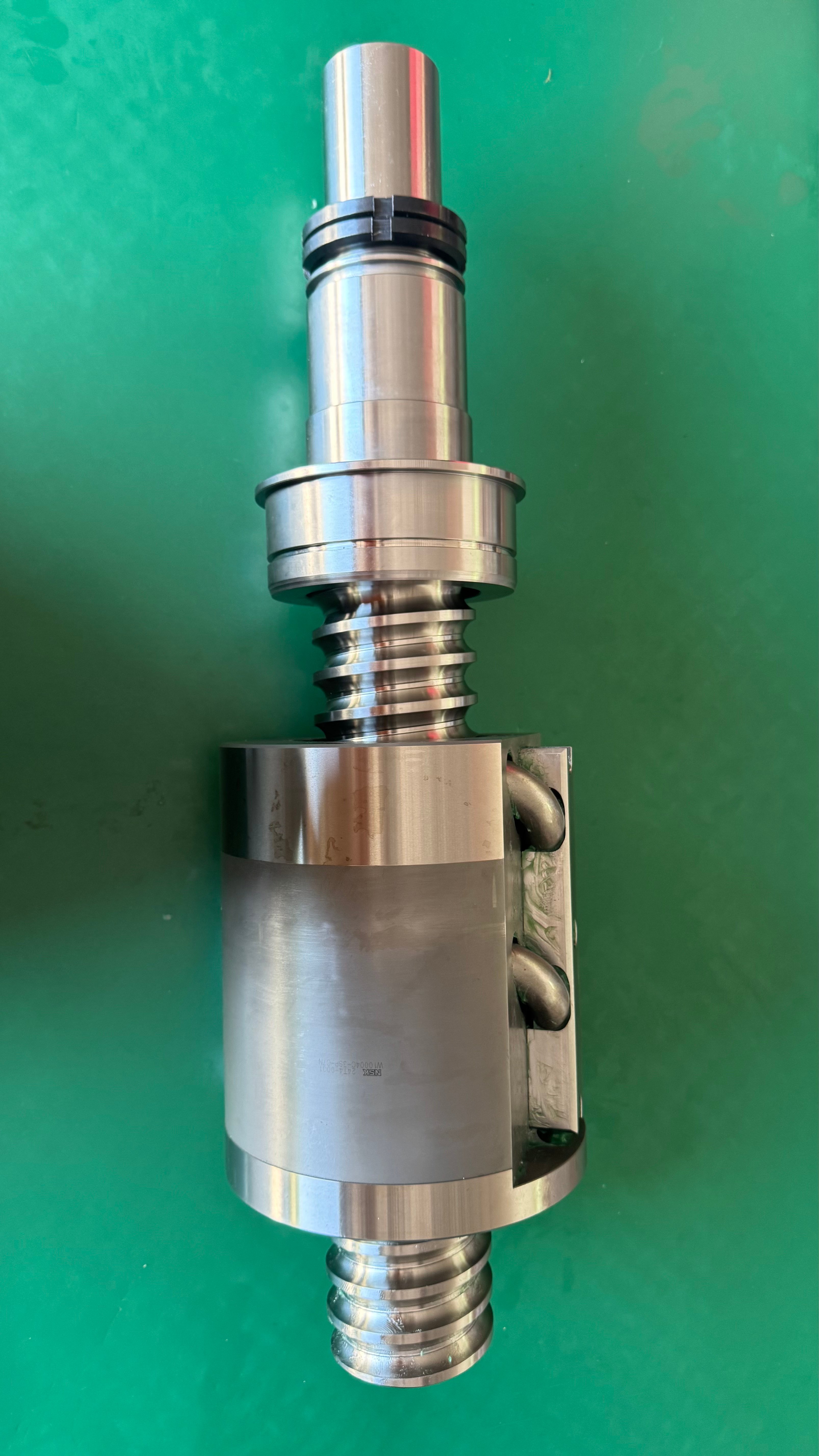 .
.
.Practical Production Recommendations
For injection molders running precision parts, we recommend a layered approach:
- Specify cooled screws on the injection and clamping axes for any new machine building optical or medical parts
- Install temperature monitoring on existing machines to establish baseline thermal behavior
- Implement warm-up cycles — run the machine empty for 15–30 minutes before starting production so thermal expansion stabilizes
- Calibrate compensation tables seasonally, as ambient shop temperature changes between summer and winter
- Schedule lubrication maintenance based on operating hours, not just calendar time
Conclusion
Ball screw thermal growth is not a trivial issue in precision injection molding. Left unmanaged, it causes dimensional drift that erodes part quality, increases scrap rates, and forces constant operator intervention.
Whether through active cooling systems, software compensation, or optimized mechanical design, controlling screw temperature directly translates to tighter tolerances, more consistent parts, and higher OEE (Overall Equipment Effectiveness).
For molders upgrading from hydraulic to all-electric machines, factoring thermal management into ball screw specification upfront avoids costly retrofits later and ensures the machine delivers its rated precision from day one.