 EN
EN
 AR
AR
 BG
BG
 CS
CS
 DA
DA
 NL
NL
 FI
FI
 FR
FR
 DE
DE
 EL
EL
 HI
HI
 IT
IT
 JA
JA
 KO
KO
 NO
NO
 PL
PL
 PT
PT
 RU
RU
 ES
ES
 SV
SV
 TL
TL
 ID
ID
 UK
UK
 VI
VI
 HU
HU
 TH
TH
 TR
TR
 FA
FA
 AF
AF
 MS
MS
 SW
SW
 GA
GA
 CY
CY
 BE
BE
 KA
KA
 LA
LA
 MY
MY
 TG
TG
 UZ
UZ


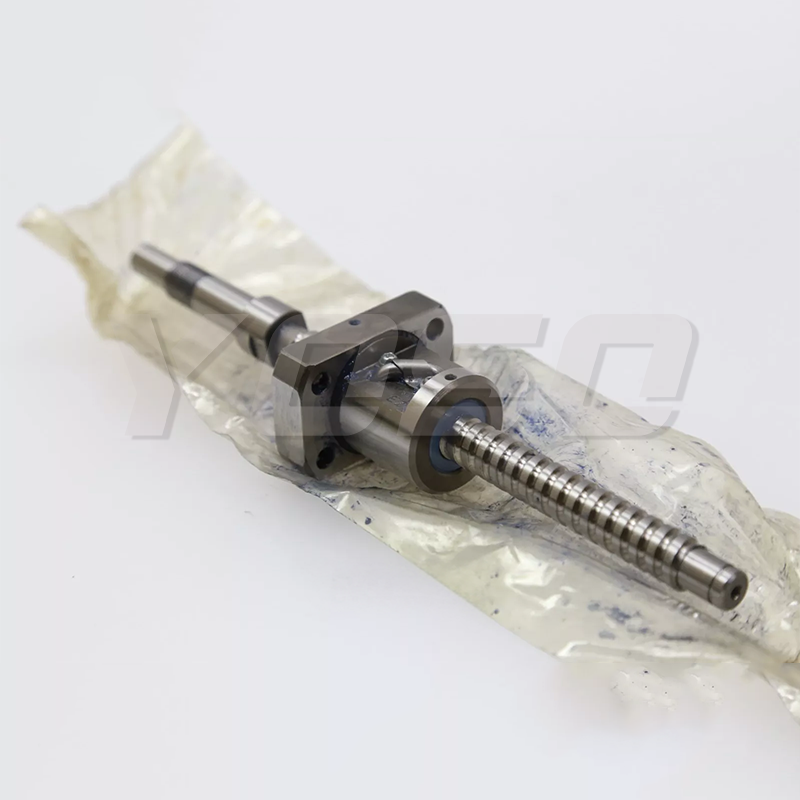
Les vis à billes sont des composants de transmission de précision essentiels dans l’automatisation industrielle, les machines-outils à commande numérique (CNC), les bras robotisés et les modules linéaires. La chute des billes constitue l’une des défaillances les plus fréquentes et les plus urgentes : dès que les billes se détachent, l’équipement peut présenter un mouvement bloqué, une perte de précision, des bruits anormaux, voire un arrêt complet, entraînant des temps d’arrêt de production coûteux.
Cet article résume systématiquement les causes profondes de la chute des billes dans les vis à billes , les méthodes d’urgence pas à pas pour la réparation, ainsi que les stratégies préventives à long terme, afin de vous aider à résoudre rapidement les défaillances, à rétablir le fonctionnement de l’équipement et à éviter la récurrence des problèmes.
La sécurité d'abord couper toute l'alimentation avant le démontage et la réparation ; verrouiller l'équipement pour éviter tout démarrage accidentel. Porter des gants de protection afin d'éviter les éraflures causées par des composants tranchants ou des billes cassées.
Chapitre 1 : Causes fondamentales de la chute des billes dans une vis à billes
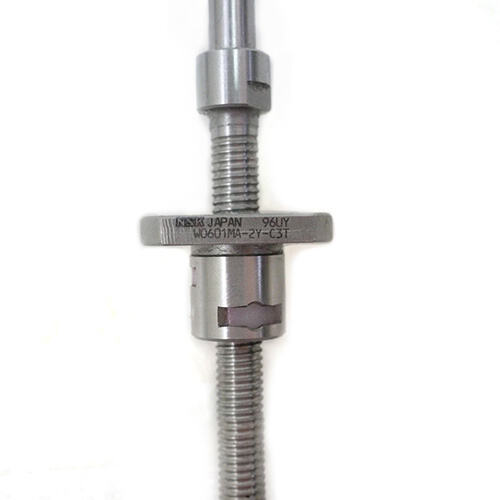
La chute des billes n'est pas une défaillance accidentelle, mais le résultat d'une utilisation anormale prolongée ou d'un dommage structurel. Comprendre les causes profondes est la clé d'une réparation complète :
1. Composants de circulation endommagés ou usés
Le système de circulation des billes (tube de retour, déflecteur, bouchon d'extrémité, entretoise) constitue la « piste » sur laquelle se déplacent les billes. Dès lors que ces pièces sont fissurées, déformées ou fortement usées, les billes sortent de leur trajectoire et tombent. Il s'agit de la cause la plus fréquente de la chute des billes.
2. Lubrification inadéquate ou défaillance du lubrifiant
L'absence de graisse ou d'huile lubrifiante, ou l'utilisation d'un lubrifiant inapproprié, entraîne un frottement à sec entre les billes et la portée. Un frottement intense génère une chaleur élevée, usant les composants et relâchant le chemin de circulation des billes, ce qui conduit finalement à leur chute.
3. Pénétration de corps étrangers
La poussière, les copeaux de métal, le liquide de refroidissement, les débris et autres impuretés pénètrent dans la cavité de l’écrou, obstruant la trajectoire de circulation et bloquant les billes. Une mise en marche forcée endommagera les pièces de circulation et fera sortir les billes de la gorge de roulement.
4. Fonctionnement en surcharge ou dommages par choc
Dépasser la charge dynamique/statique nominale de la vis à billes, ou subir un choc soudain pendant le fonctionnement, peut déformer la gorge de roulement de l’écrou ou les pièces de circulation, rompre la trajectoire de circulation des billes et provoquer leur chute.
5. Installation incorrecte ou fixation lâche
Un désalignement entre la vis et l’écrou, une base d’installation non plane ou des boulons de fixation desserrés entraînent un fonctionnement excentrique, une répartition inégale des contraintes sur les billes et les pièces de circulation, ce qui accélère l’usure et provoque la chute des billes.
6. Durée de service prolongée et vieillissement naturel
Après une longue période de fonctionnement à haute fréquence, tous les composants subissent une usure normale ; le jeu de circulation devient trop important et les pièces perdent leur fonction de limitation, ce qui entraîne la chute des billes.
Chapitre 2 : Réparation d’urgence étape par étape en cas de chute de billes
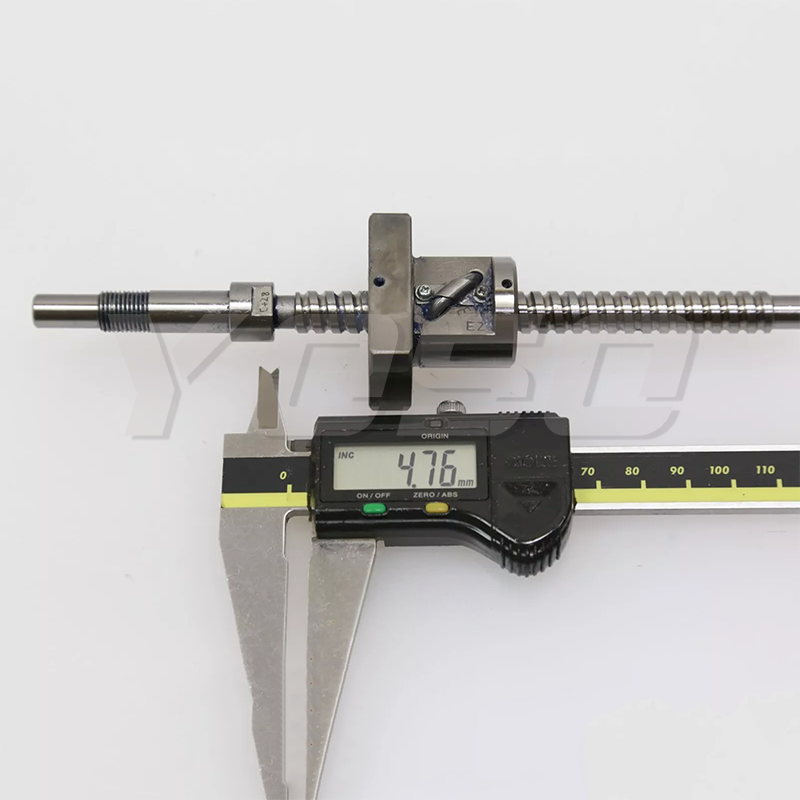
Suivez ces étapes standardisées pour réparer rapidement la chute des billes, garantissant ainsi une restauration stable de la précision et du fonctionnement :
Étape 1 : Arrêt de l’opération et inspection préliminaire
-
Arrêtez immédiatement l’équipement afin d’éviter tout dommage secondaire à la vis, à l’écrou et aux billes ;
-
Vérifiez le nombre de billes tombées, l’état apparent de l’écrou et des pièces de circulation, et repérez l’emplacement des dégâts ;
-
Vérifiez si la gorge de la vis présente des rayures, une déformation ou une usure.
Étape 2 : Démontage et nettoyage approfondi
-
Démontez soigneusement l’écrou à billes de l’équipement ;
-
Utilisez un agent de nettoyage non corrosif (par exemple de l’alcool industriel) pour éliminer tout lubrifiant résiduel, toutes les impuretés et les fragments de billes cassées ;
-
Séchez complètement la vis, l’écrou et les pièces de circulation à l’aide d’air comprimé ou d’un chiffon propre.
Étape 3 : Remplacement des composants endommagés
-
Remplacer toutes les pièces tournantes endommagées (tube de retour, déflecteur, bouchon d’extrémité, entretoise) – ne pas réutiliser les pièces usées ;
-
Utilisation billes d’origine correspondantes (même taille, même matériau et même précision) afin d’assurer un jeu de circulation constant ;
-
Si la piste de roulement de la vis ou la cavité intérieure de l’écrou est fortement déformée, remplacer l’ensemble complet de la vis à billes afin d’éviter des défaillances répétées.
Étape 4 : Réinstallation des billes et réglage du jeu
-
Injecter une petite quantité de graisse lubrifiante à haute viscosité dans la piste de circulation de l’écrou pour fixer temporairement les billes ;
-
Installer les billes une par une le long de la piste, en veillant à ne manquer aucune bille ni à en installer de superflues ;
-
Faire tourner lentement l’écrou pour vérifier le bon fonctionnement, et régler le jeu de précharge dans la plage standard.
Étape 5 : Lubrification et essai de fonctionnement
-
Appliquer uniformément une graisse lubrifiante haute performance spéciale pour vis à billes, en couvrant toutes les billes et les chemins de roulement ;
-
Reinstaller la vis à billes sur l’équipement et serrer tous les boulons de fixation ;
-
Effectuer un essai à vide à faible vitesse pendant 5 à 10 minutes afin de vérifier la présence de bruits anormaux, de blocages ou de chute de billes ; puis effectuer un essai sous faible charge pour confirmer le fonctionnement normal.
Chapitre 3 : Stratégies préventives à long terme pour éviter la chute de billes
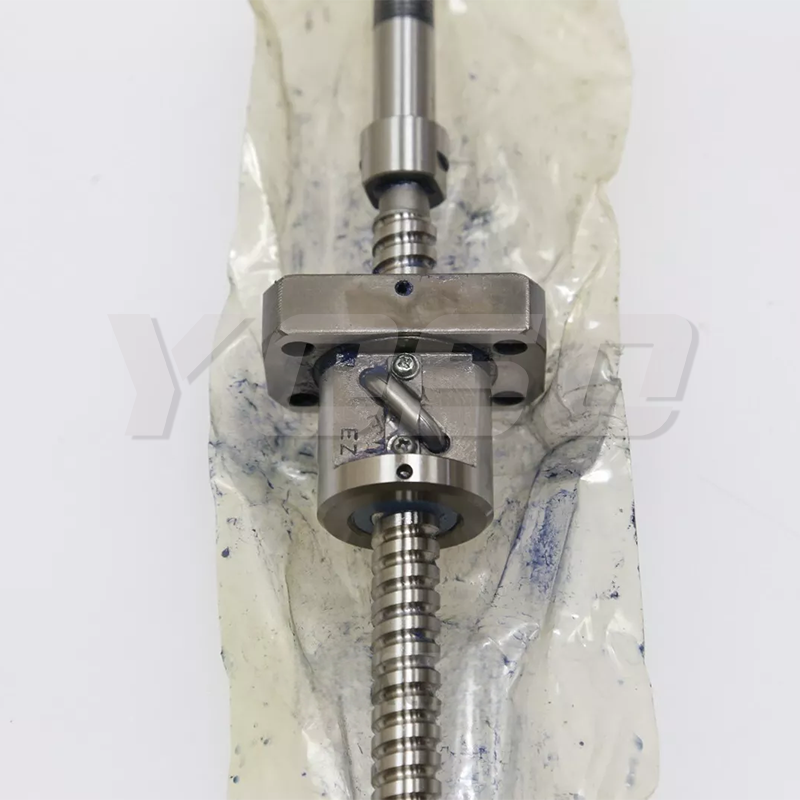
Une maintenance quotidienne efficace permet de réduire considérablement le risque de chute de billes et d’allonger la durée de vie utile des vis à billes :
-
Gestion régulière de la lubrification : Recharger ou remplacer la graisse lubrifiante spéciale tous les 1 à 3 mois (ajuster selon la fréquence d’utilisation) ; éviter de mélanger différents types de lubrifiants.
-
Protection anti-poussière et étanchéité : Installer des capots anti-poussière, des joints d’étanchéité ou des soufflets protecteurs afin d’empêcher les impuretés de pénétrer dans la cavité de l’écrou ; nettoyer quotidiennement la surface de la vis.
-
Contrôle de la charge : Utiliser strictement dans la plage de charge nominale ; éviter tout choc brutal ou toute surcharge.
-
Inspection Quotidienne vérifiez la présence de bruits anormaux, de vibrations ou de mouvements lents avant la mise en marche ; serrez immédiatement les boulons desserrés.
-
Calibrage régulier effectuez un étalonnage de précision et une inspection de l’usure des composants tous les 6 mois ; remplacez les pièces vieillies à l’avance.
-
Installation standard assurez un alignement précis de la vis et de l’écrou, une base d’installation plane et un couple uniforme pour les boulons de fixation.
Chapitre 4 : Quand faire appel à un soutien professionnel
Dans les situations suivantes, ne démontez pas ni ne réparez pas vous-même – contactez des équipes techniques professionnelles (telles que YOSO) pour obtenir de l’aide :
-
La tige filetée est courbée, déformée ou présente des rayures profondes dans la gorge de roulement ;
-
La cavité intérieure de l’écrou est gravement endommagée et ne peut plus être réutilisée ;
-
Les vis à billes haute précision (classes C1 à C3) nécessitent un étalonnage professionnel ;
-
Des échecs répétés de chute des billes après réparation par vos soins.
Service de soutien pour vis à billes YOSO
En tant que fabricant professionnel de composants de mouvement linéaire haute précision, YOSO propose des solutions intégrées pour vis à billes : des vis à billes standard et sur mesure, des accessoires de réparation, une assistance sur site pour le dépannage et un accompagnement technique. Notre équipe professionnelle vous aide à résoudre rapidement les pannes et à améliorer la stabilité de vos équipements.
Pour toute panne de vis à billes ou tout besoin de maintenance, n’hésitez pas à nous contacter à tout moment !
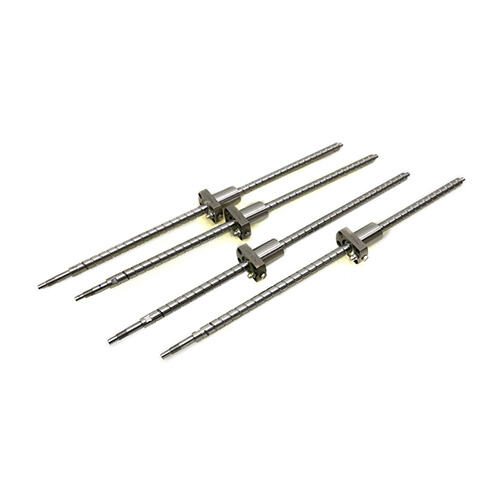
Table des matières
- Chapitre 1 : Causes fondamentales de la chute des billes dans une vis à billes
- Chapitre 2 : Réparation d’urgence étape par étape en cas de chute de billes
- Chapitre 3 : Stratégies préventives à long terme pour éviter la chute de billes
- Chapitre 4 : Quand faire appel à un soutien professionnel
- Service de soutien pour vis à billes YOSO